
Newz: Appraising Basements, AMCs,
Who is doing UAD 3.6 appraisals?
February 20, 2026
What’s in This Newsletter (In Order, Scroll Down)
- LIA AD: Limiting Liability to Third Parties
- Basement Appraisals: Understanding Contributory Value (Updated for UAD 3.6)
- Fascinating ‘Basement Home’ That Rises Just Inches Above the Ground Hits the Market for Less Than $160K
- The AMCs: Coming Soon to a Lawsuit Near You
- MY AD: The Cost Approach for Appraisers is not popular, by Tim Andersen, MAI
- 26% of Appraisers Feel Ready: What UAD 3.6 Demand
- Mortgage applications increased 2.8 percent from one week earlier
- Have you received a UAD 3.6 order yet? Survey.
- MBA: Mortgage applications increased 2.8 percent from one week earlier
Click here to subscribe to our FREE weekly appraiser email newsletter and get the latest appraisal news

Basement Appraisals: Understanding Contributory Value (Updated for UAD 3.6)
Excerpts: While homeowners may ask, “Does a finished basement add value to my appraisal?” you know the answer is a bit more complicated. A basement may impact a residential property’s value, and as an appraiser, you’ll need to evaluate its significance.
While determining the contributory value of basements isn’t overly complex, it does pose challenges. To help you out, we’ll outline essential steps and provide tips for evaluating a basement’s contributory value.
Summary
Determining how a basement contributes to a residential property’s value requires an appraiser to identify the basement type, its level of finishing, and any common concerns, like signs of mold or structural issues. Following best practices is key. This includes separating the basement from the above-grade finished area, understanding the intended use of the space, and completing comprehensive market research. By doing so, you can evaluate the basement’s contributory value more accurately
Topics include:
Types of basements (partial list)
Cellars
Partial Basements
Walk-Up Basements
How Is the Basement Finished? Determining Levels
Know the Intended Use and Client Requirements
To read more, Click Here
My comments: The best analysis and advice on basements I have seen. Watch the 7 minute video on Understanding Q/C ratings (UAD 3.6) Where I work the ground does not freeze. In my Island city there is no cemetery as the ground water from San Francico Bay is very high. Basements need pumps to remove salt water. Basement walls are not used to support the home. Sometimes there are above ground basements, basements dug out of the ground, and many other types of basements. In steep hillside areas what is a “basement” can be controversial.
In Alameda, my city, native American burials, primarily from the Ohlone people, are heavily concentrated in former shellmounds (ancient cemeteries) throughout Alameda. Almost were removed many years ago, similar to other Bay area cities close to the Bay.
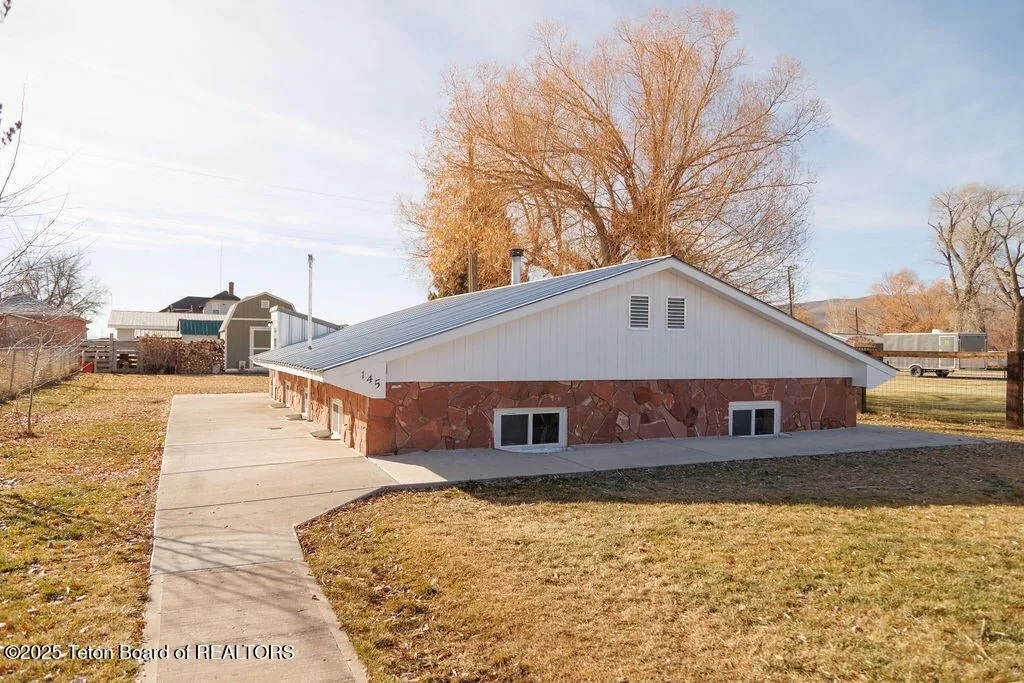
Fascinating ‘Basement Home’ That Rises Just Inches Above the Ground Hits the Market for Less Than $160K
Excerpts: 2 bedroom, 1 bath, 810 sq.ft., 8,276 sq.ft. lot, Built in 1950.
For most people, the concept of an adult “living in the basement” comes with raised eyebrows and a hint of skepticism. But for one future Wyoming homeowner, it could well end up being the ultimate conversation starter.
Because a “basement home” in Cokeville, WY, is putting a whole new spin on underground living, unfolding much the same as a traditional above-ground property, but with the majority of its living spaces located beneath street level, save for a few inches of space that accommodate its windows.
At first glance, visitors could be forgiven for thinking that the property is the result of a construction mistake; only a roof, a small chimney, and some windows can be seen above street level, giving the impression that the home has been swallowed by the ground below it.
In a way, the home is the result of a change of plans—with listing agent Zane Erickson of Re/Max Valley 1 Realty revealing that the property’s original owners had initially intended to raise the home up with an additional level.
Fully remodeled within the last yearfeaturing new paint, appliances, bathroom, electrical, plumbing, and a metal roof completed in November 2024
To see an aerial view and 51 photos in the listing, Click Here
My comment: How would you use the basement tips in the article above to do the appraisal? ANSI and UAD 3.6?

The AMCs: Coming Soon to a Lawsuit Near You
The AMCs built an entire system on silence, and now the quiet parts are being said out loud.
For years, the mortgage industry has insisted that appraisal management companies are the guardians of independence, the compliance buffer that keeps lenders and appraisers at a safe distance. Yet 2025 has delivered a storyline that feels more like satire than industry narrative. Borrowers are suing, judges are listening, and the AMC business model is beginning to look less like a safeguard and more like a very expensive middleman with a very opaque invoice.
The first shock came from California, where the Timmins class action accused Clear Capital, Core Valuation Management, and Rocket Mortgage of charging borrowers appraisal fees that bore little resemblance to what the appraiser was actually paid. The complaint did not rely on speculation. It cited research submitted to the CFPB by the Appraisal Regulation Compliance Council (ARCC), showing that Clear Capital retained between 64 percent and 84 percent of sampled appraisal fees. For an industry that has spent years insisting that AMCs simply coordinate and facilitate, the numbers were difficult to explain away…This is where the industry’s long running narrative begins to unravel. For years, AMCs have insisted that transparency would confuse consumers.
Now consumers and courts are asking why transparency is so frightening. If borrowers truly benefit from AMC involvement, why must the AMC’s fee be hidden behind the word appraisal? If AMCs truly add value, why do appraisers report being prohibited from disclosing their own compensation? If the AMC’s role is so essential, why does the business model collapse the moment borrowers learn what portion of their payment actually reaches the person doing the work?
To read more plus 47+ appraiser comments, Click Here
————————————————————–
Are you getting too many ad-only emails?
4 ways to get only the FREE email newsletters and NOT the ad-only emails.
1. Twitter: https://twitter.com/appraisaltoday Posted by noon Friday
2. Read on blog www.appraisaltoday.com/blog Posted by noon Friday. You can subscribe to the blog in the upper right of each blog page. NOTE: the popular ads with liability tips are below the first topic on my blog posts.
3. Email Archives: https://appraisaltoday.com/archives
(posted by noon Friday) The link is above and to the left of the big yellow email signup form. Newsletters start with “Newz.” Contains all recent emails sent.
4. Link to the 10 most recent newsletters (no ads) at www.appraisaltoday.com. Scroll down past the big yellow signup block. The newsletters have abbreviated titles, taken from their blog posts.
To read more about the 4 ways, plus information on why I take ads, etc.
————————————————————————
The Cost Approach for Appraisers is not popular, by Tim Andersen, MAI, MSc, CDEI, MNAA
In the February 2-26 issue of Appraisal Toda
We use the Cost Approach because it helps us to analyze markets,
recognize trends, and credibly appraise real property.
Excerpts:
Why are appraisers not using Cost Approach for accrued depreciation
Therefore, we do not use the cost approach to conclude a value opinion,
since it is so poor at that task.
However, we do not fail to use it merely because “…it is difficult to calculate
accrued depreciation accurately”.
In reality, calculating accrued depreciation is a simple three-step process
outlined in full on page 571 of the 15th ed. of The Appraisal of Real Estate.
Nor do we fail to use it because “…the market does not use the cost
approach.” That conclusion is Olympic-class, grade-A poppycock unless the
appraiser making it has surveyed the entire market to reach that conclusion
(and has the data to back it up). Since appraisers are not trained in conducting and interpreting mass-market surveys, to make such a statement raise competency issues, a door most of us would otherwise choose to keep shut.
My comments: I had never read about what most of Tim wrote. I started appraising in 1975 at an assessor’s office. At that time assessors had only been using the cost approach for homes and other types of properties. I realized that was a limited approach to valuation as did many other appraisers. I had a negative attitude towards the cost approach.
This article expanded my “negative attitude” toward the Cost Approach. I better understand the issues of where the Cost Approach can be helpful. I overcame my somewhat negative opinion of the Cost Approach and will be using it fo rmore than appraising new constuction.
To read the full article, plus 3+ years of previous issues, subscribe to the paid Appraisal Today at www.appraisaltoday.com/order .
Not sure if you want to subscribe?
Sign up for monthly auto renewal for $8.25!
Cancel at any time for any reason! You will receive a prorated refund.
$8.25 per month, $24.75 per quarter, and $89 per year (Best Buy)
or $99 per year or $169 for two years
Subscribers get FREE: past 18+ months of past newsletters
What’s the difference between the Appraisal Today free Weekly email newsletter and the paid Monthly newsletter? Click here for more info.If you are a paid subscriber and did not receive the
February, 2026 issue emailed on
Monday February 2, 2026 please email info@appraisaltoday.com, and we will send it to you. You can also hit the reply button. Be sure to include a comment requesting it. Or, call 510-865-8041
————————————————————-
26% of Appraisers Feel Ready: What UAD 3.6 Demands
Our latest survey of Opteon Panel Appraisers reveals a readiness gap and a roadmap. Here’s how lenders, AMCs, tech partners, and appraisers can close it together.
Our latest survey of Opteon Panel Appraisers reveals a readiness gap and a roadmap. Here’s how lenders, AMCs, tech partners, and appraisers can close it together.
What are Appraisers Saying?
A survey of 300 panel Opteon appraisers revealed a mixed picture of readiness, enthusiasm and clear concerns.
While 68% had already completed some form of training, only 26% feel well prepared for the transition, highlighting a significant gap that exists today between exposure and hands-on confidence. This is not a willingness problem; it’s an enablement problem.
This contrast is exasperated further when we consider transition timing with 64% of appraisers expecting to be ready to accept orders by April 2026. A high bar, yet the much lower sense of preparedness suggests that optimism on timelines is not currently matched by practical readiness.
The anticipation of technical challenges is evident, with 60% of appraisers expecting to need support during implementation, and a majority concerned that training and rollout will impact their income due to time away from production.
These findings demonstrate an industry at a crossroads: Appraisers are eager.
Bridging the Gap: What the Industry Must Do
The survey findings make one thing clear: we need a support first approach. Here’s what must happen:
Lenders and AMCs must be realistic on timelines through the learning curve.
Technology providers must deliver intuitive tools that remove, not add complexity to move forward. But concerns about increased time and cost, unclear expectations, technology readiness, and workflow disruption remain prominent.
To read more, Click Here
My comments: Definitely worth reading! Finally an AMC survey of appraisers on their approved list. Worth reading their recommendations. Unfortunately, The “F” word, Fee, is not mentioned. This is the hottest topic among appraisers.
———————————————
Have you received a UAD 3.6 order yet?
Appraisal Buzz Survey 2-14-26
Total responses: 285
No, and I won’t ever do one. – 230 – 81%
No, but I want one! – 48 – 17%
Yes, and accepted it.- 4 – 1.5%
Yes, but declined it.- 1 – 1.0%
My comments: Some interesting comments on how appraisers can get ready and more ideas.
Very different results from above AMC survey of appraisers on their panel above.
These results show that not many appraisers are accepting orders. If you want to learn how to do UAD 3.6 appraisals, you will get work with little fee competition.
My article “UAD 3.6 – Yes, No or Maybe” in the March appraisal today issue goes into much more detail, including my personal opinion of doing them.
To see the graphic, Click Here
Note: This link may not work on your computer or other devices. I got an error message on an older PC I sometimes use.
—————————————————
HOW TO USE THE NUMBERS BELOW. Appraisals are ordered after the loan application. These numbers tell you the future for the next few weeks. For more information on how they are compiled, Click Here.
Note: I publish a graph of this data every month in my paid monthly newsletter, Appraisal Today. For more information or get a FREE sample go to www.appraisaltoday.com/order Or call 510-865-8041, MTW, 7 AM to noon, Pacific time.
My comments: Rates are going up and down. We are all waiting for rates to drop lower in 2026.
Mortgage applications increased 2.8 percent from one week earlier
WASHINGTON, D.C. (February 18, 2026) — Mortgage applications increased 2.8 percent from one week earlier,
according to data from the Mortgage Bankers Association’s (MBA) Weekly Mortgage Applications Survey for the week ending February 13, 2026.
The Market Composite Index, a measure of mortgage loan application volume, increased 2.8 percent on a seasonally adjusted basis from one week earlier. On an unadjusted basis, the Index increased 5 percent compared with the previous week. The Refinance Index increased 7 percent from the previous week and was 132 percent higher than the same week one year ago. The seasonally adjusted Purchase Index decreased 3 percent from one week earlier. The unadjusted Purchase Index increased 3 percent compared with the previous week and was 8 percent higher than the same week one year ago.
“Mortgage applications rose last week as the lowest rates in four weeks helped to revive some refinance activity. Treasury yields ended the week lower as weaker data on retail sales and home sales outweighed better-than-expected readings on the job market for January,” said Joel Kan, MBA’s Vice President and Deputy Chief Economist. “Mortgage rates moved lower with the 30-year fixed rate decreasing to 6.17 percent, and all other loan types in the survey also declined. Refinance applications increased across all loan types, marking the strongest week for refinancing since mid-January. There was a drop in purchase applications overall, although VA purchase applications bucked the trend and increased four percent.”
The refinance share of mortgage activity increased to 57.4 percent of total applications from 56.4 percent the previous week. The adjustable-rate mortgage (ARM) share of activity increased to 8.2 percent of total applications.
The FHA share of total applications remained unchanged at 18.4 percent from the week prior. The VA share of total applications increased to 16.5 percent from 16.0 percent the week prior. The USDA share of total applications remained unchanged at 0.4 percent from the week prior.
The average contract interest rate for 30-year fixed-rate mortgages with conforming loan balances ($832,750 or less) decreased to 6.17 percent from 6.21 percent, with points remaining unchanged at 0.56 (including the origination fee) for 80 percent loan-to-value ratio (LTV) loans. The effective rate decreased from last week.
The average contract interest rate for 30-year fixed-rate mortgages with jumbo loan balances (greater than $832,750) decreased to 6.21 percent from 6.30 percent, with points decreasing to 0.27 from 0.34 (including the origination fee) for 80 percent LTV loans. The effective rate decreased from last week.
The average contract interest rate for 30-year fixed-rate mortgages backed by the FHA decreased to 5.99 percent from 6.01 percent, with points decreasing to 0.65 from 0.68 (including the origination fee) for 80 percent LTV loans. The effective rate decreased from last week.
The average contract interest rate for 15-year fixed-rate mortgages decreased to 5.50 percent from 5.65 percent, with points increasing to 0.73 from 0.68 (including the origination fee) for 80 percent LTV loans. The effective rate decreased from last week.
The average contract interest rate for 5/1 ARMs decreased to 5.29 percent from 5.33 percent, with points decreasing to 0.62 from 0.67 (including the origination fee) for 80 percent LTV loans. The effective rate decreased from last week.
The survey covers U.S. closed-end residential mortgage applications originated through retail and consumer direct channels. The survey has been conducted weekly since 1990. Respondents include mortgage bankers, commercial banks, thrifts, and credit unions. Base period and value for all indexes is March 16, 1990=100.
————————————————————–
 Ann O’Rourke, MAI, SRA, MBA
Appraiser and Publisher Appraisal Today
1826 Clement Ave. Suite 203 Alameda, CA 94501
Phone: 510-865-8041
Email: ann@appraisaltoday.com
Online: www.appraisaltoday.com
We want to know what you think!! Please leave a comment.