
Newz: Solar Panels, Concessions, AI and Appraisals
April 3, 2026
What’s in This Newsletter (In Order, Scroll Down)
- LIA AD: Navigating Red Flags: a Contentious Divorce Case
- What Is the Appraisal Value of Solar Panels? FAQs for Residential Appraisers
- Tiny New York Home With No Bedrooms Hits the Market for a Bargain Price
- Concessions Are Not the Price: How to Measure What the Market Is Actually Doing
- MY AD: How to reduce stress to be more productive in business and a happier life for appraisers
- My First 50 Years by Steve Papin
- AI Usage in Appraisals: Trust but Verify by Jo Traut
- MBA STATS: Mortgage applications decreased 10.4 percent from one week earlier
————————————————————————-

——————————————
What Is the Appraisal Value of Solar Panels? FAQs for Residential Appraisers
Excerpts:
How Common Are Solar Panels in Residential Appraisals?
Solar panels are increasingly common. Declining system costs, government tax incentives, and utility rebates have made solar PV ownership more accessible than ever. If you haven’t encountered an owned solar system on a subject property yet, there’s a good chance you will soon—particularly as more states push toward renewable energy goals.
The practical takeaway: developing a working knowledge of solar valuation now puts you ahead of the curve.
Topics:
Owned vs Leased Solar Panels—and Why It Matters for Appraisers
How Do You Determine the Appraisal Value of Solar Panels?
- Sales Comparison Approach. This is the preferred method under Fannie Mae and FHA guidelines.
- Cost Approach Solar PV systems are typically priced on a cost-per-watt or cost-per-kilowatt basis.
- Income Approach This method estimates value based on the energy savings the system produces.
What Do You Do When There Are No Comparable Sales with Solar Panels? This is the question appraisers ask most often, and it’s a real challenge in many markets.
——————————————————-
What Are the Key Components of a Solar PV System that Appraisers Should Be Able to Identify?
How Can Appraisers Build Competency in Solar Valuation?
Solar PV systems are one piece of a broader green home appraisal niche that’s growing fast.
To read more, Click Here
My comments: Very comprehensive analysis of the important factors. I have never appraised a home (or apartments and commercial properties) with Solar. I live in a “Mediterranean” climate in the San Francisco Bay area. No big changes in weather over the year. No snow, no high heat etc. But I have heard appraisers discussing the topics above. If I appraised Solar in a home I would use this article.
———————————————
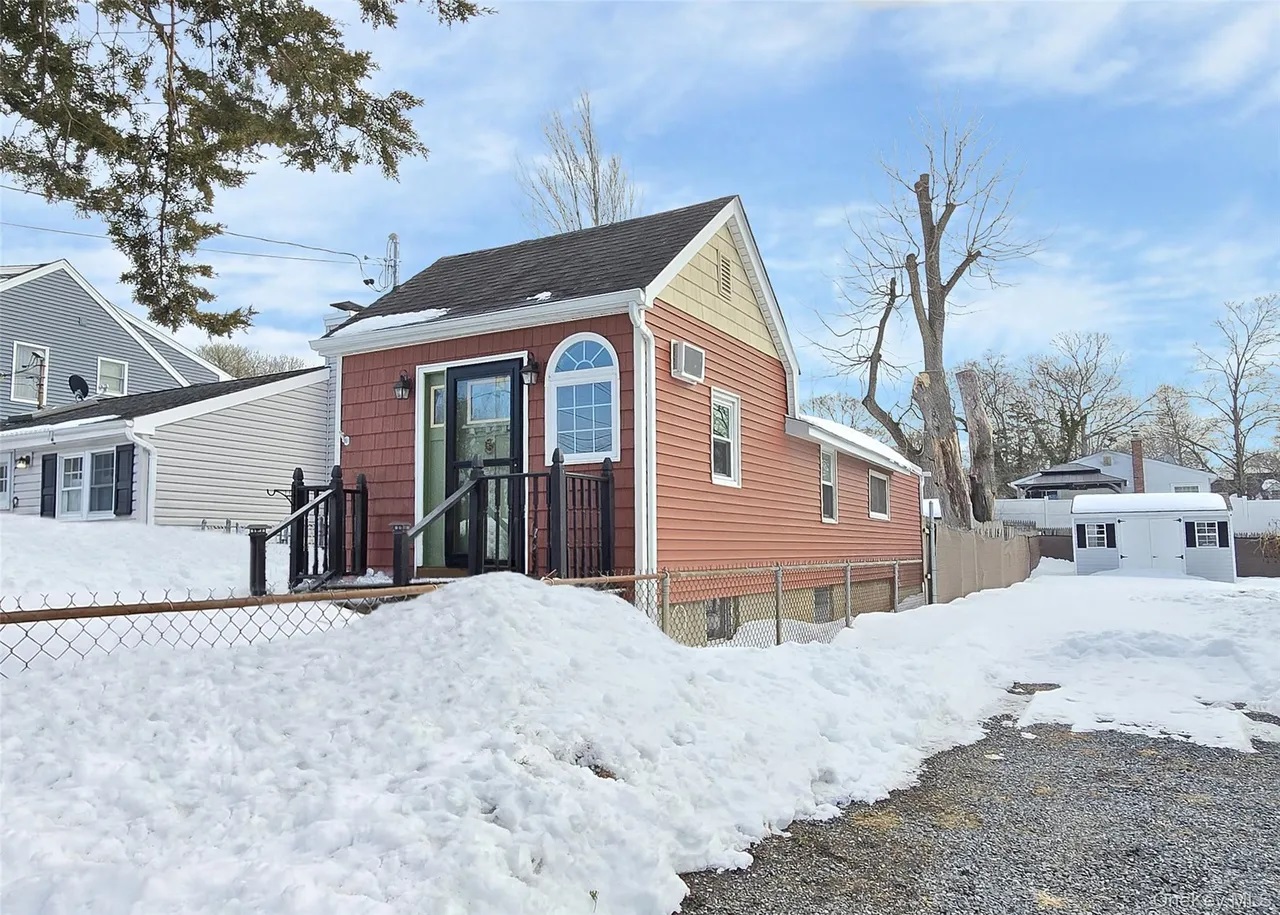
Tiny New York Home With No Bedrooms Hits the Market for a Bargain Price
Excerpts: Studio, 1 bath, 446 sq.ft., 5,227 sq.ft. Lot, Built in 1930
Located in Selden, NY, about 60 miles outside of Manhattan, the property offers just 446 square feet of living space, including a bathroom, kitchen, dining area, and living room. It’s listed for the relatively bargain price of $329,900—more than $200,000 below Selden’s median listing price of $587,000.
Described in the listing as a “studio-style cottage,” the property’s floor plan highlights several different spaces found within the petite property, including a basement area with storage and utility rooms.
However, both the floor plan and the listing description fail to highlight any bedroom spaces inside the dwelling, an element that has cause the dwelling to shoot to viral fame on Reddit—and quickly rise to the top of the week’s most popular homes list on Realtor.com®.
According to the listing, the home’s main level features a living room, dining area, kitchen, and full bathroom. The finished basement does have two “open areas” and an additional room “that can be converted back into a half bath with laundry.”
The lower level of the condo alternative could be used as a bedroom, but probably cannot be classified as one due to code issues.
The only catch? It is missing one feature that most homeowners would consider to be something of a necessity: a bedroom.
To read the listing with 16 photos, aerial view and floor plans, Click Here
My comments: In my 52 years of appraising I have appraised homes with no bedrooms. I always looked if there was any way to add a bedroom by changing a room or making an addition. The addition of a bedroom would increase the value. Studio homes are tricky to appraise due to a lack of comps usually. Sometimes I was able to find a home with no bedrooms.
They are sometimes “cottages” near a beach, for example. I have some of these homes in my city but they all somehow fit in a bedroom (Access was a bit awkward sometimes). In some less populated areas there are small cabins. Some lack bedrooms.
—————————————————-
Concessions Are Not the Price: How to Measure What the Market Is Actually Doing
By Larry Fuller
Excerpts: Seller-paid concessions are often treated as simple contract adjustments. They can signal affordability pressure, seller motivation, and shifting market dynamics. The key is not assumption. The key is measurement.
There are times in residential valuation when the guidance feels very clear.
The definition of market value is clear.
GSE guidance on concessions is clear.
USPAP is clear.
And yet some of the simplest concepts create some of the most challenging assignments.
In my twenty-plus years as a residential appraiser, seller-paid concessions have been one of those concepts.
Topics:
Concessions as Affordability Tools
Concessions in this context reduce transaction friction by bridging the gap between market pricing and buyer capacity without formally resetting price structure.
Where Appraisers Can Misstep
Appraisers often respond to concessions in one of two ways:
They ignore them if they appear common.
Or they deduct them mechanically without examining how they functioned in the transaction.
Both approaches can miss context.
A Market Example
Consider a production builder subdivision in a North Texas market over a twelve-month period…
To read more, Click Here
My comments: This is the best, practical article I have ever read about concessions. I will do a better analysis next time I have concessions.
——————————————————–
Are you getting too many ad-only emails?
4 ways to get only the FREE email newsletters and NOT the ad-only emails.
1. Twitter: https://twitter.com/appraisaltoday Posted by noon Friday
2. Read on blog www.appraisaltoday.com/blog Posted by noon Friday. You can subscribe to the blog in the upper right of each blog page. NOTE: the popular ads with liability tips are below the first topic on my blog posts.
3. Email Archives: https://appraisaltoday.com/archives
(posted by noon Friday) The link is above and to the left of the big yellow email signup form. Newsletters start with “Newz.” Contains all recent emails sent.
4. Link to the 10 most recent newsletters (no ads) at www.appraisaltoday.com. Scroll down past the big yellow signup block. The newsletters have abbreviated titles, taken from their blog posts.
To read more about the 4 ways, plus information on why I take ads, etc.
———————————————-
How to reduce stress to be more productive in business and a happier life for appraisers
In the April 2026 issue of Appraisal Today
Excerpts: Editor’s notes: This article discusses the many sources of short term stress in an appraisal business and how to handle them.
In this article, I provide ways to reduce stress. A few examples: throwing a
smurf ball at a picture of an AMC logo (or a picture of what you imagine the reviewer or underwriter looks like), walking outside for 10-15 minutes, or doing tai chi or yoga. Pick those that appeal to you. They all work.
What is stress?
Stress is the body’s natural, automatic reaction to challenges, changes, or
threats, triggering a “fight-or-flight” response that releases hormones like
adrenaline and cortisol.
While short-term stress can increase alertness and energy to meet
deadlines or avoid danger, long-term (chronic) stress can lead to serious
physical and mental health issues.
For appraisers stress is usually short term such as from an AMC request wasting your time. Also stressful is traffic causing you to be late for an appraisal inspection or computer problems.
To read the full article, plus 3+ years of previous issues, subscribe to the paid Appraisal Today at www.appraisaltoday.com/order .
Not sure if you want to subscribe?
Sign up for monthly auto renewal for $8.25!
Cancel at any time for any reason! You will receive a prorated refund.
$8.25 per month, $24.75 per quarter, and $89 per year (Best Buy)
or $99 per year or $169 for two years
Subscribers get FREE: past 18+ months of past newsletters
What’s the difference between the Appraisal Today free Weekly email newsletter and the paid Monthly newsletter? Click here for more info.
—————————————————————————————-
If you are a paid subscriber and did not receive the April, 2026 issue emailed on Monday, April 1, 2026 please email info@appraisaltoday.com, and we will send it to you. You can also hit the reply button. Be sure to include a comment requesting it. Or, call 510-865-8041
——————————————————–
My First 50 Years
Steve Papin reflects on 50 years as a residential appraiser
A few excerpts:
Memories from the Early Years
The valuation process itself was straightforward. Quarterly comp books had just been introduced when I began my career, delivering fresh sales data every 90 days. We would flip through the pages, locate sales similar in appearance in the same area as our subject property, select a number, and send the report to the client.
I recall a moment of upheaval in our office when the first client requested that we list three comparable sales in the comments section of the report. The response, repeated many times throughout my career, was: “Why? Trust us—we know what we’re doing.”
And for those who remember the early days of the profession, our first use of a widely accepted appraisal form was the “Green Hornet,” a distinctive document on green paper created by George Opelka’s father around 1962. It remains a memorable artifact from a formative era in residential appraisal.
Clarifying Living Area: Primary vs. Secondary
I’ve found two terms that consistently make sense to agents, underwriters, and other appraisers: Primary Living Area and Secondary Living Area. They’d be great additions to ANSI.
Primary Living Area refers to the portion of a home’s living space that carries the highest contributory value. In many markets, this typically includes the fully above-grade areas on the first and second floors. Ultimately, what qualifies as “primary” is determined by buyer preferences within each specific market.
To read more, Click Here
My comments: Worth reading. I got some good new ideas and reviews of older concepts.
———————————————————-
AI Usage in Appraisals: Trust but Verify
By Jo Traut
Excerpts: Artificial intelligence (AI) has arrived, and it’s brought some genuinely impressive capabilities across various sectors, including real estate appraisal. From analyzing comparable sales, assessing property condition and quality from photographs, and generating market trend analyses, AI tools are transforming workflow efficiency in ways that would have seemed like science fiction just a few years ago. Today, some appraisers are already leveraging AI to enhance their practice, which is not only acceptable but rapidly becoming essential for maintaining productivity.
The truth is, AI serves as a tool rather than a professional peer. It lacks certification, is not required to adhere to USPAP, and it won’t be available to clarify your approach to a review appraiser or stand before a state board to justify your work.
The question isn’t whether to embrace AI technology. The question is how to deploy it responsibly by adhering to USPAP and regulations while safeguarding your professional accountability standards.
Topics:
Understanding AI’s Limitations
AI is like a top student with an eidetic memory but lacking practical judgment. AI can absorb massive amounts of data, compile property statistics, and generate polished text at an impressive speed. However, when faced with a real appraisal challenge that needs market insight, context-based reasoning, or the ability to discern why one comparison stands out over another, it may struggle.
The Prompting Paradox
The Credibility Trap
USPAP Compliance
Practical Steps for Verifying Output
The Reality Check
Ask yourself if you could defend this report with a review appraiser or in front of a state board. Could you explain where the data came from and articulate the reasoning behind the conclusions? If your answer is “the AI tool told me so,” you haven’t verified enough.
To read more, Click Here
My Comments: This is not a “how to” article on how to use AI when appraising. Instead it focuses on what you need to know about the output to be sure it is okay.
I recently reviewed an appraisal article that had references at the end. They were all incorrect: irrelevant or not usable. When I called the author, he said he used ChatGPT. He did not check the references.
I attended an excellent ChatGPT webinar on how to use prompts in appraising, which is what you do first. I have not used it myself yet.
Some of the women I play pickleball with are avid genealogy researchers. They use Claude, of course. ChatGPT is not as useful to them. They use it for writing, exhibits, analysis, research, etc.
———————————————————–
HOW TO USE THE NUMBERS BELOW. Appraisals are ordered after the loan application. These numbers tell you the future for the next few weeks. For more information on how they are compiled, Click Here.
Note: I publish a graph of this data every month in my paid monthly newsletter, Appraisal Today. For more information or get a FREE sample go to www.appraisaltoday.com/order Or call 510-865-8041, MTW, 7 AM to noon, Pacific time.
My comments: Rates are going up and down. We are all waiting for rates to drop lower in 2027.
Mortgage applications decreased 10.4 percent from one week earlier
WASHINGTON, D.C. (April 1, 2026) — Mortgage applications decreased 10.4 percent from one week earlier, according to data from the Mortgage Bankers Association’s (MBA) Weekly Mortgage Applications Survey for the week ending March 27, 2026.
The Market Composite Index, a measure of mortgage loan application volume, decreased 10.4 percent on a seasonally adjusted basis from one week earlier. On an unadjusted basis, the Index decreased 10 percent compared with the previous week. The Refinance Index decreased 17 percent from the previous week and was 33 percent higher than the same week one year ago. The seasonally adjusted Purchase Index decreased 3 percent from one week earlier. The unadjusted Purchase Index decreased 2 percent compared with the previous week and was 1 percent higher than the same week one year ago.
“The 30-year mortgage rate, now at 6.57 percent, reached its highest level since last August and is up half a percentage point from just one month ago. Refinance application volumes declined sharply again last week, dropping 17 percent, and are down more than 40 percent compared to last month,” said Mike Fratantoni, MBA’s SVP and Chief Economist. “Seasonally adjusted purchase application volume also declined over the week, but only by 3 percent. The headwinds of higher rates are being offset somewhat by the buyer’s market in many parts of the country – there are more homes for sale than buyers have seen in some time. Moreover, purchase applications for FHA and VA loans continue to hold up better than those for conventional buyers. However, the shocks of the jump in rates and the increase in overall economic uncertainty are likely having an impact on buyer confidence.”
The refinance share of mortgage activity decreased to 45.3 percent of total applications from 49.6 percent the previous week. The adjustable-rate mortgage (ARM) share of activity decreased to 8.0 percent of total applications.
The FHA share of total applications decreased to 19.5 percent from 19.7 percent the week prior. The VA share of total applications increased to 16.1 percent from 15.9 percent the week prior. The USDA share of total applications remained unchanged at 0.5 percent from the week prior.
The average contract interest rate for 30-year fixed-rate mortgages with conforming loan balances ($832,750 or less) increased to 6.57 percent from 6.43 percent, with points remaining unchanged at 0.65 (including the origination fee) for 80 percent loan-to-value ratio (LTV) loans. The effective rate increased from last week.
The average contract interest rate for 30-year fixed-rate mortgages with jumbo loan balances (greater than $832,750) increased to 6.59 percent from 6.45 percent, with points decreasing to 0.43 from 0.56 (including the origination fee) for 80 percent LTV loans. The effective rate increased from last week.
The average contract interest rate for 30-year fixed-rate mortgages backed by the FHA increased to 6.25 percent from 6.15 percent, with points increasing to 0.81 from 0.75 (including the origination fee) for 80 percent LTV loans. The effective rate increased from last week.
The average contract interest rate for 15-year fixed-rate mortgages increased to 5.89 percent from 5.83 percent, with points decreasing to 0.75 from 0.80 (including the origination fee) for 80 percent LTV loans. The effective rate increased from last week.
The average contract interest rate for 5/1 ARMs decreased to 5.67 percent from 5.75 percent, with points decreasing to 0.56 from 0.68 (including the origination fee) for 80 percent LTV loans. The effective rate decreased from last week.
The survey covers U.S. closed-end residential mortgage applications originated through retail and consumer direct channels. The survey has been conducted weekly since 1990. Respondents include mortgage bankers, commercial banks, thrifts, and credit unions. Base period and value for all indexes is March 16, 1990=100.
———————————————————————
 Ann O’Rourke, MAI, SRA, MBA
Appraiser and Publisher Appraisal Today
1826 Clement Ave. Suite 203 Alameda, CA 94501
Phone: 510-865-8041
Email: ann@appraisaltoday.com
Online: www.appraisaltoday.com
We want to know what you think!! Please leave a comment.