
Newz: GSEs New Info on Completing UAD 3.6,
2026 Appraiser Survey: State of the Profession
July 3, 2026
What’s in This Newsletter (In Order, Scroll Down)
- LIA AD: Buyer Wants Lower Price to Negotiate
- 2026 Appraiser Survey: State of the Profession By Isaac Peck, Publisher, WorkingRe
- Abandoned 1822 Federal-Style Estate That Was Relocated and Then Carefully Rebuilt Hits the Market for $1.6 Million
- Can (Should) AI Replace Your Office Staff? By Dustin Harris
- MY AD: UAD 3.6 and the “ Tablet “ Question
- Fannie/Freddie Job Aids for Completing URARs Using UAD 3.6
- FHA Updates for QC requirements for Appraisal Field Reviews
- Mortgage applications increased 0.04 percent from one week earlier
————————————————————

2026 Appraiser Survey: State of the Profession
By Isaac Peck, Publisher, WorkingRe
Excerpts: Nearly one-third of all practicing appraisers plan to leave the profession within three years. Add the next cohort and roughly half intend to exit within the next five years.
Those are the headline numbers from Working RE‘s 2026 State of the Profession Survey, completed by approximately 1,800 appraisers nationwide in early 2026.
Before the retirement cliff narrative takes hold, consider this: Working RE ran a nearly identical question in its 2016 Future of Appraising Survey. At that time, 33 percent of respondents planned to retire within five years, and more than half within 10 years. Today, a decade later, most of them are still appraising.
The pattern goes back further still. In a 2009 Working RE survey (18 years ago), conducted at the bottom of the financial crisis with over 6,200 respondents, over 53 percent of appraisers said they did not expect to be appraising full-time five years from then. While the profession did see some attrition over the next five years due to the incredibly slow market that followed the 2008 real estate crash, the fallout was nowhere close to 50 percent of the profession, or even 25 percent.
Appraisers consistently overpredict their own demise.
Different This Time?
Working RE spoke with Jim Park, President of the Collateral Risk Network (CRN) and the former Executive Director of the Appraisal Subcommittee, to get his read on the survey findings. Park says the 2026 numbers reflect a genuine inflection point, not a repeat of the false alarms that preceded them.
“This time it’s different,” Park says. “We’ve reached a point where a number of things are happening at the same time. The average age of an appraiser has to be in the range of 60 to 65. That’s retirement age. On top of that, depending on who you talk to, 10 to 25 percent of appraisers could cease doing mortgage work because of UAD 3.6 alone. How many will ultimately adapt to the new form? How many will come back after sitting it out? We’ll see. But I’m more concerned about the lack of new people getting into the business than I am about the people who might leave.”
UAD 3.6: The Readiness Gap
The November 2, 2026 mandatory compliance deadline for UAD 3.6 is roughly four months away. While Working RE‘s survey ended March 15 (three months prior to this publication), even if we account for a rapid ramp up, the data suggests that the profession is not ready.
The Takeaway
Taken together, the 2026 survey describes a profession that is older and more experienced than it has ever been. Appraisers remain skeptical of hybrid products, are divided on credentialing, and approaching one of the most significant form changes in decades largely untrained. The retirement numbers are alarming on their face but unconvincing as a cliff narrative. Working RE‘s own historical data makes that case directly.
What the 2026 data cannot tell us is whether UAD 3.6 will finally push appraisers into retirement in a way that past challenges failed to do.
To read more, Click Here
My comments: Very interesting. Worth reading. Many topics with graphs and other data. The only recent appraiser survey I have seen.
—————————————————————-
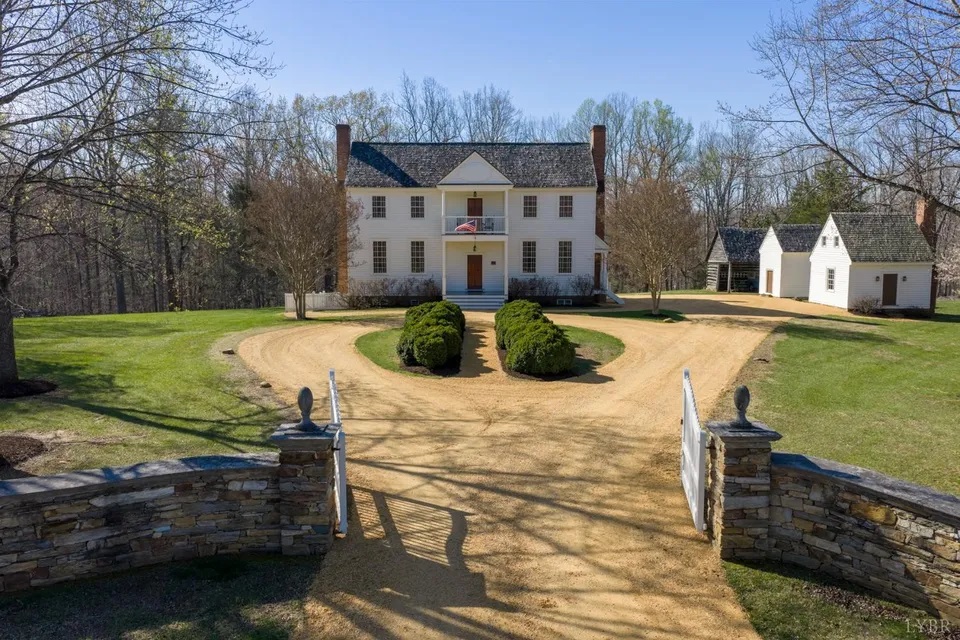
Abandoned 1822 Federal-Style Estate That Was Relocated and Then Carefully Rebuilt Hits the Market for $1.6 Million
Excerpts: 4 bedrooms, 3 baths, 4,368 sq.ft. 8.92 acres, rebuilt and moved in 2000
An awe-inspiring piece of real estate history has been brought to the market in Virginia—six years after the 200-year-old structure was painstakingly dismantled, relocated, then meticulously rebuilt on its new parcel.
The Federal-style estate, which was built in 1822 on a 1,000-acre tobacco plantation, has since been rehomed on an 8.92-acre plot in Lynchburg, VA, where it was lovingly restored by Dr. Stephanie Sullivan and her husband, Dr. Robert Sullivan.
Now on the market for $1.6 million, the property’s jaw-dropping journey is being revealed in inspiring detail, with the Sullivans laying bare the incredible effort they dedicated to salvaging the once-dilapidated dwelling, which is known as Ridgecrest.
The Sullivans worked hard to salvage every historic element that they could—replicating anything that could not be saved.
“We saved all of the post and beam, and all interior millwork, fireplaces, and base trim. If it was not salvaged, it was replicated,” she adds.
They commissioned antique expert Frank Joseph, who specialized in relocating historical structures, to assist them with the move and the restoration.
“He specializes in restorative projects,” Stephanie explains. “[He takes] structures that are threatened, dismantles them, and saves them. He took it down piece by piece, loaded it up, and brought it to Lynchburg. It took about a year and a half to two years for the whole project to be re-erected here.”
During the restoration process, the Sullivans carefully analyzed everything from paint and wallpaper to floor coverings, so they could determine what the original details of the home were.
To read more, Click Here
To read the listing with 88 photos, Click Here
————————————————————–
Can (Should) AI Replace Your Office Staff?
By Dustin Harris
Excerpts: t is one of the most loaded questions in real estate appraisal right now, and I have spent the last 90 days trying to answer it. Not theoretically. Not by reading white papers or watching YouTube videos. I mean actually building the system, running it inside a real appraisal practice, and documenting every win and every failure along the way.
The short answer? Not yet. But the longer answer is far more interesting and far more useful to you.
The Question Behind the Question
When most appraisers ask whether AI can replace their staff, what they are really asking is something more personal: Am I (or is my staff) going to be left behind if I don’t figure this out? That anxiety is legitimate. AI is not a trend. It is not a fad. It is a fundamental shift in how knowledge work gets done, and appraisal is squarely in its path.
But here is what I have learned from spending three months deep inside this technology: the question is not whether AI can replace your staff. The better question is whether it should, and what it actually looks like when you try.
What Happens When You Actually Try
The experiment I ran, which we called Project Prometheus, was built around a real appraiser running a real practice. The goal was straightforward: one appraiser, no additional staff, AI handling the back office, and a pace of over $100,000 per year in revenue, all in under 40 hours a week…
Elevating Your Team Instead of Replacing It
The most important shift I made during this experiment was not a technical one. It was a philosophical one.
I stopped thinking about AI as a replacement for human staff and started thinking about it as an upgrade to what your human staff can do. The appraiser in our experiment never benched her assistant. Instead, her assistant moved away from purely doing data entry toward overseeing an AI that does data entry. That is not a small distinction. That is the difference between a clerk and a director.
To read more, Click Here
My comments: Very good, practical real-world analysis of using AI in your appraisal business. The best I have ever read!!
———————————————————————–
Are you getting too many ad-only emails?
4 ways to get only the FREE email newsletters and NOT the ad-only emails.
1. Twitter: https://twitter.com/appraisaltoday Posted by noon Friday
2. Read on blog www.appraisaltoday.com/blog Posted by noon Friday. You can subscribe to the blog in the upper right of each blog page. NOTE: the popular ads with liability tips are below the first topic on my blog posts.
3. Email Archives: https://appraisaltoday.com/archives
(posted by noon Friday) The link is above and to the left of the big yellow email signup form. Newsletters start with “Newz.” Contains all recent emails sent.
4. Link to the 10 most recent newsletters (no ads) at www.appraisaltoday.com. Scroll down past the big yellow signup block. The newsletters have abbreviated titles, taken from their blog posts.
To read more about the 4 ways, plus information on why I take ads, etc.
———————————————————-
UAD 3.6 and the “ Tablet “ Question
By Doug Smith, SRA
In the July 2026 issue of Appraisal Today
Excerpts:
There’s a growing chorus of frustration:
“If I have to use a tablet in the field, I’ll quit.”
Or, “I’ll only work for clients who don’t require UAD 3.6.”
The concern is understandable. But before reacting too quickly, it
helps to step back and actually study the process.But appraisers have adapted before:
• Electronic delivery
• Digital signatures
• MLS evolution
• Regression tools
• Mobile photography
• Prior UAD revision
The second major advantage is the combining of checklists with
photographs.
Instead of relying on memory, the appraiser can work through the
property systematically:
• Checklist item
• Observation
• Photo
• Comment
• Move to the next section
That structure reduces omissions, improves consistency, and
creates stronger workfile support.
The first step is simple: put UAD 3.6 up on your screen and go
through it page-by-page. Most appraisers will quickly discover it is
more logical and organized than current rumor and discussion
suggest.
Editor’s comment: I prefer using a tablet for measuring interior ceiling heights, easily importing information, photos with locations, and much more into the appraisal report. I tried filling out the report manually. It was okay but It takes way too long to match photos to locations, etc.
For those who don’t want to use a tablet, this article includes 3 Printed checklists: SFR, Condo, and 1-4 Units. So you don’t miss anything.
To read the full article, and 3+ years of previous issues with many more UAD 3.6 articles, subscribe to the paid Appraisal Today at www.appraisaltoday.com/order .
Not sure if you want to subscribe?
Sign up for monthly auto renewal for $8.25!
Cancel at any time for any reason! You will receive a prorated refund.
$8.25 per month, $24.75 per quarter, and $89 per year (Best Buy)
or $99 per year or $169 for two years
Subscribers get FREE: past 18+ months of past newsletters
What’s the difference between the Appraisal Today free Weekly email newsletter and the paid Monthly newsletter? Click here for more info. Subscribe to Monthly Newsletter
—————————————————
If you are a paid subscriber and did not receive the
July, 2026 issue emailed on
Wednesday, July 1, 2026 please email info@appraisaltoday.com, and we will send lt to you. You can also hit the reply button. Be sure to include a comment requesting it. Or, call 510-865-8041
——————————————————————-
Fannie/Freddie Job Aids for Completing URARs Using UAD 3.6
The Uniform Appraisal Dataset (UAD) 3.6 and Forms Redesign team created three new job aids to help appraisers complete the Uniform Residential Appraisal Report (URAR) using UAD 3.6, assisting with
navigation and enhancing appraisal report quality:
Guidance for Appraisers through Lessons Learned: Provides practical examples to help appraisers complete the new URAR, ensuring consistency and accuracy.
Photo and Image Requirements: Clarifies photo requirements for UAD 3.6 reports, detailing required, conditionally required, and optional photos. It aims to reduce uncertainty and improve data quality by
specifying when and where photos are necessary.
https://sf.freddiemac.com/docs/pdf/uad-photo-and-image-job-aid.pdf
UAD American National Standards Institute (ANSI) Reporting Requirements: Provides examples to illustrate how to comply with ANSI requirements when documenting the area breakdown of a residential property.
To read the full 18 page PDF document, Click Here
My comments: Definitely worth reading! Finally the GSEs have useful information on completing UAD 3.6 appraisal reports. Hopefully they will offer more information.
I am looking for who offers UAD 3.6 CE classes. I have McKissock info and I hear Total is very good for help with completing UAD 3.6 appraisal reports. If you know anyone else, let me know. Hit the reply button.
———————————————-
FHA Updates for QC requirements for Appraisal Field Reviews
Date: June 23, 2026
Mortgagee Letter 2026-10
Subject: Updates to FHA Quality Control Requirements for Appraisal Field Reviews
Purpose This Mortgagee Letter (ML) updates FHA quality control (QC) requirements to allow greater flexibility and alternatives to appraisal field reviews.
Effective Date The provisions of this ML are effective immediately.
All updates will be incorporated into a forthcoming update of the HUD Handbook 4000.1, FHA Single Family Housing Policy Handbook (Handbook 4000.1).
Affected Programs
The provisions of this ML apply to all FHA-insured mortgage programs.
Background FHA has identified an opportunity to allow greater flexibility in its QC policy for Property and Appraisals by removing the requirement for Mortgagees to obtain appraisal field reviews on at least 10 percent of
origination and underwriting QC reviews.
The update makes field reviews an optional component of appraisal QC, maintaining FHA’s core appraisal compliance framework while giving Mortgagees the ability to tailor review methods based on case-specific risk.
https://www.hud.gov/sites/default/files/hudclips/documents/2026-10hsgml.pdf
My comments: If you do FHA appraisals, read this notice. Lots more details for appraisers. I quit doing FHA appraisals around 1990, so I don’t have more comments. Wanted too many inspections as compared with conventional loan appraisals.
————————————————————-
HOW TO USE THE NUMBERS BELOW. Appraisals are ordered after the loan application. These numbers tell you the future for the next few weeks. For more information on how they are compiled, Click Here.
Note: I publish a graph of this data every month in my paid monthly newsletter, Appraisal Today. For more information or get a FREE sample go to www.appraisaltoday.com/order Or call 510-865-8041, MTW, 7 AM to noon, Pacific time.
My comments: Rates are going up and down. We are all waiting for rates to drop lower in 2027.
Mortgage applications increased 0.04 percent from one week earlier,
WASHINGTON, D.C. (July 1, 2026) — Mortgage applications increased 0.04 percent from one week earlier, according to data from the Mortgage Bankers Association’s (MBA) Weekly Mortgage Applications Survey for the week ending June 26, 2026. Last week’s results included an adjustment for the Juneteenth holiday.
The Market Composite Index, a measure of mortgage loan application volume, increased 0.04 percent on a seasonally adjusted basis from one week earlier. On an unadjusted basis, the Index increased 11 percent compared with the previous week. The Refinance Index decreased 1 percent from the previous week and was 9 percent higher than the same week one year ago. The seasonally adjusted Purchase Index increased 1 percent from one week earlier. The unadjusted Purchase Index increased 11 percent compared with the previous week and was 3 percent higher than the same week one year ago.
“Mortgage rates eased slightly last week as oil prices declined. As a result, mortgage applications increased modestly, with an uptick in purchase activity offsetting a smaller decline in refinances,” said Joel Kan, MBA’s Vice President and Deputy Chief Economist. “Purchase applications remain ahead of 2025’s pace and have exhibited year-over-year growth for almost three months, as prospective homebuyers are finding opportunities in markets with ample inventory and easing home-price growth. ARM loans accounted for less than 8 percent of applications, the lowest share since January, as the yield curve continues to flatten with relatively higher short-term rates.”
The refinance share of mortgage activity decreased to 41.4 percent of total applications from 41.5 percent the previous week. The adjustable-rate mortgage (ARM) share of activity decreased to 7.6 percent of total applications.
The FHA share of total applications decreased to 16.9 percent from 17.9 percent the week prior. The VA share of total applications increased to 12.9 percent from 12.3 percent the week prior. The USDA share of total applications decreased to 0.4 percent from 0.5 percent the week prior.
The average contract interest rate for 30-year fixed-rate mortgages with conforming loan balances ($832,750 or less) decreased to 6.57 percent from 6.59 percent, with points increasing to 0.65 from 0.63 (including the origination fee) for 80 percent loan-to-value ratio (LTV) loans. The effective rate decreased from last week.
The average contract interest rate for 30-year fixed-rate mortgages with jumbo loan balances (greater than $832,750) remained unchanged at 6.52 percent, with points decreasing to 0.38 from 0.58 (including the origination fee) for 80 percent LTV loans. The effective rate decreased from last week.
The average contract interest rate for 30-year fixed-rate mortgages backed by the FHA increased to 6.27 percent from 6.25 percent, with points increasing to 0.77 from 0.76 (including the origination fee) for 80 percent LTV loans. The effective rate increased from last week.
The average contract interest rate for 15-year fixed-rate mortgages decreased to 6.00 percent from 6.02 percent, with points increasing to 0.75 from 0.69 (including the origination fee) for 80 percent LTV loans. The effective rate remained unchanged from last week.
The average contract interest rate for 5/1 ARMs increased to 5.79 percent from 5.68 percent, with points increasing to 0.94 from 0.81 (including the origination fee) for 80 percent LTV loans. The effective rate increased from last week.
The survey covers U.S. closed-end residential mortgage applications originated through retail and consumer direct channels. The survey has been conducted weekly since 1990. Respondents include mortgage bankers, commercial banks, thrifts, and credit unions. Base period and value for all indexes is March 16, 1990=100.
———————————————————
Ann O’Rourke, MAI, SRA, MBA
Appraiser and Publisher Appraisal Today
1826 Clement Ave. Suite 203 Alameda, CA 94501
Phone: 510-865-8041
Email: ann@appraisaltoday.com
Online: www.appraisaltoday.com
We want to know what you think!! Please leave a comment.