
Newz: Appraisal Stress Test, AQB Exposure Draft Removes College Degree Requirement
June 26, 2026
What’s in This Newsletter (In Order, Scroll Down)
- LIA AD: State Board Complaint Frustrations
- The Appraisal Profession Is Being Stress-Tested. That’s Not the Same as Being Replaced By Jessica Sturm
- All About the Brownstone: How the Iconic Design Went From Humble Row House Roots to Million-Dollar Metropolis Luxury
- MY AD: UAD 3.6 Software Evaluation Checklist By Doug Smith
- Include E&O in Appraisal Reports? Just Say No By Isaac Peck
- AQB second exposure draft removes college degree requirement
- MBA STATS: Mortgage applications increased 1.0 percent from one week earlier
- ———————————————————

The Appraisal Profession Is Being Stress-Tested.
That’s Not the Same as Being Replaced
A frank conversation about UAD 3.6, waiver expansion, and where the real opportunity lies.
By Written by : Jessica Sturm, EVP of Property Services at Opteon.
Excerpts:
What UAD 3.6 Actually Changes (And What It Doesn’t)
UAD 3.6 changes the infrastructure around how appraisal judgment is captured, structured, and delivered. It does not change what a great appraiser does and the value they bring. Your ability to walk a property and know, as a trained professional, that the finished basement wasn’t permitted, that the kitchen renovation was done on the cheap or that the comparable three streets over sold under pressure. None of that local, industry expertise lives in a data schema.
What the new standard demands is that the mechanics around that judgment are handled cleanly and consistently. Field data capture, structured commentary, condition ratings, quality flags, all in a format that downstream systems can use. That’s not a threat to expertise. We see this as a long-overdue investment in the infrastructure that supports our industry.
What the Stress Test Is Really Asking
Every industry stress test asks the same question: who is built for what comes next?
UAD 3.6 is asking whether the profession can operate with greater rigor and efficiency. Waiver expansion is asking whether appraisers can own the complex, high stakes, advisory end of the market with real authority. The mature appraiser pipeline is asking whether the profession can retain experience and retrain while bringing in and developing new people. These are hard questions, but the profession has more tools, more data, and more support to answer them than at any point in its history.
Accounting faced the same reckoning. When tax software arrived and then matured, the prediction was that it would hollow out the profession. Routine compliance work did automate and what happened next was the opposite of collapse.
To read more, Click Here
My comments: Interesting analysis. I think the new reports are much better than the old forms for reviewers and borrowers. If I was doing GSE appraisals I would look forward to doing them.
————————————————
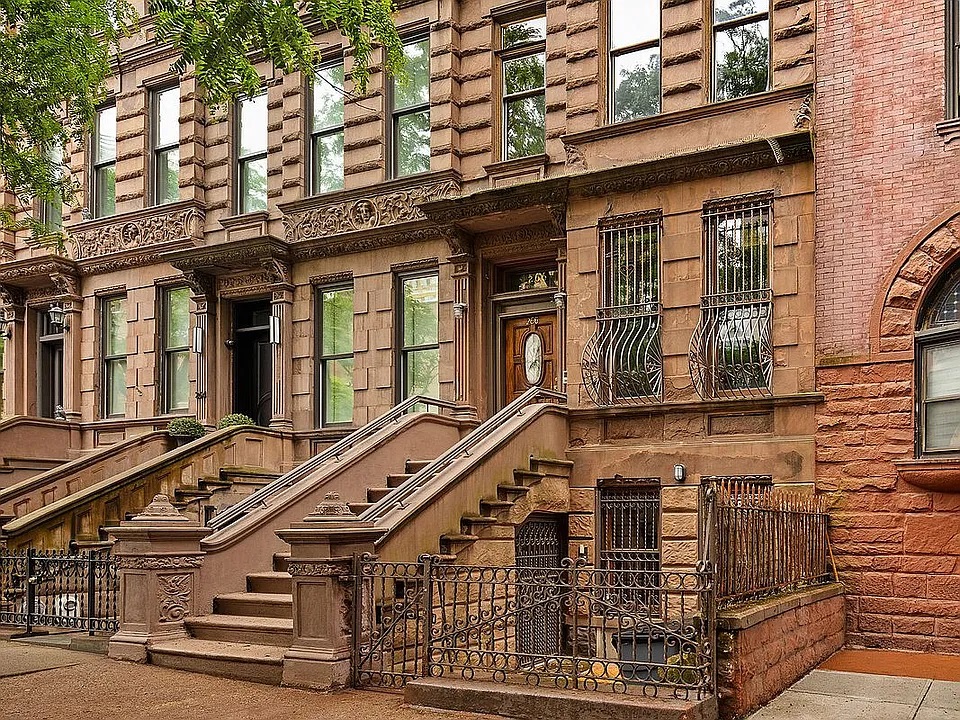
All About the Brownstone: How the Iconic Design Went From Humble Row House Roots to Million-Dollar Metropolis Luxury
Excerpts: here is perhaps no greater real estate redemption story than that of the classic American brownstone, a once-humble row house that now represents extreme wealth and architectural prestige in some of the country’s priciest cities.
Today, the brownstone home is arguably a cultural icon, at least in New York City, having been featured in a myriad of pop culture hits, from “Sex and the City” to “Home Alone 2,” with each appearance on screen only adding to its allure.
Yet, in the 19th century, when brownstones first started popping up in cities along the East Coast—including Boston, Philadelphia, and Washington, DC—the uniform sandstone structures were seen as anything but opulent, having been conceived as a cheap alternative to the grand marble estates that the wealthy resided in.
Even the properties’ stoops, which now feature as a backdrop to millions of tourist photos, were built, not out of a desire to create a certain aesthetic, but to enable residents to retreat from the manure that lined the streets at a time when horse-drawn carriages were the only mode of transportation.
It wasn’t until the 1960s and 1970s that brownstones began surging in popularity, having spent years being treated as a pariah of the property world. Many were left empty and boarded up, abandoned by families who upgraded to more luxurious dwellings.
In the six decades since, the homes have done a complete 180, emerging as one of the most sought-after styles of city dwelling, with demand further heightened by their scarcity. Because brownstones have not been built since the early 20th century, there are only a finite number, making them increasingly hard to come by.
Many designers have tried to mimic the traditional brownstone, using alternative materials to replicate their reddish brown façades.To read more, Click Here
My comments: I often see New York Brownstones in tv series and movies. I knew nothing about their history. Very interesting.
Include E&O in Appraisal Reports? Just Say No
By Isaac Peck, Publisher Working RE Magazine
Excerpts: Plenty of appraisal management companies still require appraisers to attach an E&O declarations page (dec page) to every report. The practice persists because it’s convenient for the AMC, not because it confirms an appraiser is actually covered when a claim hits.
Ultimately this is a business decision. Some clients will absolutely insist on the dec page, and an appraiser may not want to turn down the work. Even so, OREP recommends against the practice when possible, and the claims data is why.
The Case Against
The downside starts with liability. When borrowers or attorneys see proof of insurance, they’re more likely to file a claim—you’ve shown them there’s money to chase. The irony is that the policy attached to the report rarely covers them anyway. E&O is claims-made, which means the policy in force when a claim is filed is what applies, not the one bound to a report from three years ago.
The appraiser ends up with all of the exposure and none of the protection. Add to that the information leak. The dec page puts the appraiser’s policy number, limits, and carrier contact directly into the hands of the borrower, who was never an intended user of the report and has no business with that information.
What to do when an AMC or lender still requests the dec page be placed inside your appraisal report:
Offer the E&O once per year and ask the AMC to keep it on file. This usually satisfies compliance needs without embedding the document in every report.
Explain that most E&O carriers actively discourage attaching the declarations page because it increases claim activity, an outcome that benefits neither side.
Document the AMC’s request in writing so expectations are clear if a dispute arises later. If the AMC won’t adjust its policy, weigh whether the assignment volume justifies the added exposure. Only you can make that call. To read more, Click Here
My comments: Another common issue with AMCs. I am so glad I have never worked for any of them…
—————————————————————–
AD3.6 Software Evaluation Checklist, 3 Pages
by Doug Smith
EXCERPTS
5. Data Integration
• [ ] MLS import capability
• [ ] Public record integration
• [ ] Reduction of duplicate data entry
• [ ] Built-in compliance checks prior to submission6. Output and Client Flexibility
• [ ] UAD 3.6 ready and functional today• [ ] Adaptable for non-lender/private work
• [ ] Narrative flexibility
• [ ] Clean PDF generation and export options
7. Vendor Status and Support
• [ ] Clear UAD 3.6 development timeline
• [ ] Training materials available
• [ ] Responsive support
• [ ] Data ownership and portability clearly defined8. Pricing Structure
• [ ] Subscription-based pricing
• [ ] Module-based pricing• [ ] Per-report pricing
• [ ] Estimated annual total cost: ____________________________
9. Trial Evaluation Method
• [ ] Run the same real assignment through each platform
• [ ] Record total time from start to draft completion
• [ ] Count duplicate data entries required• [ ] Evaluate sketch and photo workflow efficiency
• [ ] Assess revision prompts and compliance alerts
• [ ] Evaluate final report clarity and layout
To read the full CHECKLIST plus 3+ years of previous issues, subscribe to the paid Appraisal Today at www.appraisaltoday.com/order .
Not sure if you want to subscribe?
Sign up for monthly auto renewal for $8.25!
Cancel at any time for any reason! You will receive a prorated refund.$8.25 per month, $24.75 per quarter, and $89 per year (Best Buy)or $99 per year or $169 for two years
Subscribers get FREE: past 18+ months of past newslettersWhat’s the difference between the Appraisal Today free Weekly email newsletter and the paid Monthly newsletter? Click here for more info.
———————————————————
Are you getting too many ad-only emails?4 ways to get only the FREE email newsletters and NOT the ad-only emails.
1. Twitter: https://twitter.com/appraisaltoday Posted by noon Friday
2. Read on blog www.appraisaltoday.com/blog Posted by noon Friday. You can subscribe to the blog in the upper right of each blog page. NOTE: the popular ads with liability tips are below the first topic on my blog posts.
3. Email Archives: https://appraisaltoday.com/archives(posted by noon Friday) The link is above and to the left of the big yellow email signup form. Newsletters start with “Newz.” Contains all recent emails sent.
4. Link to the 10 most recent newsletters (no ads) at www.appraisaltoday.com. Scroll down past the big yellow signup block. The newsletters have abbreviated titles, taken from their blog posts.To read more about the 4 ways, plus information on why I take ads, etc. Click here</

Pulling Comps on a Governor’s Mansion
By Ryan Lundquist
Excerpts: Last week I got to tour one of the most interesting listings in California right now, and I have a few thoughts about comps. If you didn’t know, when Ronald Reagan was governor of California, he began building a huge mansion in Carmichael, and this unicorn property is now listed for sale.
A BRIEF HISTORY OF THIS ESTATE
The State of California built a Governor’s mansion in the 1970s in Carmichael, which is about 10 miles from Downtown Sacramento. This mansion began construction under Ronald Reagan’s leadership, and he would have likely lived there, but it was not completed until Jerry Brown took office (Brown refused to live in this house, which he dubbed “The Taj Majal”).This home located at 2300 California Avenue has 8 bedrooms, 8 full bathrooms, and is just under 12,000 square feet of living area (11,984). If you want more information about where Reagan lived in Sacramento, check out a post I wrote years ago.
CURRENTLY LISTED FOR SALE AT $7.5M
This estate is now listed for sale by Hattie Coleman. It’s been on the market now for almost 200 days. Check it out here. Thanks for letting me tour the place last week. I’ve been meaning to get out there, and I’m so glad I did.
AN OUTLIER ABOVE OTHER OUTLIERS This mansion sold previously for $4,062,500 per MLS ($4.1M in Tax Records), and it was an outlier above other outliers in the entire county. It originally sold from the government in 1983, but I’m not sure what the price was then.
THE ZESTIMATE CHASES THE LIST PRICEI had to check, and sure enough, the Zestimate chased the list price when this home was listed for sale. The Zestimate was at $5.2M, but as soon as it listed, it jumped to $7.1M. Look, online estimates are interesting, but I put zero weight on any of them. Like I always say, Zillow can’t smell if 20 cats live there. I just like to point out how this works because I think some consumers place too much emphasis on the Zestimate while not seeing the games that happen behind the scenes. And you’re telling me it was only worth $2M in 2021 before jumping to $5M in 2024?
WHAT DO WE DO FOR COMPS?
In real estate text books, comps are easy. There are always three model match sales in a one-mile radius over the past ninety days. But in this case, this property is a total outlier. What would someone pay for something with a substantially-larger lot size and square footage – not to mention some cool California history? On that note, are there bragging rights to own a home like this?
QUESTIONS I WOULD ASK ABOUT COMPS
I don’t have a perfect answer for comps because this is a unicorn property, but here are a few ideas swirling through my mind. I suspect we would have to ask all of these questions if trying to value the home.
- What would it be worth without the history? And does the history add extra value?
- What is the land worth? (substantial lot size)
- What did it compare to during the prior sale in 2004? Granted, we have to take previous sales with a grain of salt because the sale may or may not represent the way the market sees the property today. Moreover, the property has been refreshed, so it’s not necessarily the same home as back then.
- What are buyers willing to pay in the region for stately homes? My graphs above show this estate sold above any other home in Sacramento County at the time. I mention this because sometimes we have to pull comps from much further away if warranted. Yet, we can’t forget this property is still tied to a location, so we have to be careful with this and make location adjustments if need.
- There is such a thing as too dissimilar though. I think of a real estate agent who told me the best comps were in Napa for his listing in Sacramento. Yeah, that doesn’t smell reasonable
- Where is the top of the price market? What is the most a buyer would pay for something like this before moving on to a different home?
- Are there other homes with historic or almost historic significance that might be a good frame of reference?
- What would this property cost to build today? Per Wikipedia, “In 1972, the legislature budgeted $150,000 for preliminary plans for the mansion and $1.3 million for the construction of the building.”
- Are there any other non-residential uses possible for this estate? In my conversation with the public over the past week, I had a few people mention some potential uses beyond being owner occupied. What does zoning allow? And what is the highest and best use?
- To read more, Click Here
- My comments: Worth reading the entire blog post with lots of photos and graphs, including the very interesting appraiser comments!
- ————————————————————-
-
AQB Second Exposure Draft Removes College Degree Requirement for Residential and General and Many More Changes
- Summary from Doug Smith:
- The Appraiser Qualifications Board (AQB) has released its latest Exposure Draft proposing significant changes to the Real Property Appraiser Qualification Criteria. The public comment period closes July 27, 2026.
- I got this information a few days before this newsletter went out and I did not have time to review the Draft. Many thanks to Doug for doing this summary.
- Among the proposed changes
- • Elimination of college degree requirements for Certified Residential and Certified General appraisers.
- • Elimination of college-level coursework requirements currently tied to certification pathways• Revisions to qualifying education requirements, including a greater emphasis on appraisal-specific education.
- • Removal of continuing education requirements for Trainee Appraisers during the trainee period
- • Elimination of minimum time requirements tied to experience accumulation, focusing instead on completion of required experience hours.
- • Proposed alternative pathways intended to provide additional flexibility for entering the profession.
- • Revisions to supervisor/trainee provisions and experience documentation requirements.
- • Changes affecting how practical experience may be obtained and demonstrated.
- One provision in the appendix that may generate discussion involves an alternative experience pathway in which certain appraisal assignments may be completed without traditional supervisory oversight after specific requirements have been satisfied. I am still reviewing the details of this section and welcome additional interpretation from those who have studied the draft.
- These proposals, if adopted, would represent some of the most significant changes to appraiser qualification criteria in many years. The Exposure Draft does not change current requirements. It is being released for public review and comment.
- I encourage appraisers, trainees, educators, supervisors, and state regulators to review the actual document and submit comments directly to the AQB.
- As always, it is best to review the original proposal rather than rely solely on summaries or social media discussions.
- So, I ask the AQB, what’s the good of dumbing down real estate appraising? Fundamentally, the AQB has not made a good case for making it easier to become an appraiser. That said, the mentor system is a holdover from the Middle Ages and the apprenticeship method of learning a trade.
- Overhauling that system is a worthy goal but not heeding the intellectual aptitude requirements of appraising is foolhardy.
- The Exposure Draft is now open for public comment until July 27th. The AQB will hold a webinar on the new Exposure Draft and take public comments on July 9th at 2pm ET. Click here to register.
- To read the emailed notice with good links for more information, Click Here
- To read the Exposure Draft (159 Pages), Click Here
- ———————————————————————————–
- HOW TO USE THE NUMBERS BELOW. Appraisals are ordered after the loan application. These numbers tell you the future for the next few weeks. For more information on how they are compiled, Click Here.
- My comments: Rates are going up and down. We are all waiting for rates to drop lower in 2027.
-
Mortgage applications increased 1.0 percent from one week earlier
- WASHINGTON, D.C. (June 24, 2026) — Mortgage applications increased 1.0 percent from one week earlier, according to data from the Mortgage Bankers Association’s (MBA) Weekly Mortgage Applications Survey for the week ending June 19, 2026. This week’s results include an adjustment for the Juneteenth holiday.
- The Market Composite Index, a measure of mortgage loan application volume, increased 1.0 percent on a seasonally adjusted basis from one week earlier. On an unadjusted basis, the Index decreased 10 percent compared with the previous week. The Refinance Index increased 3 percent from the previous week and was 17 percent higher than the same week one year ago. The seasonally adjusted Purchase Index decreased 1 percent from one week earlier. The unadjusted Purchase Index decreased 12 percent compared with the previous week and was 3 percent higher than the same week one year ago.
- “Mortgage rates changed little over the course of last week, despite the more hawkish tone from the FOMC at its June meeting,” said Mike Fratantoni, MBA’s SVP and Chief Economist.
- “Purchase application volume edged slightly lower, while refinance activity posted modest gains. Despite the elevated mortgage rates and overall economic uncertainty, mortgage application volume is running 8 percent above year-ago levels.”
- The refinance share of mortgage activity increased to 41.5 percent of total applications from 40.3 percent the previous week. The adjustable-rate mortgage (ARM) share of activity decreased to 8.2 percent of total applications.
- The FHA share of total applications increased to 17.9 percent from 17.5 percent the week prior. The VA share of total applications decreased to 12.3 percent from 12.9 percent the week prior. The USDA share of total applications increased to 0.5 percent from 0.4 percent the week prior.
- The average contract interest rate for 30-year fixed-rate mortgages with conforming loan balances ($832,750 or less) decreased to 6.59 percent from 6.60 percent, with points remaining unchanged at 0.63 (including the origination fee) for 80 percent loan-to-value ratio (LTV) loans. The effective rate remained unchanged from last week.
- The average contract interest rate for 30-year fixed-rate mortgages with jumbo loan balances (greater than $832,750) decreased to 6.52 percent from 6.62 percent, with points increasing to 0.58 from 0.57 (including the origination fee) for 80 percent LTV loans. The effective rate decreased from last week.
- The average contract interest rate for 30-year fixed-rate mortgages backed by the FHA remained unchanged at 6.25 percent, with points increasing to 0.76 from 0.73 (including the origination fee) for 80 percent LTV loans. The effective rate increased from last week.The average contract interest rate for 15-year fixed-rate mortgages remained unchanged at 6.02 percent, with points increasing to 0.69 from 0.65 (including the origination fee) for 80 percent LTV loans. The effective rate increased from last week.
- The average contract interest rate for 5/1 ARMs decreased to 5.68 percent from 5.86 percent, with points remaining unchanged at 0.81 (including the origination fee) for 80 percent LTV loans. The effective rate decreased from last week.The survey covers U.S. closed-end residential mortgage applications originated through retail and consumer direct channels.
- The survey has been conducted weekly since 1990. Respondents include mortgage bankers, commercial banks, thrifts, and credit unions. Base period and value for all indexes is March 16, 1990=100.
- —————————————————————————–

- Ann O’Rourke, MAI, SRA, MBA
- Appraiser and Publisher Appraisal Today
- 1826 Clement Ave. Suite 203 Alameda, CA 94501Phone: 510-865-8041
Email: ann@appraisaltoday.com - Online: www.appraisaltoday.com
We want to know what you think!! Please leave a comment.