
Newz: Former Appraiser Goes to Prison, Board Says AMC Violated Appraiser Independence
July 10, 2026
What’s in This Newsletter (In Order, Scroll Down)
- LIA AD: Who Said I Agreed To Be An Expert?
- Former Florida Resident Sentenced to 20 Years in Federal Prison for Appraisal Fraud
- Whimsical Storybook Cottage Built With Salvaged Wood From Old Boxcars Lists for Just $250K
- The Board Has Spoken, and AMCs Should Pay Attention
- MY AD: UAD 3.6 and the “Tablet” Question By Doug Smith, SRA
- UAD 3.6 and the Future of Residential Appraising By Tony Pistilli
- The Full Measure: Midyear 2026 Economic Update for Appraisers By Kevin Hecht
- MBA STATS: Mortgage applications decreased 2.2 percent from one week earlier

———————————————
Former Florida Resident Sentenced to 20 Years in Federal Prison for Appraisal Fraud
Excerpts from DOJ Press Release
Tampa, FL – Armando Martinez (51, Plano, TX) has been sentenced by Chief U.S. District Judge Amos Mazzant, III, of the United States District Court for the Eastern District of Texas to 20 years in federal prison for bank fraud. Martinez previously pleaded guilty. U.S. Attorney Gregory W. Kehoe made the announcement.
According to court documents filed with the United States District Court for the Middle District of Florida, Martinez, who had his Florida Appraiser’s license revoked, orchestrated and executed a bank fraud scheme directed at multiple financial institutions by taking over the identity and license number of a legitimate licensed appraiser.
Martinez then purportedly conducted onsite appraisals for dozens of properties in Florida. In reality, Martinez paid others to go to the properties and take pictures for appraisals he completed. He then sent the appraisals to the victim lenders, using his computer after having fled the United States to the Dominican Republic.
Based on the false and fraudulent appraisals, the financial institutions were fraudulently induced to approve and fund mortgage loans and pay Martinez appraisal fees. As a result of Martinez’s appraisal fraud, more than $65 million in mortgages are impaired or defective. These mortgages were either guaranteed by the Federal Housing Administration or purchased and guaranteed by Fannie Mae and Freddie Mac.
Dave Towne Comments: Another ethically twisted former appraiser is going to be experiencing “three hots and a cot” for the next 20 years, assuming the full sentence is served.
It never ceases to amaze me how some very bad people in our profession think they can keep the ‘wool pulled over the eyes’ of financial institutions, and the funders or guarantors of those mortgage loans.
In this case, the former appraiser had his licenses in Florida and Texas REVOKED in 2020. But then stole the identity of another unsuspecting appraiser, fled the US, hired ‘go-fers’ to get Florida subject and comp photos and data, then wrote, signed and submitted fraudulent appraisals after the revocation date.
The other sickening part of this, which is not mentioned, is that the ‘go-fers’ the convicted appraiser hired probably were akin to “gig workers” with limited education or understanding of what they were actually doing to assist the mortgage frauds activity.
To subscribe to Dave Towne’s emails, send an email to dtowne@fidalgo.net requesting to be added to his email list. I have subscribed for many years. He lives in Mt. Vernon, WA
To read the full Press Release, Click Here
——————————————————
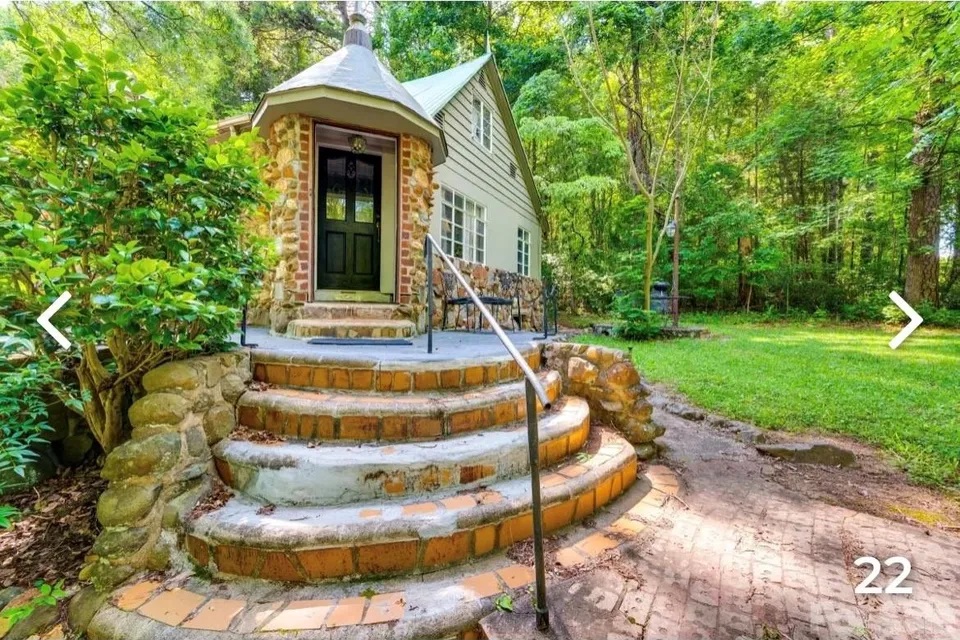
Whimsical Storybook Cottage Built With Salvaged Wood From Old Boxcars Lists for Just $250K
Excerpts: 2 bedrooms, 1 bath, 1 acre, Built in 1949
The 818-square-foot fairytale-inspired residence, which is located in Salisbury and features a charming stone facade and turret-style entrance, is being used as an investment property but could easily be transformed into a unique primary residence if a future owner should see fit.
Built in 1949, the two-bedroom dwelling, which has enchanted its way to the top of the week’s most popular homes list, offers a host of delightful features, including a cozy living room with a stone fireplace, bedrooms with vaulted ceilings, and several modern upgrades.
Currently being used as an AirBnb…. could be used as a single family residence or is currently being used as an Air BNB. The unique wood flooring was salvaged from old boxcars from the Spencer railyard! Ceilings upstairs are lower than 7 ft and are not included in the HLA, but are heated and cooled. The home sits on 1 acre, with 1 large outbuilding/workshop and a 1 car garage with extra storage.
To read the listing, Click Here
—————————————————————————

The Board Has Spoken, and AMCs Should Pay Attention
The Board handled this case with the same patience appraisers have when an AMC sends “preferred comps” from another planet.
Excerpts: Virginia’s Real Estate Appraiser Board delivered a message at its June meeting that was impossible to miss. An attorney appeared on behalf of Financial Asset Services and Brandon Sison, asking the Board to reconsider the discipline handed down in March. The request arrived without the AMC or Sison themselves, which already set an interesting tone. When you ask a regulatory board to undo a suspension, showing up in person is usually a good start.
The March decision was clear. The Board suspended both licenses for six months and placed them on probation for eighteen months.
The violations were not abstract or debatable. They involved documented pressure on an appraiser, including threats of reporting them to the state, threats of nonpayment, and attempts to steer the value by sending reweighted comparables.
Anyone who has ever dealt with an AMC that pushes too hard knows exactly what that looks like. Virginia’s statutes, regulations, and federal law all prohibit this behavior, and the Board acted accordingly.
The Board’s decision sends a message that does not require any reading between the lines. Virginia is treating appraiser independence as something worth defending with actual action, not polite reminders.
When an AMC crosses the line, the Commonwealth is not shrugging, not stalling, and certainly not offering a sympathetic pat on the back. They are responding with the kind of clarity that makes it very easy to understand what will and will not be tolerated.
To read more plus appraiser comments, Click Here
My comments: Finally a Board says AMC crosses a line. Of course, this AMC problem happens all the time.
—————————————————————–
Are you getting too many ad-only emails?
4 ways to get only the FREE email newsletters and NOT the ad-only emails.
1. Twitter: https://twitter.com/appraisaltoday Posted by noon Friday
2. Read on blog www.appraisaltoday.com/blog Posted by noon Friday. You can subscribe to the blog in the upper right of each blog page. NOTE: the popular ads with liability tips are below the first topic on my blog posts.
3. Email Archives: https://appraisaltoday.com/archives
(posted by noon Friday) The link is above and to the left of the big yellow email signup form. Newsletters start with “Newz.” Contains all recent emails sent.
4. Link to the 10 most recent newsletters (no ads) at www.appraisaltoday.com. Scroll down past the big yellow signup block. The newsletters have abbreviated titles, taken from their blog posts.
To read more about the 4 ways, plus information on why I take ads, etc.
———————————————-
UAD 3.6 and the “ Tablet “ Question
By Doug Smith, SRA
In the July 2026 issue of Appraisal Today
Excerpts: There’s a growing chorus of frustration:
“If I have to use a tablet in the field, I’ll quit.”
Or, “I’ll only work for clients who don’t require UAD 3.6.”
The second major advantage is the combining of checklists with
photographs.
Instead of relying on memory, the appraiser can work through the
property systematically:
• Checklist item
• Observation
• Photo
• Comment
• Move to the next section
That structure reduces omissions, improves consistency, and
creates stronger workfile support.
The first step is simple: put UAD 3.6 up on your screen and go
through it page-by-page. Most appraisers will quickly discover it is
more logical and organized than current rumor and discussion
suggest.
Once templates are developed and dropdown responses
customized, many portions of the process actually become easier than
before. Information is entered once, organized systematically, and no
longer dependent on memory or difficult-to-read notes.
In many cases, substantial portions of the report may already be
complete upon returning to the office – or, in some assignments, nearly
finalized in the field.
For those who don’t want to use a tablet, this article includes sample printed checklists for field inspections (SFR, Condo and 2-4 Units). Your software provider may have them.
ANOTHER RECENT TIP FROM APPRAISERS: Use a UAD 2.6 appraisal report you recently completed and change it to a UAD 3.6 appraisal report. Excellent idea!!
To read the full article and many more on UAD 3.6, plus 3+ years of previous issues, subscribe to the paid Appraisal Today at www.appraisaltoday.com/order .
Not sure if you want to subscribe?
Sign up for monthly auto renewal for $8.25!
Cancel at any time for any reason! You will receive a prorated refund.
$8.25 per month, $24.75 per quarter, and $89 per year (Best Buy)
or $99 per year or $169 for two years
Subscribers get FREE: past 18+ months of past newsletters
What’s the difference between the Appraisal Today free Weekly email newsletter and the paid Monthly newsletter? Click here for more info.
————————————————-
If you are a paid subscriber and did not receive the July, 2026 issue emailed on
Wednesday, July 1, 2026 please email info@appraisaltoday.com, and we will send lt to you. You can also hit the reply button. Be sure to include a comment requesting it. Or, call 510-865-8041
—————————————————————–
UAD 3.6 and the Future of Residential Appraising
By Tony Pistilli
Excerpts: The residential appraisal industry is entering into one of the most significant transitions in more than two decades. The migration from the legacy Uniform Appraisal Dataset (UAD) 2.6 standard to the modernized UAD 3.6 framework is far more than a simple form redesign. It represents a fundamental shift in how appraisal data is reported, transmitted, reviewed, and ultimately used by market participants.
For many appraisers, the transition to UAD 3.6 may initially feel troublesome due to updated data standards, redesigned reports, and new software platforms. While all these changes require adaptation, they are overwhelmingly positive for appraisers willing to embrace the new technologies that accompany UAD 3.6.The Explosion of Appraisal Software PlatformsUnder UAD 2.6, appraisers operated almost exclusively within one of four familiar desktop software platforms. That environment is changing rapidly.The move toward web-based software has opened the door for an expanding number of appraisal technology providers. Traditional appraisal form software companies are modernizing their platforms, while entirely new technology vendors are entering the market with AI computer vision, and automation-first solutions already enabledAppraisers may soon encounter:
- Web based appraisal platforms, in addition to desktop software
- Lender and AMC proprietary UAD 3.6 forms and systems
- Mandatory mobile inspection applications
- AI-assisted appraisal tools
- Computer vision-enabled form population
- These changes create both opportunities and complexities.
The initiative also introduces a “property data collection” mindset rather than a purely “form filling” mindset. This is a critical distinction because it opens the door for automation technologies that were previously difficult or impossible to implement.The bottom line is this: the industry is moving toward faster, more data-rich, more consistent valuations, and those who adapt early are likely to gain significant competitive advantages. To read more, Click Here
—————————————————————
The Full Measure: Midyear 2026 Economic Update for Appraisers
By Kevin Hecht, Appraiser and Economist
Excerpts: Welcome to another edition of The Full Measure. As we cross the midpoint of 2026, it is time to step back from the daily grind of inspections, comparable searches, and report writing to take a wider view of the economic landscape.
Whether you spend most of your time appraising single-family homes, small income-producing properties, vacant land, or a mix of all three, the forces shaping this economy are shaping your work.
This midyear update is written for the appraiser who wants to understand not just what the market is doing, but why—and what it means for the credibility of every report you sign.Topics include:
- The Macroeconomic Picture: Resilience Amidst Uncertainty
- The Federal Reserve: Higher for Longer Becomes the New Reality
- The Housing Market: Supply, Demand, and the Condition Premium
- Beyond Single-Family: What the Broader Property Market Is Telling Us
Looking Ahead: The Appraiser as the Macro StabilizerAs we move into the second half of 2026, the real estate market across all property types appears to be settling into a prolonged period of stabilization rather than heading toward any dramatic correction. CBRE forecasts that commercial real estate investment activity will increase 16 percent in 2026, reaching $562 billion, nearly matching the pre-pandemic annual average.
The housing market is not in freefall. The risks are real—persistent inflation, the possibility of a Fed rate hike, continued geopolitical uncertainty, and an affordability ceiling that is keeping millions of would-be buyers on the sidelines—but a broad market crash is not in the forecast.In this environment, the role of the appraiser is more vital than ever. We are the macroeconomic stabilizer in the real estate finance ecosystem. When markets overheat, our objective valuations help prevent lenders from extending credit against inflated collateral. When markets soften, our careful analysis of actual comparable sales and market conditions prevents unnecessary panic. We do not make the market. We measure it, and in measuring it accurately, we help keep it honest.
To read more, Click Here
My comments: Written by an appraiser-economist for appraisers. This is the only economic analysis I regularly read.
—————————————————————-
HOW TO USE THE NUMBERS BELOW. Appraisals are ordered after the loan application. These numbers tell you the future for the next few weeks. For more information on how they are compiled, Click Here.
Note: I publish a graph of this data every month in my paid monthly newsletter, Appraisal Today. For more information or get a FREE sample go to www.appraisaltoday.com/order Or call 510-865-8041, MTW, 7 AM to noon, Pacific time.
My comments: Rates are going up and down. We are all waiting for rates to drop lower in 2027.
Mortgage applications decreased 2.2 percent from one week earlier
WASHINGTON, D.C. (July 8, 2026) — Mortgage applications decreased 2.2 percent from one week earlier, according to data from the Mortgage Bankers Association’s (MBA) Weekly Mortgage Applications Survey for the week ending July 3, 2026. This week’s results include an adjustment for the Fourth of July holiday.The Market Composite Index, a measure of mortgage loan application volume, decreased 2.2 percent on a seasonally adjusted basis from one week earlier. On an unadjusted basis, the Index decreased 12 percent compared with the previous week. The adjusted Refinance Index decreased 4 percent from the previous week and was 8 percent higher unadjusted than the same week one year ago. The seasonally adjusted Purchase Index decreased 1 percent from one week earlier. The unadjusted Purchase Index decreased 11 percent compared with the previous week and was 5 percent higher than the same week one year ago.
“Mortgage application volume was little changed during the week of the nation’s 250th Independence Day celebration, as the 30-year fixed rate increased slightly to 6.58 percent,” said Mike Fratantoni, MBA’s SVP and Chief Economist. “After adjusting for the Independence Day holiday, government purchase volume increased modestly, led by a 5 percent gain in VA purchase applications, while conventional purchase activity declined. Refinance application volume was down 4 percent, as homeowners saw little enticement to act with rates still elevated.”
The refinance share of mortgage activity decreased to 40.6 percent of total applications from 41.4 percent the previous week. The adjustable-rate mortgage (ARM) share of activity increased to 7.8 percent of total applications.The FHA share of total applications decreased to 16.4 percent from 16.9 percent the week prior. The VA share of total applications increased to 13.0 percent from 12.9 percent the week prior. The USDA share of total applications increased to 0.5 percent from 0.4 percent the week prior.
The average contract interest rate for 30-year fixed-rate mortgages with conforming loan balances ($832,750 or less) increased to 6.58 percent from 6.57 percent, with points decreasing to 0.64 from 0.65 (including the origination fee) for 80 percent loan-to-value ratio (LTV) loans. The effective rate increased from last week.
The average contract interest rate for 30-year fixed-rate mortgages with jumbo loan balances (greater than $832,750) decreased to 6.50 percent from 6.52 percent, with points increasing to 0.42 from 0.38 (including the origination fee) for 80 percent LTV loans. The effective rate decreased from last week.
The average contract interest rate for 30-year fixed-rate mortgages backed by the FHA increased to 6.28percent from 6.27 percent, with points increasing to 0.79 from 0.77 (including the origination fee) for 80 percent LTV loans. The effective rate increased from last week.The average contract interest rate for 15-year fixed-rate mortgages decreased to 5.99 percent from 6.00 percent, with points decreasing to 0.71 from 0.75 (including the origination fee) for 80 percent LTV loans. The effective rate decreased from last week.
The average contract interest rate for 5/1 ARMs increased to 5.84 percent from 5.79 percent, with points remaining unchanged at 0.94 (including the origination fee) for 80 percent LTV loans. The effective rate increased from last week.
The survey covers U.S. closed-end residential mortgage applications originated through retail and consumer direct channels. The survey has been conducted weekly since 1990. Respondents include mortgage bankers, commercial banks, thrifts, and credit unions. Base period and value for all indexes is March 16, 1990=100.
—————————————————-
 Ann O’Rourke, MAI, SRA, MBA
Appraiser and Publisher Appraisal Today
1826 Clement Ave. Suite 203 Alameda, CA 94501
Phone: 510-865-8041
Email: ann@appraisaltoday.com
Online: www.appraisaltoday.com
We want to know what you think!! Please leave a comment.