
Newz: ROAD to Housing Act and Appraisers, UAD 3.6 Adjustments
October 23, 2026
ARTICLE LIST – In order, Scroll down the page to read.
- LIA AD: Judicial Appraiser Panels: Balancing Opportunity and Liability
- 21st Century ROAD to Housing Act By Jo Traut
- 5 Moody Gothic Victorian Homes You Can Buy for Under $500K Right Now
- I Wish the UAD 3.6 Deadline Would Hurry Up and Get Here, By Chad Barker
- MY AD: Appraisal Forms Software in September, 1993
- Surviving UAD 3.6: Secondary Market Risk Protocols, By Desiree Mehbod
- UAD 3.6 Adjustments: New Rules, Same Principles, By Doug Smith
- MY UAD 3.6 UPDATE – Where to get free appraisal webinars and podcasts on youtube. Demos of UAD 3.6 software and other relevant topics.
- MBA Stats: Mortgage applications decreased 5.3 percent from one week earlier

Thanks to our Sponsor!!!
——————————————————————
21st Century ROAD to Housing Act
By Jo Traut
Excerpts:
What Is the 21st Century ROAD to Housing Act?
The 21st Century ROAD to Housing Act (Renewing Opportunity in the American Dream) became law on July 11, 2026. The legislation addresses a wide range of housing-related issues, including housing supply, affordability, consumer protections, and modernization efforts across several federal housing programs.
Appraisal-related provisions were included as part of broader efforts to improve the homebuying process and strengthen the appraisal profession.
Several provisions are particularly relevant to appraisers, from expanded FHA eligibility to workforce development initiatives and standardized reconsideration of value procedures.
What the New Law Means for Appraisers
For years, state-licensed residential appraisers have largely been excluded from FHA appraisal work. The 21st Century ROAD to Housing Act could eventually change that.
The new federal law includes several appraisal-related provisions designed to expand opportunities within the profession, modernize appraisal oversight, improve consumer protections, and support the development of the next generation of appraisers.
While some changes will require additional implementation and guidance before they take effect, appraisers should begin paying attention now, especially those interested in future FHA appraisal opportunities.
Here’s what appraisers need to know about the law, its potential impact on the profession, and how to prepare for what’s ahead.
Key Changes for Appraisers
• Licensed Appraisers May Once Again Be Eligible to Perform FHA Appraisals
• Trainee Appraisers Will Be Added to the ASC National Registry
• Grants Are Authorized for Appraiser Education and Workforce Development
• Reconsiderations of Value Receive a Federal Framework
• Appraisal Oversight and Registry Funding Are Updated
• A Public Appraisal Database Study Is Underway
How Appraisers Can Prepare Now
When Will These Changes Take Effect?
To read more, Click Here
My comments: If you do lender residential appraisals, read this full article. An excellent summary of what it means for appraisals. I have been following this topic for a long time. Finally it parts of it may be implemented over time. Be ready for when they come!
——————————————————————
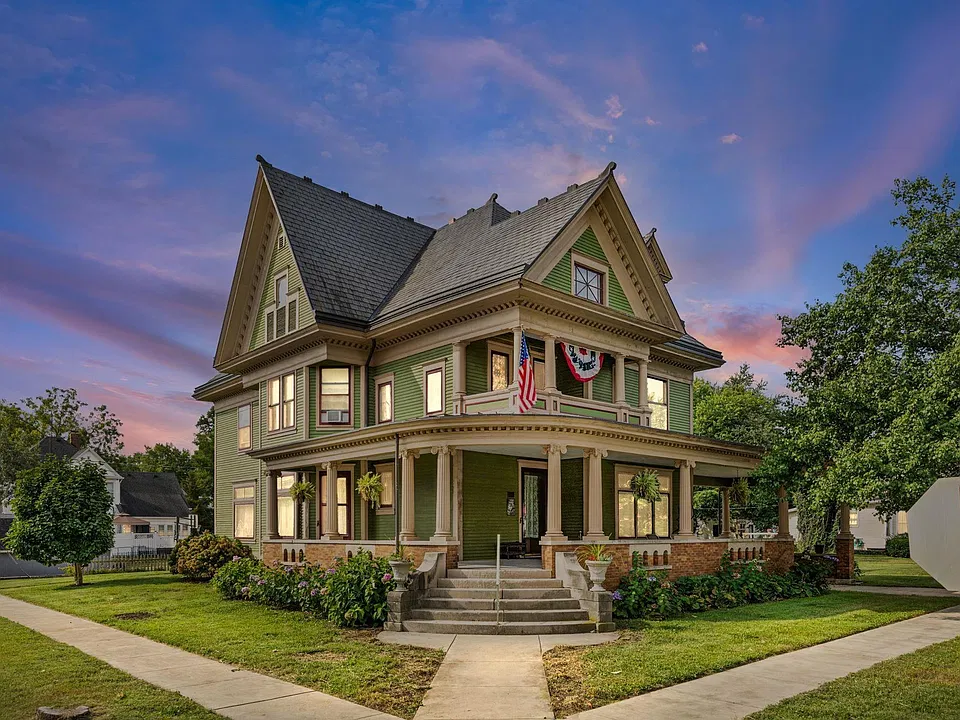
5 Moody Gothic Victorian Homes You Can Buy for Under $500K Right Now
Excerpts: Gothic Revival Victorian homes have remained a popular style choice for buyers since the style took hold in the United States in the mid-1800s.
Known for their striking facades with pitched roofs and for timeless interiors with stained glass, arched windows, and soaring towers, these dwellings continue to attract investors seeking a renovation project and buyers wanting to live in a historical home.
Now that it is officially spooky season, we found five moody Victorians available for under $500,000 this Halloween.
——————————————————————————–
SAMPLE VICTORIAN #5 from article (Photo above)
5. 202 W McConnell St, Oxford, IN
Price: $399,900
Excerpts: 4 bedrooms, 4,563 sq.ft, 0.66 acre lot, Built in 1908
This four-bedroom Victorian, listed on the National Register of Historic Places, has been in the same family “for more than 100 years.”
The “extraordinary” 4,563-square-foot interior has been meticulously maintained and updated. Amenities include a grand parlor, a library, “maid’s quarters,” and a sunroom. A surprising upstairs ballroom is a “special treasure” for hosting grand-scale events and celebrations. Other historic highlights include natural woodwork, hardwood floors, pocket doors, stained-glass windows, and a full basement with an original coal room and game room “offering a fascinating glimpse into life in another era.”
A carriage house can also be found on the property’s double lot.
With more than 4,500 square feet, this remarkable residence features 4 bedrooms, a grand parlor, library, ballroom, maid’s quarters, sunroom, and beautiful wraparound porch. The full basement adds even more character, including the original coal room and game area, offering a fascinating glimpse into life in another era.
Upstairs, the ballroom offers one of the home’s most special treasures. Here, you’ll discover a true time capsule of original family belongings, along with the original carpets that have witnessed generations of celebrations, gatherings, and memories. Outside, the property continues to impress. Situated on a beautiful corner lot encompassing two lots, the grounds include a charming carriage house.
To see all 5 homes, Click Here
To see more photos from the Sample Victorian, Click Here (from Zillow)
My comments: In my city, there are many historic Victorians, similar to the sample above. Back in the 1950s and 60s classic Victorians were being demolished and replaced with modern apartment buildings.
Now we have few homes available for under $1,000,000 including “starter homes”. Victorians are much more expensive, even small homes that need some work.
If you are looking at why Alameda no longer routinely demolishes its famous Victorian homes, it is due to strict local preservation laws passed in the 1970s that stripped away the economic incentive to tear them down.
Local leader Chuck Corica first entered Alameda politics specifically to stop developers from tearing down the city’s historic homes. He was elected mayor in 1975, the same year the city adopted its strict Historic Preservation Ordinance and voters passed Measure A (Article 26). This measure banned the construction of multi-unit apartment buildings, effectively creating a legal “firewall” that saved thousands of Alameda’s iconic Victorians from demolition.
Today, the city boasts one of the largest concentrations of intact Victorian-era homes in the country 60s, developers were buying them and demolishing the Victorians, replacing them with very boring modern apartments.
Sometimes I have an appraiser call me asking about HBU on Victorians. They do not know about “Measure A” which does not allow demolition even though some city zoning used to mention it.
————————————————————————-
Halloween in Alameda – World War II Haunted Aircraft Carrier
We also have have The USS Hornet (The “Grey Ghost”) Ranked #4 on California’s most haunted list, the ship is famous for reports of shadow figures, disembodied voices, recorded gunfire sounds, moving furniture, and the “Dress Whites Ghost” sailor.
Staying overnight, waiting to hear strange voices, and more, is very popular, especially around Halloween! It is also a great place for parties. I have been to a few over the years, with live music and dancing. You can get a tour of the ship also. I have never stayed there overnight – too scary for me!!!
For more information on The USS Hornet, and photos, Click Here
——————————————————————
I Wish the UAD 3.6 Deadline Would Hurry Up and Get Here
By Chad Barker
Excerpts: wish the UAD 3.6 deadline would hurry up and get here.
There, I said it.
That may not be the prevailing sentiment across the appraisal profession right now, but I mean it. The old forms are, well, old. They have served the industry for a very long time, but much of the technology, data and workflow surrounding those forms has advanced dramatically while the basic reporting structure has remained largely unchanged.
Actually, as far as I am concerned, the deadline already has arrived.
A modern appraisal firm has been preparing for months. Its appraisers have taken the training, learned the software, worked through the new terminology and, most importantly, completed real UAD 3.6 assignments. The transition is no longer theoretical. The work is happening now, and from where I sit, that is a good thing.
If your firm is not there yet, phase one may be less about technology and more about mindset. Clear the mental cloud around the change. Stop looking at UAD 3.6 primarily as something being done to the appraisal profession and start looking at what it gives us an opportunity to build. Once you do that, the future gets a lot more interesting.
The Profession Is Still the Profession
UAD 3.6 does not fundamentally change what an appraiser does. The appraiser still identifies the problem, determines the scope of work, gathers and analyzes evidence, reconciles the information and reaches a credible conclusion. Professional judgment still belongs to the appraiser.
What changes is the process around that judgment. More facts move through structured fields. Information becomes more consistent. Reporting becomes more dynamic. Validation becomes more integrated into the workflow. That is a significant change, but it is not the removal of professional judgment. In many ways, it should allow us to spend more time on judgment by improving the machinery around it.
Clients Are Learning, Too
Appraisers are not the only ones going through this transition. Clients are learning too.
Different lenders, AMCs and technology platforms will have different ordering processes, overlays, validation requirements, submission paths and escalation procedures. That makes collaboration more important.
How does the client identify the product? How is the scope communicated? Which validation issues require action? Who owns an escalation? How are recurring problems shared and corrected? Those are not just technical questions. They are customer service questions.
To read more, Click Here
Are you getting too many ad-only emails?
4 ways to get only the FREE email newsletters and NOT the ad-only emails.
1. Twitter: https://twitter.com/appraisaltoday posted by noon Friday – all recent newsletters
2. Read on blog www.appraisaltoday.com/blog Posted by noon Friday. You can subscribe to the blog in the upper right of each blog page.
3. Email Archives: https://appraisaltoday.com/archives
(posted by noon Friday) The link is above and to the right of the big yellow email signup form. Newsletters start with “Newz.” Contains all recent emails sent.
4. Link to the 10 most recent newsletters (no ads) at www.appraisaltoday.com. Scroll down past the big yellow signup block.
To read more about the 4 ways, plus information on why I take ads, etc. Click here
——————————————————————
Appraisal Forms Software in September, 1993
A Glance at the Past
In the May, 2026 issue of Appraisal Today
Editor’s note: This article was originally written as a review of forms software
in in the September, 1993 issue of Appraisal Today. In 1993, there were 13
companies:
Appraisers Choice/Richard Heyn, Appraisers Edge, Day One, Dynamic
Computing, Formfill, Homeputer, MCS, Microform, Residential Appraiser
(SFREP), Softbyte, a la mode, United Systems, and WCA.
NOTE: Some say there were more than 13 companies but I could not get
their names or information.
Clickforms/Bradford started with Mac forms software in 1986 and later
switched to Windows, but was not included in my 1993 review.
Per one software observer in 1993, more forms software from other
companies was available when I started my business in 1986, but I don’t
have a list of them.
In my 1993 review I found that none of the programs were poor or inferior.
None were significantly above the typical. I had expected a wider range.
A few vendors had copy/use protection. ACI had a hardware device. Some
had customer name encryption. Others had no restrictions.
Prices were by the number of users and forms. URAR form only varied
from $199 to $595. Only one user with all forms varied from $395 to $3,995.
Most were under $1,000. ACI was the most expensive. A la mode was $395.
Some had annual support costs, from $250 to $300, which typically included
upgrades.
To read more about this topic, plus 2+ years of previous issues, subscribe to the paid Appraisal Today.
If this article helped you understand about the old forms software (UAD 2.6), it is worth the subscription price!
—————————————————————-
Not sure if you want to subscribe?
Sign up for monthly auto renewal for $8.25!
Cancel at any time for any reason!
You will receive a prorated refund.
$8.25 per month, $24.75 per quarter, and $89 per year (Best Buy)
or $99 per year or $169 for two years
Subscribers get FREE: past 18+ months of past newsletters
To purchase the Monthly Appraisal Today newsletter:
www.appraisaltoday.com/order or call 510-865-8041
What’s the difference between the Appraisal Today free Weekly email newsletters and the paid Monthly newsletter? Click here for more info
Cancel at any time for any reason!
You will receive a prorated refund.
$8.25 per month, $24.75 per quarter, and $89 per year (Best Buy)
or $99 per year or $169 for two years
Subscribers get FREE: past 18+ months of past newsletters
To purchase the Monthly Appraisal Today newsletter:
www.appraisaltoday.com/order or call 510-865-8041
——————————————————————

Surviving UAD 3.6: Secondary Market Risk Protocols
By Desiree Mehbod
Excerpts: If economic necessity forces you to accept UAD 3.6 assignments, you cannot afford to sign blindly while exposed to massive secondary market liability risks.
The reality on the ground for independent real estate appraisers is unforgiving. While the industry debates the long term dangers of data harvesting, many independent business owners face an immediate, binary choice: sign the new UAD 3.6 reports and accept Certification 25, or stop feeding your family. Not every appraiser has a robust book of private estate, divorce, and non lending work.
Transitioning away from AMCs takes time, marketing skills, and capital that many simply do not have right now. The GSEs and tech platforms know this, exploiting economic necessity to push a data first framework that drastically expands our liability.
As for me, I have already decided that I won’t be touching UAD 3.6. However, I recognize that I have the luxury of having a choice in this matter because of the structure of my specific business and client base, which allows me to focus on non GSE work. Many of my peers do not have that safety net right now. They have bills to pay and families to support, meaning they have no choice but to work within the system provided to them.
I recently spoke to a real estate contract lawyer friend
If you are an appraiser who must operate within the UAD 3.6 system to keep your business alive, you cannot afford to sign these reports passively. You must implement a strict, defensive risk management protocol on every single assignment. The goal is simple: satisfy the automated compliance gates to ensure the reports clear the portal and are accepted, while embedding a defensive legal shield inside the workfile to protect yourself from downstream lawsuits and regulatory exposure.
Certification 25 forces you to grant a broad usage license to the client’s authorized networks, but it does not completely erase your federal copyright. To prevent outside real estate agents, public syndication sites, or stray data brokers from scraping your original text and high resolution interior photographs for outside commercial gain, assert your copyright directly:
“Intellectual Property Notice: This report contains original analysis and photographs protected under federal copyright law © 2026. Consistent with the permissions granted in Certification 25, a usage license is provided to the client and authorized participants for mortgage transaction purposes. The appraiser retains all remaining proprietary rights under law.”
To read more, Click Here
My comments: Good advice on dealing with the data issues appraisers have.
——————————————————————
UAD 3.6 Adjustments: New Rules, Same Principles,
By Doug Smith
As appraisers work their way through the transition to UAD 3.6, two matters deserve some attention.
The first is the challenge of adapting our adjustment processes to the new reporting format. The second is understanding why Fannie Mae and Freddie Mac have changed the way certain property characteristics, particularly bedrooms and bathrooms, are reported.
These are separate issues, but they share something important: the need to understand the reasoning behind what we do.
1. The Adjustment Process: Back to Basics
With all the attention being given to learning new software, inspection procedures, and reporting requirements, it might be a good time to dust off Mark Ratterman’s Valuation by Comparison: Residential Analysis and Logic.
In the introduction to his book, Ratterman describes the role of the appraiser as:
“a researcher and interpreter of human behavior”
He goes on to explain that appraisers must understand the mind-set of typical buyers and sellers and anticipate the decisions they are likely to make.
Fannie Mae reinforces this principle in its Selling Guide, B4-1.3-09,
Adjustments to Comparable Sales:
“The appraiser’s adjustments must reflect the market’s reaction (that is, market based adjustments) to the difference in the properties.”
Fannie Mae goes further, cautioning against the use of rules of thumb when market analysis supports a different adjustment. Its example contrasts a customary $20-per-square-foot adjustment with market evidence supporting $100 per square foot.
These two statements, separated by years but closely related in principle, remind us of something fundamental about the appraisal process.
Ratterman reminds us that the appraiser must understand how buyers and sellers think. Fannie Mae reminds us that our adjustments must demonstrate how those buyers and sellers react to differences between properties.
That is the foundation of the sales comparison approach. It is not enough to recognize a difference between two properties. We must determine whether that difference matters to the market and, when it does, how much.
UAD 3.6 may change the way we collect information, organize property characteristics, and present our adjustments. But it does not change the underlying principles of valuation.
New rules. Same principles. And perhaps a good time to revisit how we develop and support our adjustments.
2. Bedrooms, Bathrooms, and a Little History
One question appearing in discussions about UAD 3.6 is why the GSEs have changed the reporting of bedrooms and bathrooms to include those located below grade in the total counts.
To understand the significance of this change, it helps to look back at Fannie Mae’s historical treatment of below-grade finished areas.
Fannie Mae has long recognized that below-grade improvements may contribute substantial value.
In its March 2, 2010 Selling Guide, Fannie Mae stated:
“Rooms that are not included in the above-grade room count may add substantially to the value of a property—particularly when the quality of the finish is high.”
The same guide recognized that strict above-grade-to-above-grade comparisons might not always be appropriate and permitted departures when the property’s design warranted them, provided the appraiser explained the reasoning.
Now, with UAD 3.6, the GSEs require above- and below-grade bedrooms and bathrooms to be included in the total counts, while retaining the distinction between levels through the Level and Room Detail table.
Viewed against that history, the change appears to be a logical progression toward more comprehensive reporting of a property’s characteristics. It does not, however, establish that above- and below-grade areas necessarily have equal contributory value.
The historical treatment of below-grade improvements illustrates an important distinction. How Fannie Mae directs appraisers to report property characteristics is not necessarily how the market assigns value to those characteristics.
Combining above- and below-grade bedroom and bathroom counts does not eliminate differences in location, utility, finish, or market acceptance. Those distinctions remain matters for the appraiser to analyze.
This raises a practical question for appraisers working with UAD 3.6. If market analysis demonstrates a difference in the contributory value of above- and below-grade bedrooms or bathrooms, how should that difference be reflected in the new adjustment grid? The reporting format may present challenges in making and displaying such adjustments. That is a matter deserving further attention as appraisers gain experience with the new system. What should not be lost in the process is the obligation to recognize and support differences demonstrated by the market.
Perhaps Fannie Mae is homogenizing the milk, but it is still up to appraisers to determine whether the cream deserves a premium!
The reporting rules may be new, but the responsibility for interpreting market behavior remains exactly where it has always been—with the appraiser.
More standardized data collection does not replace the professional judgment necessary to analyze market evidence, develop credible adjustments, and arrive at a well-supported opinion of value.
My comments: Good ideas on UAD 3.6 and adjustments.
——————————————————————
MY UAD 3.6 UPDATE – Where to get free appraisal webinars and podcasts on Youtube.
American Valuation Society Webinars on Youtube
I have been taking their webinars live and watching recordings for awhile.
I have watched UAD 3.6 software demos and many appraisal issues.
I get regular email notifications for new webinars.
The Founder and President of : American Valuation Society is Gynell Vestal (AQB Certified USPAP Instructor and CDEI) who serves as the president and founder of the organization. She often moderates the webinars and is very effective in running them.
I receive email notices of their new podcasts.
To see the availailable webinars, go to
https://www.youtube.com/@avsocietyorg
—————————————————————————-
Appraiser eLearning Podcasts on Youtube
Free recordings of their regular podcasts. Worth watching. Keeps up to date on hot appraisal topics and many other topics.
Good Recent Podcast 10-20-26 – The UAD 3.6 Exception: What Happens Next? From Appraiser eLearning. I recently watched it. asy to understand. Discusses lender extension and deadlines.
GSE Seller Exceptions are complicated and not easy to understand when reading about them.
This 10-20-26 video interviews Kim Perotti, Co-President of Axis and Mark Ayton, SVP of Business Strategy at Axis AMC. I interviewed them soon after they started in 2009 when AMCs first started. Click here to Watch https://www.youtube.com/watch?v=bfKqmuywLNc
To see other available Appraiser eLearning Podcasts, go to https://www.youtube.com/@AppraisereLearning
——————————————————————
HOW TO USE THE NUMBERS BELOW. Appraisals are ordered after the loan application. These numbers tell you the future for the next few weeks. For more information on how they are compiled, click here.
Note: I publish a graph of this data every month in my paid monthly newsletter, Appraisal Today. For more information or get a FREE sample go to www.appraisaltoday.com/order Or call 510-865-8041, MTW, 7 AM to noon, Pacific time.
My comments: Rates are going up and down in 2026.
Mortgage applications decreased 5.3 percent from one week earlier
WASHINGTON, D.C. (October 21, 2026) — Mortgage applications decreased 5.3 percent from one week earlier, according to data from the Mortgage Bankers Association’s (MBA) Weekly Mortgage Applications Survey for the week ending October 16, 2026.
The Market Composite Index, a measure of mortgage loan application volume, decreased 5.3 percent on a seasonally adjusted basis from one week earlier. On an unadjusted basis, the Index decreased 5 percent compared with the previous week. The Refinance Index decreased 2 percent from the previous week and was 59 percent lower than the same week one year ago. The seasonally adjusted Purchase Index decreased 7 percent from one week earlier. The unadjusted Purchase Index decreased 7 percent compared with the previous week and was 18 percent lower than the same week one year ago.
“Mortgage rates decreased for the first time in over two months, with the 30-year fixed rate dropping to 7.41 percent. However, lower rates were not enough to boost application activity, as both purchase and refinance applications continued to decline,” said Joel Kan, CMB, MBA’s Vice President and Deputy Chief Economist. “Purchase applications fell 18 percent behind last year’s pace, as higher rates are pricing buyers out of the market. The ARM share held steady at 10.5 percent, as ARM rates remained almost a full percentage point lower than the 30-year fixed rate, giving qualified borrowers a lower rate option to purchase a home.”
Added Kan, “It is very clear that the higher mortgage rate environment has cooled the housing market this fall.”
The refinance share of mortgage activity increased to 39.0 percent of total applications from 37.7 percent the previous week. The adjustable-rate mortgage (ARM) share of activity remained unchanged at 10.5 percent of total applications.
The FHA share of total applications decreased to 16.3 percent from 16.4 percent the week prior. The VA share of total applications decreased to 11.5 percent from 11.9 percent the week prior. The USDA share of total applications decreased to 0.5 percent from 0.6 percent the week prior.
The average contract interest rate for 30-year fixed-rate mortgages with conforming loan balances ($832,750 or less) decreased to 7.41 percent from 7.50 percent, with points decreasing to 0.75 from 0.83 (including the origination fee) for 80 percent loan-to-value ratio (LTV) loans. The effective rate decreased from last week.
The average contract interest rate for 30-year fixed-rate mortgages with jumbo loan balances (greater than $832,750) decreased to 7.33 percent from 7.49 percent, with points decreasing to 0.60 from 0.70 (including the origination fee) for 80 percent LTV loans. The effective rate decreased from last week.
The average contract interest rate for 30-year fixed-rate mortgages backed by the FHA decreased to 7.13 percent from 7.19 percent, with points decreasing to 1.15 from 1.21 (including the origination fee) for 80 percent LTV loans. The effective rate decreased from last week.
The average contract interest rate for 15-year fixed-rate mortgages decreased to 6.73 percent from 6.87 percent, with points decreasing to 0.73 from 0.90 (including the origination fee) for 80 percent LTV loans. The effective rate decreased from last week.
The average contract interest rate for 5/1 ARMs decreased to 6.46 percent from 6.54 percent, with points decreasing to 1.11 from 1.13 (including the origination fee) for 80 percent LTV loans. The effective rate decreased from last week.
The survey covers U.S. closed-end residential mortgage applications originated through retail and consumer direct channels. The survey has been conducted weekly since 1990. Respondents include mortgage bankers, commercial banks, thrifts, and credit unions. Base period and value for all indexes is March 16, 1990=100.
——————————————————————
 Ann O’Rourke, MAI, SRA, MBA
Appraiser and Publisher Appraisal Today
1826 Clement Ave. Suite 203 Alameda, CA 94501
Phone: 510-865-8041
Email: ann@appraisaltoday.com
Online: www.appraisaltoday.com