
Newz: UAD 3.6 Fees, Fun Appraiser Game, Who Can Get Your Appraisal Data?
October 16, 2026
ARTICLE LIST – In order, Scroll down the page to read
- LIA AD: Problem with An Affidavit
- UAD 3.6 and the Appraisal Fee Chain: Who Actually Sets the Fee?, By Doug Smith, SRA
- Lots Under Water
- Certification 25: The 20-Year Fight Over Who Gets to Use Your Data, By Isaac Peck, WorkingRE, Publisher
- Appraiser Game – Something FUN, By Dustin Harris
- MY AD: 2026 E&O Update – Claims, Payment Options, Lawsuits, Etc
- Inspectors Blocked the Door, Appraisers handed over the Keys By Desiree Mehbod
- MBA STATS: Mortgage applications decreased 2.7 percent from one week earlier

Thanks to our Sponsor!!!
——————————————————-
UAD 3.6 and the Appraisal Fee Chain: Who Actually Sets the Fee?
By Doug Smith, SRA
“…the higgling and bargaining of the market…”
— Adam Smith, The Wealth of Nations, 1776
There has been considerable discussion about appraisal fees as UAD 3.6 is implemented. Much of the criticism over resistance to fee increases has been directed at Appraisal Management Companies.
But before deciding where responsibility lies, perhaps we need to follow what might be called the appraisal fee chain.
It begins with the borrower
A consumer seeking to purchase or refinance a residence provides information to a lender. The familiar conventional mortgage application is the Uniform Residential Loan Application (URLA), also known as Freddie Mac Form 65/Fannie Mae Form 1003.
For federal mortgage disclosure purposes, an application is considered received once the lender has six pieces of information: the consumer’s name, income, Social Security number, property address, estimated property value, and desired loan amount.
Once those items have been received, the lender generally must provide a Loan Estimate within three business days.
That Loan Estimate includes estimated loan and closing costs, including the anticipated cost of an appraisal when one is required.
This is where the appraisal fee chain gets interesting.
Federal disclosure rules limit how much certain estimated charges can increase between the Loan Estimate and closing. Depending on the circumstances, some required third-party service charges may be subject to a 10% cumulative tolerance, while others are subject to different rules. A valid changed circumstance may also permit a revised Loan Estimate.
So here is the first question:
Does the appraisal amount initially disclosed to the borrower influence the fee that can later be offered to the appraiser?
Once the borrower indicates an intent to proceed, the appraisal ordering process moves forward. Depending on the lender’s business model, the appraisal may be ordered directly from an appraiser or through an AMC.
Eventually, an assignment reaches an appraiser with a proposed fee.
But where in the appraisal fee chain was that number actually established?
Was it established by the lender when estimating the cost of the loan?
Was it established through an existing agreement or fee schedule between the lender and AMC?
Does the AMC determine the fee it offers the appraiser?
For lenders ordering directly, are they expecting UAD 3.6 assignments to be completed for the same fees previously paid for UAD 2.6 assignments?
And when an appraiser responds that the proposed fee is inadequate, how far back up the appraisal fee chain does that information travel?
These questions matter because UAD 3.6 changes the appraisal product and, for many appraisers, the process required to produce it. Appraisers are investing in training, software and equipment. Inspection procedures and data collection are changing. During the transition, the time required to complete an assignment may change as well.
Yet much of the current discussion seems to begin with the assumption that the appraisal fee should remain where it was.
Perhaps the question should not simply be, “Why won’t AMCs increase appraisal fees?”
The better question may be:
Where in the appraisal fee chain is the price of a UAD 3.6 appraisal actually being established—and is there still room for the market to establish a different price?
Nearly 250 years ago, Adam Smith described part of that price-setting process as the “higgling and bargaining of the market.”
Appraisers are participants in that market too.
A proposed fee is a proposal, not necessarily the market price.
Perhaps it is time for a little more higgling and bargaining.
My comments: I had never known about this before. Thanks to Doug Smith for the info!
——————————————————-
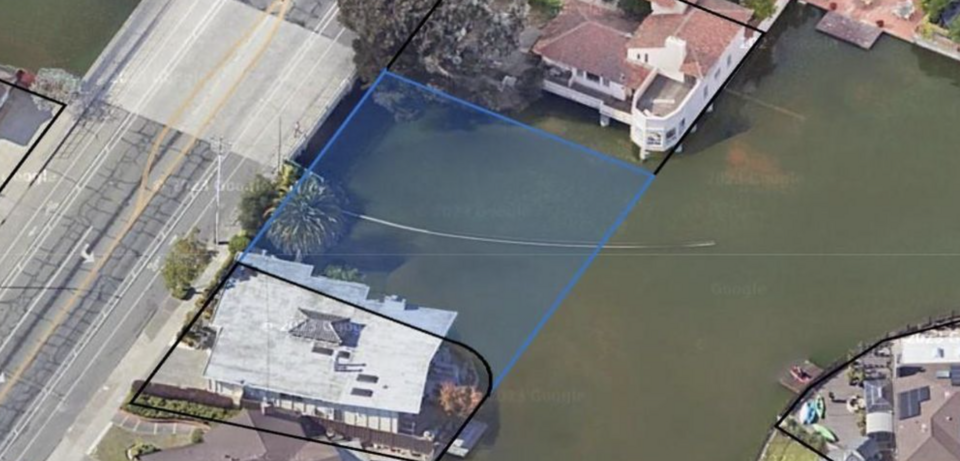
Lots Under Water
Many people want waterfront lots, and they’ll pay good money for them.
But what about an underwater lot?
A roughly quarter-acre water lot is available in the San Francisco Bay Area city of Alameda, CA, for $400,000. (has not sold)
Excerpts: The property assessor’s office in the county lists it as vacant residential land with zoning for a single-family home or a structure with up to four units. The water part wasn’t obvious.
“I was asked to list a vacant lot and went out to take pictures of it and come to find out, it was underwater,” Jones says, adding her GPS took her to a different address. She had no idea that the listing was a water lot.
“I really know how to read street signs to find addresses and kept going when I got there,” she says. “I stopped and said, ‘This is where it should be, this should be the 600 block of Grand.’”
Her next task was to use the county system to view the lot.
“It came up as the water where I was over the bridge, or under the bridge actually, so I was surprised,” she recalls. “I was sure my seller was not aware. He thought he was getting vacant land.”
Jones says the county sold the land because of a tax lien. Currently, there is nothing on the lot, which is near a roadway bridge.
To read more about the Alameda lot plus more photos, Click Here
My comments: A big issue for this property is access to the street. The above water lot cannot be reached if a home is built there without a legal easement access through the home’s lot. See the photo above.
I have appraised many homes in this area. Many of the “original” homes were large, Bayfront homes called the “Gold Coast”. In the 1950s, land was filled in to allow newer homes in front of the larger older homes. Other original homes extended their sizes by building over the water. I saw one that was alleged to be a small apartment, over the water, which was lived in by Jack London, who was born in San Francisco.
The Assessor’s office records are sometimes uncertain on properties, especially on the water boundary, so sometimes I requested that a survey be done. I never appraised any with usable waterfront sections (that I knew of)
When I moved to the Bay Area, many people told me that across the Bay, south of San Francisco, in low tidal areas many years ago, small parcels were sold. Owners of the lots could walk and swim in them.
Many thanks (again) to reader Joe Lynch, who sent me an article about land under water in San Francisco. But I could not resist talking about the Alameda land under water especially the great photo above!
——————————————————-
Appraiser Game – Something FUN
A Great Escape from UAD 3.6!
By Dustin Harris
I built something silly last week and I think your readers might get a kick out of it. It’s a video game about doing an appraisal inspection. You play the appraiser. You laser the corners, grab the required photos, measure the porch height from grade (yes, that’s a 3.6 thing now), and try to get back to the car before the dog, the goat, the chickens, the homeowner and a Realtor fishing for a number eat your hour. It’s free, it runs on a phone or a laptop, and there’s no signup.
The part that might interest your readers more than the game is how it got made. I described it out loud to an AI while I was stuck in an airport in Rome and it was playable before I landed. I don’t write code. There’s a short “how this was built” page linked from the first screen, and I wrote the whole thing up as a white paper if anyone wants the longer version.
How to play
Here’s the game:
the appraiser- The house is in front of you, top-down, like a floor plan. You tap where you want to walk, and your little appraiser walks there. At each corner of the house you tap a button to laser-measure it. Inside, you tap to take the required photos: living room, kitchen, bath, furnace. There’s a spot by the front door where you measure the porch height from grade, because under UAD 3.6 that’s a real thing now. There’s a cracked driveway to note.
And the whole time, the dog is coming for your ankle, the goat wants your clipboard, the chickens are underfoot, the homeowner wants to tell you about the roof, and a Realtor is walking toward you to ask what number you’re thinking. Your laser measure doubles as a stun gun, which is the only part that isn’t realistic. You have an hour on the clock and it runs fast. Get everything, get back to the car, and you get a score and a rank, from Trainee all the way up to Review Appraiser Legend.
That’s it. It takes about two minutes to play. It works on your phone or your laptop. It’s free, there’s no signup, and nobody is tracking you.
The part I actually want you to see is the “how this game was built” link on the first screen. I described the game out loud to an AI assistant, in plain English, the way I’d describe it to a friend. It built the first version before my connecting flight. I played it, said what was confusing (“I can’t tell how to move,” “how do I leave in the car?”), and it fixed each thing in minutes. I never saw a line of code.
Total: one evening of attention. If a guy who still can’t set the clock on his truck can do that, so can you, and the same loop that built a game will build the report checker you’ve been meaning to make for five years.
Play it at game.dustinharrisos.com . The dog is undefeated so far.
My comments: Many thanks to Dustin. Plus he used AI!
——————————————————-
Are you getting too many ad-only emails?
4 ways to get only the FREE email newsletters and NOT the ad-only emails.
1. Twitter: https://twitter.com/appraisaltoday posted by noon Friday – all recent newsletters
2. Read on blog www.appraisaltoday.com/blog Posted by noon Friday. You can subscribe to the blog in the upper right of each blog page.
3. Email Archives: https://appraisaltoday.com/archives
(posted by noon Friday) The link is above and to the right of the big yellow email signup form. Newsletters start with “Newz.” Contains all recent emails sent.
4. Link to the 10 most recent newsletters (no ads) at www.appraisaltoday.com. Scroll down past the big yellow signup block.
To read more about the 4 ways, plus information on why I take ads, etc. Click here
——————————————————-
2026 E and O Update – Claims, Payment Options, Lawsuits, Etc.
In the October, 2026 issue of Appraisal Today
By Claudia Gaglione, Esq. & Magda Pretorius, Risk and Claims Analyst with
LIA Administrators & Insurance Services (LIA)
Excerpts:
Lawsuits, Demands, and Threats
Most lawsuits are filed by borrowers. They sue most often claiming the
appraiser (and other parties such as the sellers, agents, home inspectors, etc.)
failed to disclose certain defective conditions present at the property.
Borrowers
also sue over square footage errors.
Sometimes sellers sue when the buyer’s appraisal comes in below the
contract price (a continuing phenomenon in this age of frantic bidding caused by low inventory that often results in contract prices that exceed list prices).
Less than 10% of overall claims activity comes from lawsuits.
Claims involving alleged misrepresentations about utilities running to the
subject property are common. For example, the appraiser reports the property is serviced by public water and sewer because that is what is stated in public records and MLS. It is later discovered that the home is serviced by a private water well or a septic system.
In another matter, the septic was located close to the home and,
unbeknownst to the owners, it was beneath a newly constructed screened in
sunroom. This was not discovered until the septic backed up and could not be
accessed for service.
In all of these situations, the borrowers claim the appraisers are partly
responsible for their “loss”.
These claims can be defended because the appraiser does not owe a duty
to the borrower, and because the appraiser is not a home inspector, etc., and is entitled to rely upon public records/third parties, etc.
OTHER TOPICS
Licensing Board Complaints
State License Board Complaint activity remains high. In some states the
investigations get resolved quickly; less than 6 months. In other states it can take between 2 and 3 years.
State Boards continue to focus on education, rather than punishment. Only
about 10% of these complaints result in discipline. The rest are dismissed, closed
with a letter of warning, or there is some kind of conditional dismissal (meaning the State tells the appraiser if they agree to take certain classes the complaint will be dismissed).
Most of the complaints have to do with value. Sellers and listing agents
complain when the appraisal does not support an inflated contract price.
Refinance borrowers complain when the appraisal does not come in with what they think their house is worth.
Sometimes complaints have nothing to do with value and they can be
personal. The property owner might complain that the appraiser was rude because he or she showed up late for the appointment or because they did not answer questions during the inspection.
One complaint criticized the appraiser’s “dirty” clothing and even attached a
photo of the appraiser captured by their Ring doorbell camera. The appraiser
responded that she never knows if she will be crawling around an attic or a
crawlspace when going on inspections so she dresses accordingly.
Appraisers are frustrated that the State would even open a file when the
complaint has nothing to do with value or with USPAP. In some states, the rules say every complaint has to be investigated, no matter the reason, and every report has to be reviewed for USPAP compliance, even if that is not the basis of the original complaint.
OTHER TOPICS
Artificial Intelligence
Non-lender appraisals
Discrimination
To read more about this topic, plus 2+ years of previous issues, subscribe to the paid Appraisal Today.
If this article helped you understand Liabiity and E&O Insurance, it is worth the subscription price!
—————————————————————-
Not sure if you want to subscribe?
Sign up for monthly auto renewal for $8.25!
Cancel at any time for any reason!
You will receive a prorated refund.
$8.25 per month, $24.75 per quarter, and $89 per year (Best Buy)
or $99 per year or $169 for two years
Subscribers get FREE: past 18+ months of past newsletters
To purchase the Monthly Appraisal Today newsletter:
www.appraisaltoday.com/order or call 510-865-8041
What’s the difference between the Appraisal Today free Weekly email newsletters and the paid Monthly newsletter? Click here for more info
Cancel at any time for any reason!
You will receive a prorated refund.
$8.25 per month, $24.75 per quarter, and $89 per year (Best Buy)
or $99 per year or $169 for two years
Subscribers get FREE: past 18+ months of past newsletters
To purchase the Monthly Appraisal Today newsletter:
www.appraisaltoday.com/order or call 510-865-8041
——————————————————-
Certification 25: The 20-Year Fight Over Who Gets to Use Your Data
By Isaac Peck, WorkingRE, Publisher
Excerpts: There’s a growing controversy about the new Certification 25 on Fannie Mae and Freddie Mac’s UAD 3.6 appraisal report. Starting in late September 2026, the debate has moved from a podcast episode to the blogs to just about every appraiser forum.
The clock is ticking. UAD 3.6 becomes mandatory on Nov. 2, 2026, with a one-time exception that lets lenders who request it keep submitting legacy 2.6 reports through May 19, 2027. After that, every appraisal delivered to Fannie Mae or Freddie Mac carries this certification.
The criticisms of Certification 25 so far break into two categories. One is about consumer privacy and appraiser liability: Once the report leaves the appraiser’s hands, interior photos and property data can be copied and redistributed indefinitely, and the homeowner never agreed to any of it.
The other argues that signing Certification 25 puts appraisers in violation of USPAP’s Confidentiality section.
Here’s a historical view on the language in the new Certification.
Two Certifications, Side by Side
Let’s start with Certification 21 from UAD 2.6, which appraisers have signed on every 1004 since the forms became mandatory on Nov. 1, 2005:
(UAD 2.6) 21. The lender/client may disclose or distribute this appraisal report to: the borrower; another lender at the request of the borrower; the mortgagee or its successors and assigns; mortgage insurers; government sponsored enterprises; other secondary market participants; data collection or reporting services; professional appraisal organizations; any department, agency, or instrumentality of the United States; and any state, the District of Columbia, or other jurisdictions; without having to obtain the appraiser’s or supervisory appraiser’s (if applicable) consent. Such consent must be obtained before this appraisal report may be disclosed or distributed to any other party (including, but not limited to, the public through advertising, public relations, news, sales, or other media).
Now let’s look at UAD 3.6’s Certification 25, which opens with the same list of recipients.
(UAD 3.6) 25.: The lender/client may disclose or distribute this appraisal report to: the borrower; another lender at the request of the borrower; the mortgagee or its successors and assigns; mortgage insurers; government sponsored enterprises; other secondary market participants; data collection or reporting services; professional appraisal organizations; any department, agency, or instrumentality of the United States; and any state, the District of Columbia, or other jurisdictions. Any of the foregoing persons or entities who receive this appraisal report may choose to store, copy, reproduce, analyze, use and distribute the data in the appraisal report for internal or external purposes without having to obtain the appraiser’s or supervisory appraiser’s (if applicable) consent. Consent must be obtained before this appraisal report may be disclosed or distributed to any other party (including, but not limited to, the public through advertising, public relations, news, sales, or other media). A person or entity who receives a copy of an appraisal report does not become an intended user, unless the appraiser identifies such person as an intended user. The appraiser and supervisory appraiser (if applicable) shall have no liability for any use of this appraisal report not related to the mortgage finance transaction and related activities for which this appraisal report was prepared.
The bolded section is what has some appraisers up in arms.
Read the verbs in that first sentence. Store, copy, reproduce, distribute. Those are the rights the Copyright Act reserves to the owner of a work: reproduction and distribution.
To read more, Click Here
My comments: Very good analysis. The best I have read about the Big Problem with UAD 3.6 and Cert 25.
——————————————————-

Inspectors Blocked the Door, Appraisers Handed Over the Keys
By Desiree Mehbod
Excerpts: A fellow appraiser dropped a direct message in my inbox with a link to home inspector Preston Kincaid’s Facebook video, and watching him warn the public sent a chill through me because his words mirrored the exact warnings I have been shouting about our own appraisal profession.
To understand the shock, you first need to know what Spectora is and how home inspectors work. Spectora is the dominant cloud software platform used by roughly 7,000 independent home inspectors across the country to draft, format, and deliver digital property inspection reports. By law and standard contract, home inspectors operate under strict bilateral confidentiality. They cannot share a completed report or a single hidden defect with a real estate agent, a lender, or anybody without explicit written permission from the paying client. TourProperties
For years, Spectora founders Kevin and Mike Wagstaff promised users they would never sell their data. Then private equity firm Radian Capital poured $40 to $80 million into the company. Basic math proves a $100 monthly software subscription never justifies a tens of millions buyout. The real product being purchased was the proprietary pipeline of ground truth physical property data and artificial intelligence training rights.
Last year, the hidden cost exploded into public view when two separate clients called Preston in a fury. The first client lost a mortgage loan after an underground oil tank notation inside the digital report somehow reached the lender, a latent defect on the property that absolutely nobody knew about, not even the people who owned the home. The second client saw their homeowner insurance policy spike after a suspected asbestos insulation flag leaked to an insurance carrier. Both clients accused Preston of breaking confidentiality. Preston had honored every ethical bound but the software platform he was using and its embedded partner widget, Fixle, silently harvested and piped those exact defect alerts straight into corporate risk pools.
Appraisers face the identical betrayal mapped out in Who Controls Access in UAD 3.6. Certification 25 forces the appraiser to certify that any recipient can store, copy, distribute, and analyze their work without permission, as detailed in Certification 25 and the Quiet Breach of Appraiser Confidentiality. As errors & omissions insurance provider Isaac Peck, President of OREP, noted in UAD 3.6 Erases My Legal Defenses: Insurance Industry Agrees, Certification 25 does not increase the chances of a claim against the appraiser, but it removes the appraiser’s “I didn’t authorize that specific use” defense, if a claim were ever to surface.
By signing a UAD 3.6 report, you are converting a passive corporate data scrape into a certified legal waiver of your own liability protection.
This is not a theoretical threat. Look at Clear Capital’s public announcement regarding its ClearAVM platform, where they openly brag about integrating Restb.ai computer vision tech to parse more than 2 billion property photos monthly.
To read more, Click Here
My comments: Appraiser Confidentiality Big Issues!!
——————————————————-
HOW TO USE THE NUMBERS BELOW. Appraisals are ordered after the loan application. These numbers tell you the future for the next few weeks. For more information on how they are compiled, click here.
Note: I publish a graph of this data every month in my paid monthly newsletter, Appraisal Today. For more information or get a FREE sample go to www.appraisaltoday.com/order Or call 510-865-8041, MTW, 7 AM to noon, Pacific time.
My comments: Rates are going up and down in 2026.
Mortgage applications decreased 2.7 percent from one week earlier
WASHINGTON, D.C. (October 14, 2026) — Mortgage applications decreased 2.7 percent from one week earlier, according to data from the Mortgage Bankers Association’s (MBA) Weekly Mortgage Applications Survey for the week ending October 9, 2026.
The Market Composite Index, a measure of mortgage loan application volume, decreased 2.7 percent on a seasonally adjusted basis from one week earlier. On an unadjusted basis, the Index decreased 2 percent compared with the previous week. The Refinance Index decreased 0.4 percent from the previous week and was 56 percent lower than the same week one year ago. The seasonally adjusted Purchase Index decreased 4 percent from one week earlier. The unadjusted Purchase Index decreased 4 percent compared with the previous week and was 16 percent lower than the same week one year ago.
“Mortgage applications decreased as rates moved higher last week. The 30-year fixed rate was 7.5 percent, the highest rate since November 2023 and more than a percentage point higher than a year ago,” said Joel Kan, CMB, MBA’s Vice President and Deputy Chief Economist. “As a result, borrowers continue to rely more on ARM loans to help lower their monthly payments. The ARM share at 10.5 percent was at its highest level since October 2025. Last week’s decrease in refinances was mainly driven by a 5 percent drop in FHA refinance applications.”
The refinance share of mortgage activity increased to 37.7 percent of total applications from 37.0 percent the previous week. The adjustable-rate mortgage (ARM) share of activity increased to 10.5 percent of total applications.
The FHA share of total applications remained unchanged at 16.4 percent from the week prior. The VA share of total applications increased to 11.9 percent from 11.8 percent the week prior. The USDA share of total applications increased to 0.6 percent from 0.5 percent the week prior.
The average contract interest rate for 30-year fixed-rate mortgages with conforming loan balances ($832,750 or less) increased to 7.50 percent from 7.49 percent, with points decreasing to 0.83 from 0.84 (including the origination fee) for 80 percent loan-to-value ratio (LTV) loans. The effective rate increased from last week.
The average contract interest rate for 30-year fixed-rate mortgages with jumbo loan balances (greater than $832,750) increased to 7.49 percent from 7.39 percent, with points increasing to 0.70 from 0.52 (including the origination fee) for 80 percent LTV loans. The effective rate increased from last week.
The average contract interest rate for 30-year fixed-rate mortgages backed by the FHA increased to 7.19 percent from 7.14 percent, with points decreasing to 1.21 from 1.36 (including the origination fee) for 80 percent LTV loans. The effective rate remained unchanged from last week.
The average contract interest rate for 15-year fixed-rate mortgages increased to 6.87 percent from 6.71 percent, with points decreasing to 0.90 from 1.05 (including the origination fee) for 80 percent LTV loans. The effective rate increased from last week.
The average contract interest rate for 5/1 ARMs increased to 6.54 percent from 6.43 percent, with points decreasing to 1.13 from 1.69 (including the origination fee) for 80 percent LTV loans. The effective rate decreased from last week.
The survey covers U.S. closed-end residential mortgage applications originated through retail and consumer direct channels. The survey has been conducted weekly since 1990. Respondents include mortgage bankers, commercial banks, thrifts, and credit unions. Base period and value for all indexes is March 16, 1990=100.
——————————————————-
 Ann O’Rourke, MAI, SRA, MBA
Appraiser and Publisher Appraisal Today
1826 Clement Ave. Suite 203 Alameda, CA 94501
Phone: 510-865-8041
Email: ann@appraisaltoday.com
Online: www.appraisaltoday.com
We want to know what you think!! Please leave a comment.