
Newz: Surplus vs. Excess Land,
Easement Issues and Liability
August 14, 2026
What’s in This Newsletter (In Order, Scroll Down)
- LIA AD: Easements: Issues and Appraiser Liability
- Surplus Land vs. Excess Land: What Appraisers Need to Know, By Kevin Hecht
- Built Different: How the Ranch-Style Home Went from 1930s Architectural Rebel to America’s Favorite Floor Plan
- Let’s Talk About Letters of Engagement, By Jeff Whaley
- MY AD: UAD 3.6 Software Evaluation Checklist
- An Abridged History of the Appraiser Profession, By Kendra Budd, Editor Working RE
- My UAD 3.6 Tips of the Week
- MBA: Mortgage applications increased 3.6 percent from one week earlier
———————————————————
Surplus Land vs. Excess Land: What Appraisers Need to Know
By Kevin Hecht
Excerpts: Land valuation is a fundamental aspect of real estate appraisal, influencing property transactions, development decisions, and investment strategies. A key part of the process involves distinguishing between the land that supports the property’s current use and any additional land that may or may not have independent value.
Commonly, a square footage adjustment is made based on lot size differences among comparable properties without one key distinction: whether the difference in land is surplus or excess land. This fails to consider whether the extra land has value independent of the subject property.
Surplus land generally does not contribute value beyond its association with the primary parcel, though it may still add some contributory value in certain market conditions. Excess land, by contrast, has value because it can be divided and sold separately.
Understanding this distinction is essential for developing a credible appraisal.
Surplus Land vs. Excess Land at a Glance
Surplus Land – Cannot be separated and sold independently
Excess Land – Can be divided and sold separately
Surplus Land – No independent highest and best use
Excess Land – May have a different highest and best use
Surplus Land – Typically contributes limited additional value
Excess Land – Has independent value and should be analyzed separately
Surplus Land – Remains part of the primary property
Excess Land – Can potentially support separate development
Key Differences Between Surplus and Excess Land
Surplus and excess land apply to commercial and residential properties. Before determining whether land is surplus or excess, appraisers must consider zoning, highest and best use, surrounding properties and their use, property improvements, and supply and demand for the property and any proposed improvements.
Why the Distinction Matters in Appraisal
Choosing the correct land type has an effect on the final value of the property. Excess land adds value to the subject property and creates future potential. Thus, a higher price per square foot should be assigned to excess land over surplus land.
Ultimately, identifying land type is about more than just checking if a property can be split. It’s about understanding the property’s most productive use under current legal and economic conditions.
To read more, Click Here
My comments: Read this article!! The best comprehensive article I have read on this issue. Understanding Surplus vs. Excess Land is critical in appraising. I have encountered this issue mostly in commercial and agricultural appraisals. It can happen in any type of property.
Unfortunately, residential lender appraisers sometimes encounter this but don’t know much about it. I have appraised it on single family properties. Not understanding what this is of the many ways residential appraisers end up trouble at the state appraisal board because of lack of knowledge and experience.
—————————————————

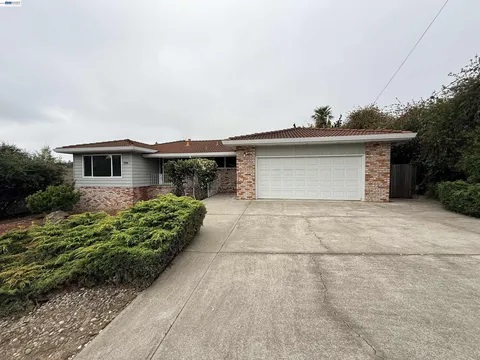
Built Different: How the Ranch-Style Home Went from 1930s Architectural Rebel to America’s Favorite Floor Plan
Excerpts: here are an abundance of different architectural styles on offer in the U.S.—and many that are considered mainstays in the country’s home design lexicon.
But while midcentury modern abodes and Cape Cod dwellings might dominate the pages of design magazines, another, rather more unassuming style has firmly established itself as being the most beloved by homeowners and buyers: the ranch-style home.
In 2025, Realtor.com® revealed that ranch-style abodes were the second most popular properties on the market, comprising more than a third of all listings on the market as of May of that year.
And, according to a 2019 Google trend report, the fascinating truth about American architecture preferences is that ranch-style homes remain the single most searched property type in the U.S.
And it’s no fluke.
For nearly a century, the ranch house has been the unsung hero of the American Dream. Emerging in the 1930s and skyrocketing to ubiquitous fame during the mid-century suburban boom, the ranch-style home transformed how Americans lived.
It shattered the rigid, multi-story box designs of the past, replacing them with a low-slung, informal aesthetic built for everyday living, backyard barbecues, and effortless indoor-outdoor flow.
While its clean lines and simple silhouettes might seem straightforward at first glance, the ranch home boasts a rich history rooted in regional heritage, economic shifts, and innovative design philosophy.
Here, Realtor.com® deep dives into the fascinating legacy, signature elements, and enduring popularity of America’s favorite house.
To read more about ranch style homes and see photos, Click Here
My comments: Fascinating with many photos. I have been appraising ranch style homes since I started appraising in 1975 in California. But I never knew much about their history until now!
—————————————————————–
Let’s Talk About Letters of Engagement
By Jeff Whaley
Excerpts: Hardly a day goes by without a call from an appraiser with problems or questions about private assignments.
Over the last couple of years, more residential appraisers have been looking to diversify at least part of their appraisal business. No one really likes the AMC- and interest-rate-driven roller coaster of demand for our services.
Most residential appraisers are trained on mortgage-lending assignments. Those assignments usually come with some kind of pre-determined engagement letter from the client or AMC. Appraisers have limited ability to negotiate or discuss the specific requirements.
Too often, the jump into private work comes with a learning curve that can be expensive and can create significant liability. There is no question that the best time to ask questions and get answers is before accepting the appraisal assignment. This is where a good Letter of Engagement (LOE) begins.
An effective LOE discussion and negotiation should cover all of the information below, and sometimes more:
Parties and Property
Identify the parties: Clearly name the client, intended users, and appraiser.
Identify the property: Include the physical address, legal description, and property type.
Identify the property interest: Specify the rights being appraised, such as fee simple, leased fee, or leasehold.
Assignment Purpose and Value Premise
Purpose of the appraisal: Define the intended use, such as divorce, estate tax, litigation, or another clearly stated purpose.
Type of value: Specify the exact value definition to be used, most commonly market value or fair market value.
Effective date: State the date of the value estimate, whether current, retrospective, or prospective….
To read more, Click Here
My comments: Comprehensive discussion of Letters of Engagement. When I started my appraisal business in 1986 I took non-lender appraisals. I met local appraisers at regular SREA and AI meetings and they advised me on Letters of Engagement. I used a Letter of Engagement from the Appraisal Institute, similar to the topics in this article. I often changed from my “template” to fit the situation. For example, divorce vs. estate appraisals, property disputes over fences, and more.
—————————————————————–
Are you getting too many ad-only emails?
4 ways to get only the FREE email newsletters and NOT the ad-only emails.
1. Twitter: https://twitter.com/appraisaltoday Posted by noon Friday
2. Read on blog www.appraisaltoday.com/blog Posted by noon Friday. You can subscribe to the blog in the upper right of each blog page. NOTE: the popular ads with liability tips are below the first topic on my blog posts.
3. Email Archives: https://appraisaltoday.com/archives
(posted by noon Friday) The link is above and to the left of the big yellow email signup form. Newsletters start with “Newz.” Contains all recent emails sent.
4. Link to the 10 most recent newsletters (no ads) at www.appraisaltoday.com. Scroll down past the big yellow signup block. The newsletters have abbreviated titles, taken from their blog posts.
To read more about the 4 ways, plus information on why I take ads, etc.
——————————————————————–
UAD 3.6 Software Evaluation Checklist
In the June, 2026 issue of Appraisal Today
By Doug Smith, SRA
Excerpts:
2. Workflow Style Fit
• [ ] WYSIWYG format (report-like interface)
• [ ] Questionnaire / structured data capture
• [ ] Ease of navigation
• [ ] Customization capability
4. Field Capture and Measurement
• [ ] Tablet-friendly inspection workflow
• [ ] Efficient photo organization
• [ ] Sketch editing efficiency
• [ ] ANSI Z765 support clearly documented
• [ ] Scan measuring defensibility and documentation
5. Data Integration
• [ ] MLS import capability
• [ ] Public record integration
• [ ] Reduction of duplicate data entry
• [ ] Built-in compliance checks prior to submission
To read the full article with many more good topics, plus 3+ years of previous issues, subscribe to the paid Appraisal Today.
Not sure if you want to subscribe?
Sign up for monthly auto renewal for $8.25!
Cancel at any time for any reason! You will receive a prorated refund.
$8.25 per month, $24.75 per quarter, and $89 per year (Best Buy)
or $99 per year or $169 for two years
Subscribers get FREE: past 18+ months of past newsletters
What’s the difference between the Appraisal Today free Weekly email newsletter and the paid Monthly newsletter? Click here for more info. Subscribe to Monthly Newsletter at www.appraisaltoday.com/order
———————————————————–
If you are a paid subscriber and did not receive the
August, 2026 issue emailed on
Monday August 3, 2026 please email info@appraisaltoday.com, and we will send lt to you. You can also hit the reply button. Be sure to include a comment requesting it. Or, call 510-865-8041
——————————————————————-
An Abridged History of the Appraiser Profession
By Kendra Budd, Editor Working RE
For most of the 20th century, there was nothing stopping anyone from calling themselves an appraiser.
Licensing didn’t come about until the early 1990s as a result of FIRREA, but the roots of the profession were laid down nearly a century before that. The theoretical framework behind the three approaches to value was developed by economists in the late 1800s. Then the Great Depression and the creation of the FHA in the 1930s gave the profession its first real structure. By the time FIRREA passed in 1989, the industry had already been shaped by decades of self-regulation, technological innovation, and the savings and loan crisis.
To dig into that history, Working RE spoke with Greg Stephens, a recently retired appraiser whose career began in 1977, and Byron Miller, a former engineer turned appraiser who chairs the North Star Chapter of the Appraisal Institute. What follows is an attempt to trace the building blocks and turning points that shaped the profession as we know it today.
Early Appraisal Methods
The concept of appraising property is older than most people think. In the Book of Numbers of The Holy Bible, God commanded Moses to commission one person from each of the 12 tribes to determine the highest and best use of the Land of Canaan. According to Appraisal Today, many consider these tribal leaders to be the first appraisers.
For most of recorded history, property valuation was informal and subjective. In ancient Mesopotamia, a home’s value was tied to its owner’s social standing. Larger homes with courtyards, gardens, and adobe brick construction reflected wealth and status. In feudal Europe, land was owned by lords and leased to those who worked it, tying valuation directly to the owner’s power rather than the land itself. Property assessment was common throughout colonial America, but it was not until the late 1800s that a theoretical basis for property valuation began to take shape.
The earliest known publication on the subject was Thomas Cochran’s 1874 paper Methods of Real Estate Valuation for Taxation, presented to the Social Science Association of Philadelphia. Cochran proposed standard procedures for property valuation and even offered an early definition of market value. But the real breakthrough came from British economist Alfred Marshall, whose 1890 book Principles of Economics merged supply-cost theory with demand-price theory. As J. Wayne Moore notes in the Journal of Property Tax Assessment & Administration, Marshall’s writing “provided the theoretical basis for the three basic approaches to value in use today: replacement cost, market comparison, and capitalization of income.”
Marshall’s work inspired a wave of publications that brought economic theory into appraisal practice.
It was Frederick Morrison Babcock who left the most lasting mark on the profession. “Babcock was a second-generation appraiser out of Chicago … he claims to have trained over 3,000 appraisers in his career. That has an indelible impact,” says Byron Miller, a Minnesota appraiser and co-author of Valuation Bias: The Invisible Fence of Racial Discrimination, a popular online class offered by the Appraisal Institute. Miller spent months researching the history of the appraiser profession in preparation for his class.
The federal government’s involvement in appraising began in earnest during the Great Depression. The National Housing Act of 1934 established the Federal Housing Administration (FHA) and the Federal Savings and Loan Insurance Corporation (FSLIC), while also increasing support for the Veterans Administration (VA), all aimed at stabilizing the housing market through standardized underwriting, mutual mortgage insurance, and reduced foreclosures. These agencies played a crucial role in shaping appraisal standards by establishing guidelines and promoting uniform, reliable property valuations.
Professional organizations followed. The Society of Real Estate Appraisers (SREA) formed in 1935 to standardize the appraisal process. According to Stephens, the SREA was “primarily servicing the banks at the time because prior to that, you had real estate brokers providing valuation services to the lending industry.” The AIREA, which had formed in 1932 as an affiliate of the National Association of Realtors®, went national that same year. The AIREA is best known for creating the MAI and SRA designations. “The MAI being commercial, and the SRA being residential,” Stephens says.
Technological Advancements
After the Great Depression, more scholars and economists came forward with their own publications on appraisal theory, and the FHA continued to shape the industry. But the practice of appraising remained relatively stagnant until the 1980s.
During what he calls the “Wild West” of appraisals, reports were completed by pencil or electric typewriter. “You had to get [the reports] aligned just perfectly, or they would be off and you’d have to reprint the whole thing all over again,” he says. Polaroid™ photos were glued directly onto the report. Comps were photocopies of maps with hand-drawn arrows pointing at specific properties. According to Stephens, the process was so time-consuming that you could only complete about one or two appraisal reports per day.
That changed with the introduction of computer software in the 1980s. Personal computers allowed appraisers to store and analyze larger sets of data, reducing the time needed to complete a report. But according to Stephens, the competing software platforms (like ACI and a la mode) created a new problem: there was “no data standard.”
Conclusion
The appraisal profession has survived economic catastrophe, decades of self-regulation, a complete overhaul of its licensing framework, and two major housing crises. It has adapted to every technological shift from Polaroid™ cameras to iPhones and digital tablets.
Now, as the appraiser profession once again faces a new wave of technological change, Stephens urges appraisers to get ahead of it. “It’s a lot easier for appraisers to get up to speed with these changes that are being mandated by the GSEs. So going forward, we will see fewer appraisers and those appraisers will be far more tech savvy,” he says. For what Stephens calls the “old guard,” the time to adapt is now, not later.
Miller sees the resistance as understandable but costly. “What you’re seeing with a lot of the people that are pessimistic, is the uncertainty. It’s the uncertainty of the future,” he says.
To read more, Click Here
My comments: Worth reading. I have discussed topics with both Miller and Stephens. When ANSI started I interviewed Miller several times about ANSI as he was on the “original” ANSI group. He is definitely an expert on appraisal history. Greg Stephens was a local fee appraiser in my area who I met at local meetings when I first started fee appraising. Later he moved on to AMC management.
——————————————————————-
UAD 3.6 Tips of the Week
Use an appraisal done on current forms (UAD 2.6). Then do the report. in UAD 3.6. Or, do an appraisal of your own house on UAD 3.6. You can’t really understand it until you try to use it.
Very good Facebook Page to find out what appraisers are saying
The name is “Appraisers perspective of UAD 3.6”
Andy Arledge (Freedom Appraise) is one of the administrators and
discourages very negative comments. There is a special list for appraisers who are actually doing 3.6 appraisals. Many comments on many different UAD 3.6 softwares. Worth reading.
The only appraiser Facebook appraisal page I like.
—————————————————————
My Monthly paid Appraisal Today has many articles on UAD 3.6 and software, starting in early 2025. To subscribe Click Here
———————————————————————–
HOW TO USE THE NUMBERS BELOW. Appraisals are ordered after the loan application. These numbers tell you the future for the next few weeks. For more information on how they are compiled, Click Here.
Note: I publish a graph of this data every month in my paid monthly newsletter, Appraisal Today. For more information or get a FREE sample go to www.appraisaltoday.com/order Or call 510-865-8041, MTW, 7 AM to noon, Pacific time.
My comments: Rates are going up and down. We are all waiting for rates to drop lower in 2027.
Mortgage applications increased 3.6 percent from one week earlier
WASHINGTON, D.C. (August 12, 2026) — Mortgage applications increased 3.6 percent from one week earlier, according to data from the Mortgage Bankers Association’s (MBA) Weekly Mortgage Applications Survey for the week ending August 7, 2026.
The Market Composite Index, a measure of mortgage loan application volume, increased 3.6 percent on a seasonally adjusted basis from one week earlier. On an unadjusted basis, the Index increased 3 percent compared with the previous week. The Refinance Index increased 5 percent from the previous week and was 22 percent lower than the same week one year ago. The seasonally adjusted Purchase Index increased 3 percent from one week earlier. The unadjusted Purchase Index increased 2 percent compared with the previous week and was 1 percent lower than the same week one year ago.
“After five consecutive weeks of increases, mortgage rates declined slightly last week as oil prices dipped briefly on the hopes of a sustained resolution to the war in Iran. The 30-year fixed rate decreased four basis points but remained close to its highest level in a year at 6.77 percent,” said Joel Kan, CMB, MBA’s Vice President and Deputy Chief Economist. “The reprieve in rates supported an increase in both purchase and refinance applications over the week, although the pace of applications has fallen below last year’s pace in recent weeks. As refinance incentives have dwindled with rates at current levels, the average loan size for refinance applications was down to its lowest level since July 2025.”
The refinance share of mortgage activity increased to 40.7 percent of total applications from 39.9 percent the previous week. The adjustable-rate mortgage (ARM) share of activity remained unchanged at 7.9 percent of total applications.
The FHA share of total applications remained unchanged at 17.3 percent from the week prior. The VA share of total applications remained unchanged at 12.3 percent from the week prior. The USDA share of total applications remained unchanged at 0.5 percent from the week prior.
The average contract interest rate for 30-year fixed-rate mortgages with conforming loan balances ($832,750 or less) decreased to 6.77 percent from 6.81 percent, with points increasing to 0.67 from 0.65 (including the origination fee) for 80 percent loan-to-value ratio (LTV) loans. The effective rate decreased from last week.
The average contract interest rate for 30-year fixed-rate mortgages with jumbo loan balances (greater than $832,750) decreased to 6.68 percent from 6.72 percent, with points decreasing to 0.51 from 0.52 (including the origination fee) for 80 percent LTV loans. The effective rate decreased from last week.
The average contract interest rate for 30-year fixed-rate mortgages backed by the FHA remained unchanged at 6.43 percent, with points increasing to 0.77 from 0.75 (including the origination fee) for 80 percent LTV loans. The effective rate remained unchanged from last week.
The average contract interest rate for 15-year fixed-rate mortgages decreased to 6.10 percent from 6.13 percent, with points increasing to 0.94 from 0.73 (including the origination fee) for 80 percent LTV loans.
The effective rate increased from last week.
The average contract interest rate for 5/1 ARMs decreased to 5.99 percent from 6.03 percent, with points decreasing to 0.83 from 0.99 (including the origination fee) for 80 percent LTV loans. The effective rate decreased from last week.
The survey covers U.S. closed-end residential mortgage applications originated through retail and consumer direct channels. The survey has been conducted weekly since 1990. Respondents include mortgage bankers, commercial banks, thrifts, and credit unions. Base period and value for all indexes is March 16, 1990=100.
————————————————–
 Ann O’Rourke, MAI, SRA, MBA
Appraiser and Publisher Appraisal Today
1826 Clement Ave. Suite 203 Alameda, CA 94501
Phone: 510-865-8041
Email: ann@appraisaltoday.com
Online: www.appraisaltoday.com
We want to know what you think!! Please leave a comment.