ANSI and UAD 3.6 for Appraisers

Newz: ANSI and UAD 3.6, Trainee Inside the Fast and Cheap Model

February 13, 2026

What’s in This Newsletter (In Order, Scroll Down)

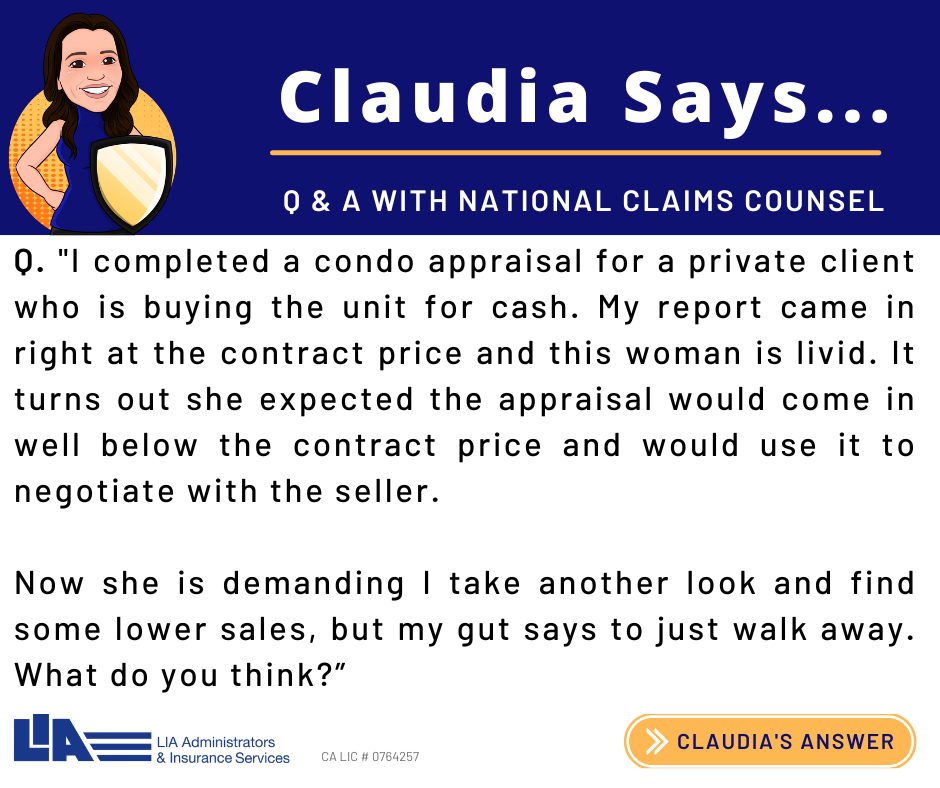
  • LIA AD: Buyer Wants Lower Price to Negotiate
  • ANSI Z765 and the New UAD 3.6: What Appraisers Need to Know
  • New York Lumber Baron’s Private Island Retreat Hits the Market for $2.7 Million—With a Historic 8-Bedroom Mansion
  • We Will Always Need Appraisers: Josh Walitt on Valuation, Technology, and Adaptability By Isaac Peck, Publisher WorkingRE
  • MY AD: What is new in the New URAR. List of data requests for each page of UAD 3.6 SFR report.
  • The Trainee Inside the Fast and Cheap Model
  • The Ethics of Credibility in Real Estate Appraisal By Timothy Andersen, MAI
  • MBA: Mortgage applications decreased 0.3 percent from one week earlier

———————————————–

Click here to subscribe to our FREE weekly appraiser email newsletter and get the latest appraisal news

—————————————-


——————————————————-

ANSI Z765 and the New UAD 3.6: What Appraisers Need to Know

Excerpts:

Why ANSI Z765 Matters More Under UAD 3.6

Fannie Mae and Freddie Mac have both adopted ANSI Z765 as the standard for measuring one-unit detached and attached dwellings. For years, ANSI shaped how appraisers calculated gross living area, but measurement practices still varied from one professional to another. Under the new UAD 3.6 framework, those differences matter more because:

The URAR now breaks out finished area by level, making ANSI designations part of the form structure.

Lenders run automated checks that compare the sketch, GLA figures, and room-level data for consistency.

Any mismatch can trigger a revision request, a CU warning, or a QC hold.

In short, ANSI is no longer just a best practice. It’s now deeply connected to how the form captures data and how lenders review appraisals.

Core ANSI Rules that Every Appraiser Must Apply

ANSI Z765 is the national standard for measuring single-family homes. Appraisers must follow the standard in full when required by the assignment. Key elements include:

Above-Grade vs. Below-Grade

A basement is any area partially or fully below grade, regardless of finish. Even if it includes high-quality living space, it must be reported as below-grade finished area, not GLA.

Ceiling Height Requirements….

To read more, Click Here

My comments: Good review of ANSI standards and how they change with UAD 3.6

————————————————————–

New York Lumber Baron’s Private Island Retreat Hits the Market for $2.7 Million—With a Historic 8-Bedroom Mansion

Excerpts: 8 bedrooms, 6.5 baths, 9,112 sq.ft., 0.5 acre lot, Built in 1905

Longue Vue Island is in Alexandria Bay on the St. Lawrence River and is understood to be one of the only artificial islands in the state of New York.

The island, which has also been known as Rosette Island and Artificial Island over the years, is home to a stunning eight-bedroom mansion and detached boathouse that were built for its original owner, Hudson Rose, a businessman who specialized in the lumber trade.

The home was designed by the architects Barney & Chapman in 1905. The grand arts & craft home features 8BR/6.5BA, gorgeous white cabinetry with island, stainless steel appliances, formal dining and spacious living room with detailed woodwork, fireplace, hardwood floors and enclosed stone porch that surrounds the first floor. As you leave the first floor, the grand original staircase leads to the second & third floor. Also features an amazing 3-slip deep-water boathouse that can accommodate 4 -6 boats with living quarters above. The upstairs above the boathouse has a wet bar, game room, beautiful wainscotting & hardwood floors throughout, 1BR/1.5 BA and living room.

To see the listing with an aerial view, virtual tour and 49 photos, Click Here

My comments: I have lived on a developed island in San Francisco Bay for the past 40 years. I love my Island of Alameda and will never leave! Of course I am always interested in other islands. What we say is “I hate to leave the island!”

——————————————————————

We Will Always Need Appraisers: Josh Walitt on Valuation, Technology, and Adaptability

By Isaac Peck, Publisher WorkingRE

Excerpts: To thrive in today’s appraisal landscape, adaptability matters more than ever. Markets shift, technology evolves, and clients’ needs change. Appraisers who recognize the versatility of their valuation skills—beyond traditional lender work—are better positioned to diversify, grow, and remain relevant in a changing industry.

Joshua Walitt is the very picture of adaptability and change. Originally a banker, Walitt did a mid-career jump into appraising after realizing that banking wasn’t for him. Since making that choice, Walitt hasn’t just followed his industry; he has set the pace for it.

Walitt has become a sought-after expert on compliance, real estate, and valuation, as well as a reviewer, a national speaker, an educator, and an expert witness. His company, Walitt Solutions, provides consulting services to lenders, appraisers, management companies, technology companies, education providers, and regulators.

Technology and Diversification

When I asked Walitt what the future of appraising looks like, he did not hesitate. “Technology,” he answered. “I don’t know any way around giving an answer without technology coming into it. We’ve had inspection apps for decades. But I think now, the importance of learning and using those is really coming to the forefront. A lot more data collection will be necessary for appraisers. Technology is forcing us to change. We’ll see a lot more velocity, consistency, and repeatability. And not just in the inspection,” he said.

The Future of Residential Valuation

With a wide network of videos, blog posts, and human contacts, Walitt is a presence across the entire appraisal profession. Living in Colorado, he has also served on a local Board of Equalization, resolving disputes between homeowners and assessors. All of this human contact has given Walitt a different view of the future than those who see incoming technologies as more disruptive than constructive. He believes that so long as there is property, people will need human valuation experts.

Walitt told me he was “optimistic about the future of the valuation profession. There’s always a need to know how much a property is worth. At this point in time, we don’t have machines that can replace human judgment, we’ve got a good place for it. With technology, it will look different. Think about the two-minute checkup from your dentist or going to the optometrist and someone remotes in to control the equipment that works on your eyes. We never imagined that we would have that technology, but we do. It’s becoming different, and it will be different,” he said.

To read more, Click Here

My comments: I have been following Walitt for quite a while. Good to know more about him and what he thinks.

—————————————————————

Are you getting too many ad-only emails?

4 ways to get only the FREE email newsletters and NOT the ad-only emails.

1. Twitter: https://twitter.com/appraisaltoday Posted by noon Friday

2. Read on blog www.appraisaltoday.com/blog Posted by noon Friday. You can subscribe to the blog in the upper right of each blog page. NOTE: the popular ads with liability tips are below the first topic on my blog posts.

3. Email Archives: https://appraisaltoday.com/archives

(posted by noon Friday) The link is above and to the left of the big yellow email signup form. Newsletters start with “Newz.” Contains all recent emails sent.

4. Link to the 10 most recent newsletters (no ads) at www.appraisaltoday.com. Scroll down past the big yellow signup block. The newsletters have abbreviated titles, taken from their blog posts.

To read more about the 4 ways, plus information on why I take ads, etc.

Click here

————————————————————–

What is new in the New URAR. List of data requests for each page of UAD 3.6 SFR report.

In the June, 1925 issue of Appraisal Today

Excerpts:

Page 3

Property Access – Search F-1 for full list

Zoning

Compliance

Classification Code

Classification Description

Property use

The type(s) of non-residential use observed on the property.

Agricultural

Commercial (e.g., retail, day care, elder care, beauty or barber shop, doctor’s

office) Industrial

Other (Describe)

Non-Residential Property Use

Hazard Zone

Property Restrictions

Easements

Encroachments

Site Characteristics (Example: topography, rolling, adverse impact

Site features and impact to value/marketability

The Site Features table provides information about relevant site factors that may impact the value and marketability of the property

Site influence

Many are listed plus details required (proximity, impact). Search in F-1

3 examples: agricultural, body of water, busy roadway

Impact classification is requested on some data, in many

categories-influence: Proximity, Impact, Comment

Adverse

The market reaction has a negative impact on the property’s value or marketability.

Beneficial

The market reaction has a positive impact on the property’s value or marketability.

Neutral

No measurable market impact on the property’s value or marketability.

Note: Neutral does not mean equal to other properties. For example, if the

subject and all comparables have the same view, that does not necessarily mean that Impact is Neutral.

Utilities

The appraiser must indicate whether each of the following utilities are connected to the site, and whether the utility is public or private.

Electricity

Gas

Sanitary Sewer

Water

Other (Describe) – if applicable

Broadband Internet

To read the full article, plus 2+ years of previous issues, subscribe to the paid Appraisal Today at www.appraisaltoday.com/order . I hope that at least one education provider will set up a list of each data requested with a live or virtual class that goes through the report page by page explaining what it means! ou can see what you need to know to complete the report.

Not sure if you want to subscribe?

Sign up for monthly auto renewal for $8.25!

Cancel at any time for any reason! You will receive a prorated refund.

$8.25 per month, $24.75 per quarter, and $89 per year (Best Buy)

or $99 per year or $169 for two years

Subscribers get FREE: past 18+ months of past newsletters

What’s the difference between the Appraisal Today free Weekly email newsletter and the paid Monthly newsletter? Click here for more info

————————————————

If you are a paid subscriber and did not receive the

February, 2026 issue emailed on

Monday February 2, 2026 please email info@appraisaltoday.com, and we will send it to you. Be sure to include a comment requesting it. Or, call 510-865-8041

————————————

The Trainee Inside the Fast and Cheap Model

The trainee walked into a job expecting mentorship and instead found a crash course in misconduct.

Excerpts: There is a widening gap in this industry between the people who actually protect the public trust and the people who only talk about it. A recent Reddit post from a Georgia trainee captured that gap with uncomfortable clarity. Not because his experience was unusual, but because it showed exactly what happens when the demand for fast and cheap collides with a profession built on accuracy, accountability, and real judgment.

The trainee described a year of being sent out alone to inspect properties, told to introduce himself using the name of a licensed appraiser who was never present, instructed to drop that person’s license into the file, and discouraged from adding supervisor details because the supervisor did not actually supervise. His so called trainer lived in another state, ignored most of his questions, and only appeared long enough to nitpick minor clerical issues. After twelve months, he could measure a house with precision, but no one had walked him through developing a sales comparison grid, reconciling approaches, or completing a report from start to finish. He was not being trained. He was being used.

And then came the comment that exposed the ecosystem. An appraiser described a local AMC that sends trainees out to inspect because they are cheap, fast, and most importantly invisible to the client. Many lenders do not allow trainee inspections, so instead of disclosing the truth, the AMC buries the trainee’s role behind a vague line in the addendum about a clerical administrative assistant who aids in X, Y, Z. The licensed appraiser signs the report, collects the fee, and keeps the volume flowing, while the trainee gets a small cut and a log of hours that will not lead to competency because no one is training them beyond measuring and sketching.

To read more plus 23+ appraiser comments, Click Here

My comments: This is what happened when licensing started in the 1990s. A licensed appraiser hired trainees and did not teach them how to appraise. Required classes offered by proprietary schools taught trainees how to pass the exam. A generation of appraisers had inadequate or no training and poor classes. It is not their fault.

——————————————————–

The Ethics of Credibility in Real Estate Appraisal

By Timothy Andersen, MAI, MSc., CDEI, MNAA

Excerpts:

The Nature of Credibility

Credibility has many definitions. In real estate appraisal, the definition that matters most is USPAP’s: “…worthy of belief.”

In this article, I’ll demonstrate why credibility is more than just a guide for creating a quality work product. It’s also an ethical obligation to clients, and the cornerstone of public trust in our profession. And I’ll outline the fundamental characteristics of credible appraisal reports: They should be clear, unambiguous, precise, concise, and grounded in logic and epistemic responsibility. (I’ll explain that last term later in the piece.)

Clarity

For appraisals to be credible and appraisal reports non-misleading, appraisers must communicate their reasoning and conclusions clearly. Jargon, overuse of boilerplate, convoluted sentences, internal inconsistencies, and vague language are the enemies of clarity.

The Ethical Imperative to Improve

The ethics of credibility demand more than technical competence and “my 20 years of experience.” They require a steadfast commitment to clarity, accuracy, sound logic, and rigorous intellectual honesty.

Credibility isn’t a static trait; it requires ongoing effort. We can always improve our writing, analytical skills, and ethical awareness. And we don’t have to do this alone in our offices. Professional organizations, workshops, peer networks, state appraisal coalition meetings, and national conventions are there to help us refine these abilities.

Ethical and competent real estate appraisers have a duty to produce appraisals that inspire trust and reports that are transparent, easy to understand, and not misleading. Appraisal reports have far-reaching implications. They influence financial decisions, impact communities, and shape perceptions of our profession. By committing to the ethical principle of credibility and all that it encompasses, we as appraisers can uphold the integrity of our profession, ensure its long-term success, and, as USPAP’s Preamble urges, “promote and maintain a high level of public trust in appraisal practice.”

To read more, Click Here

My comments: Well written and worth reading. We often get caught up in producing appraisals and can forget what it all means.

————————————————–

HOW TO USE THE NUMBERS BELOW. Appraisals are ordered after the loan application. These numbers tell you the future for the next few weeks. For more information on how they are compiled, Click Here.

Note: I publish a graph of this data every month in my paid monthly newsletter, Appraisal Today. For more information or get a FREE sample go to www.appraisaltoday.com/order Or call 510-865-8041, MTW, 7 AM to noon, Pacific time.

My comments: Rates are going up and down. We are all waiting for rates to drop lower in 2026.

Mortgage applications decreased 0.3 percent from one week earlier

WASHINGTON, D.C. (February 11, 2026) — Mortgage applications decreased 0.3 percent from one week earlier, according to data from the Mortgage Bankers Association’s (MBA) Weekly Mortgage Applications Survey for the week ending February 6, 2026.

The Market Composite Index, a measure of mortgage loan application volume, decreased 0.3 percent on a seasonally adjusted basis from one week earlier. On an unadjusted basis, the Index increased 2 percent compared with the previous week. The Refinance Index increased 1 percent from the previous week and was 101 percent higher than the same week one year ago. The seasonally adjusted Purchase Index decreased 2 percent from one week earlier. The unadjusted Purchase Index increased 4 percent compared with the previous week and was 4 percent higher than the same week one year ago.

“Mortgage applications were relatively flat over the week, but it was a mixed bag for the different loan types. The 30-year fixed rate was unchanged at 6.21 percent, and conventional applications declined for both purchases and refinances as borrowers held out for another drop in rates or shifted to other loan types,” said Joel Kan, MBA’s Vice President and Deputy Chief Economist. “FHA purchase and refinance applications increased, helped partially by the FHA rate declining and remaining 20 basis points lower than the conforming 30-year fixed rate.”

Added Kan, “Borrowers are increasingly utilizing FHA loans as affordability challenges remain, despite recent improvements. Similarly, the ARM share increased to a seven-week high with ARM rates almost a percentage point lower than fixed rates.”

The refinance share of mortgage activity decreased to 56.4 percent of total applications from 57.1 percent the previous week. The adjustable-rate mortgage (ARM) share of activity increased to 8.0 percent of total applications.

The FHA share of total applications increased to 18.4 percent from 17.8 percent the week prior. The VA share of total applications increased to 16.0 percent from 15.8 percent the week prior. The USDA share of total applications remained unchanged at 0.4 percent from the week prior.

The average contract interest rate for 30-year fixed-rate mortgages with conforming loan balances ($832,750 or less) remained unchanged at 6.21 percent, with points remaining unchanged at 0.56 (including the origination fee) for 80 percent loan-to-value ratio (LTV) loans. The effective rate increased from last week.

The average contract interest rate for 30-year fixed-rate mortgages with jumbo loan balances (greater than $832,750) decreased to 6.30 percent from 6.32 percent, with points remaining unchanged at 0.34 (including the origination fee) for 80 percent LTV loans. The effective rate decreased from last week.

The average contract interest rate for 30-year fixed-rate mortgages backed by the FHA decreased to 6.01 percent from 6.04 percent, with points increasing to 0.68 from 0.67 (including the origination fee) for 80 percent LTV loans. The effective rate decreased from last week.

The average contract interest rate for 15-year fixed-rate mortgages increased to 5.65 percent from 5.61 percent, with points increasing to 0.68 from 0.63 (including the origination fee) for 80 percent LTV loans. The effective rate increased from last week.

The average contract interest rate for 5/1 ARMs decreased to 5.33 percent from 5.37 percent, with points increasing to 0.67 from 0.58 (including the origination fee) for 80 percent LTV loans. The effective rate decreased from last week.

The survey covers U.S. closed-end residential mortgage applications originated through retail and consumer direct channels. The survey has been conducted weekly since 1990. Respondents include mortgage bankers, commercial banks, thrifts, and credit unions. Base period and value for all indexes is March 16, 1990=100.

—————————————————————————-

Ann O’Rourke, MAI, SRA, MBA

Appraiser and Publisher Appraisal Today

1826 Clement Ave. Suite 203 Alameda, CA 94501

Phone: 510-865-8041

Email:  ann@appraisaltoday.com

Online: www.appraisaltoday.com

Crazy Appraisal Stories! We all have them!!

Crazy Appraisal Stories!

Excerpts: Not Just Measuring Homes and Taking Pictures
I went to appraise a home for a movie producer in Brentwood, California. I knocked on the door, and one of the producer’s boyfriends opened the door and invited me in. He was completely naked. He told me that whatever I do, don’t let the cat out. As I went room to room taking photos, I met another naked boyfriend. He also told me not to let the cat out. As I went to the second floor of the house, I met the producer who was also naked. He told me again, “don’t let the cat out.”
I’m approaching the rear patio door to take pics of the rear of the house. Outside I see a beautiful pure-bred Persian cat. I know I didn’t let the cat out but I sure as hell better get it back in the house. I started chasing the cat in the rear yard. Finally, I grabbed it, but not before it ripped my blouse and caused my hands to bleed. Huffing and puffing from the chase, I tossed the cat back into the house and closed the door. A few moments later one of the naked boyfriends came over and said “that’s the neighbor’s cat. Get him out of the house.” I then had to chase the cat again. Finally, I caught the cat and put him out of the house. I was left there panting with a torn blouse and bleeding hands, thinking appraising homes is definitely not just measuring homes, taking pics, and typing up forms.
-Mary Cummins
To read more, click here
My comments: Just For Fun! We’ve all got these stories!

Appraisal Business Tips 

Humor for Appraisers

Click here to subscribe to our FREE weekly appraiser email newsletter and get the latest appraisal news!!

To read more of this long blog post with many topics, click Read More Below!!

NOTE: Please scroll down to read the other topics in this long blog post on Desktops, Future of appraising, Cubicasa, ANSI, unusual homes, mortgage origination stats, etc.


Read more!!

PAVE Appraiser Bashing

PAVE Action Plan to Advance Property Appraisal and Valuation Equity

By McKissock, March 23, 2022
Two of the more controversial recommendations:
Excerpts:
Inform Federal Housing Administration (FHA) borrowers about the process to request a reconsideration of a valuation when the initial valuation is lower than expected.
Perhaps the most far-reaching recommendation for action is number 1.6, which states, “Develop a legislative proposal that modernizes the governance structure of the appraisal industry to improve transparency and public participation in the establishment of appraisal standards and appraiser qualification criteria, and to advance diversity in the profession.” Translation: Amend FIRREA to remove references to The Appraisal Foundation and transfer the Foundation’s authority to write appraisal standards and qualifications to the Appraisal Subcommittee or another federal government entity.
As of this writing, no proposed legislation related to the PAVE recommendations has been introduced. Because committees in both the Senate and the House are holding hearings, a bill (or, more likely, bills) can be expected very soon. Stay tuned.
Short and worth reading. To read more, including links to the full PAVE report and the summary, click here
—————————————
AEI’s Comments on PAVE Report
Excerpt: The Brookings and Freddie Mac studies are not based on rigorous data analysis. Most importantly, they conflate race with socio-economic status (SES), i.e. income, buying power, marriage rates, credit scores, etc. Race-based gaps found in the Brookings and Freddie Mac studies either entirely or substantially disappear when adjusting for differences in SES. Furthermore, our analyses show that similar gaps are present in majority White or White-only tracts across different SES levels, raising serious questions regarding a race-based explanation.
To read more, click here
My comment: American Enterprise Institute is a conservative “think tank” and has also supported the appraisers’ side on other issues.
=============================================

Congress Committee Meetings on Appraisal Bias

Strengthening Oversight and Equity in the Appraisal Process
Thursday, March 24, 2022
Senate Committee on Banking, Housing, and Urban Affairs
Appraiser Witness: James Park, Executive Director Appraisal Subcommittee
To watch, click here
=================================================

Devalued, Denied, and Disrespected: How Home Appraisal Bias and Discrimination Are Hurting Homeowners and Communities of Color Tuesday, March 29, 2022

House Financial Services Committee

Appraiser speakers:
  • Pledger M. Bishop, III, President, Appraisal Institute
  • David S. Bunton, President, The Appraisal Foundation
  • Dean Kelker, Senior Vice President and Chief Risk Officer, SingleSource Property Solutions, on behalf of the Real Estate Valuation Advocacy Association
To watch, click here
My comments: I was not able to watch either of these meetings before writing this newsletter.
Jonathan Miller attended the virtual March 24 meeting and had comments on the March 24 and 29 hearings. To read his comments, click here Scroll down to “James Park”
His blog post for today (usually sent around 11 AM EST) may have comments on the March 29 meeting. To read his comments, click here. Search for “devalued” (Hopefully, this link works.)

Appraisal Business Tips 

Humor for Appraisers

Click here to subscribe to our FREE weekly appraiser email newsletter and get the latest appraisal news!!

To read more of this long blog post with many topics, click Read More Below!!

NOTE: Please scroll down to read the other topics in this long blog post on unusual homes, 1004/Desktops, mortgage origination stats, etc.

Read more!!

Desktop appraisals – Lots of Info Available!

Desktop appraisals – Lots of Info Available
Fannie and Freddie started using Desktops on March 19, 2022

Both a floor plan and a building sketch with dimensions and GLA calculations are required. ANSI is not required.

———————————————–

March 2022 Fannie Mae Appraiser Update: 

Link to March Appraiser Update, click here:

Link to “About Desktop Appraisals” PDF with 5 pages of information, click here Watch the Noble Appraiser explore the benefits of performing desktop appraisals:
The Desktop Appraisal Discovery Link to Noble Appraiser on desktops video, click here 

—————————

McKissock: Fannie Mae and Freddie Mac Desktop Appraisals: Your Questions Answered

Excerpts: In January 2022, Fannie Mae and Freddie Mac announced a desktop appraisal option that goes live in mid-March 2022. In various articles and opinion pieces, some claim that desktop appraisals will solve the appraiser shortage and modernize the appraisal process, while others claim that they will cause the demise of the appraisal profession.

Here are a few of the 16 questions answered

  • What is a desktop appraisal?
  • Does USPAP require me to complete an inspection?
  • What data sources are used for identifying the subject’s relevant characteristics?
  • Are there any state restrictions?
  • Must I be competent in the subject’s market area?
  • Are extraordinary assumptions allowed?
  • Does the limited scope of work mitigate my liability?
  • Won’t these types of valuations be risky for the lender

To read more, click here

——————————-

Bradford Software Webinar Floor Plans for Desktops – Discover Your Options with 7 Floor Plan Providers March 24, 2022 (1 hour, 34 minutes), with comments from Scott Reuter of Freddie Mac.

It was recorded and is available at https://vimeo.com/692030955

I did not have time to watch it yesterday.

———————————————–

My comments on the above resources: What’s the best resource(s) for you?

Noble appraiser video is short (3 min. 34 seconds) understandable and very informative. Fannie Mae is “the source” for desktops. McKissock’s Q and A post is well written, understandable with short answers.

Bradford’s video has demos of 7 app providers for floor plans and sketches.

If lenders will use them much is very uncertain. The Covid desktops were never widely adopted. No one knows now which cell phone apps will be used, who will use them, and their accuracy (tested by an independent company). Minimum of an IPhone 12 Pro, with LIDAR camera. Appraisers who have tested them say the floor plans are good, but sketches with dimensions and floor plans may not be accurate on complicated home designs.

Appraisal Business Tips 

Humor for Appraisers

Click here to subscribe to our FREE weekly appraiser email newsletter and get the latest appraisal news!!

To read more of this long blog post with many topics, click Read More Below!!

NOTE: Please scroll down to read the other topics in this long blog post on unusual homes, lender bias, ANSI, FHA class, mortgage origination stats, etc.

Read more!!

Fannie ANSI Update – 19 New FAQs

Fannie ANSI FAQs Update

Updated Standardized Property Measurement Guidelines – 19 new FAQs, 5 Pages

Excerpt from the short Fannie email sent 3-15-22 at 8 AM (Pacific time): “…Are you ready? We’ve updated the Standardized Property Measuring Guidelines fact sheet to include more answers to your frequently asked questions. Thanks to all the appraisers, AMCs, and lenders who submitted questions.”
My comment: There are no changes to the first page, including comps measured differently and the exception process. Links are included for references in Fannie’s Selling Guide in the Guidelines.
FAQ topics include:
Q5. When common practice in the local market differs from the ANSI standard, can the appraiser modify the subject’s GLA to conform to local custom?
Q8. The ANSI standard specifically notes that the definition of above and below grade could cause some houses to have no above-grade finished square footage.
How should appraisers report GLA in this scenario?
Q9. How will lenders know that appraisers used the ANSI standard?
Q15. Will appraiser adherence to the ANSI standard cause confusion when the subject GLA differs from other sources such as MLS or public record?
Q16. How should appraisers account for rooms located in above-grade finished areas that do not qualify as GLA under the ANSI standard?
Q18. The GLA of comparables available to appraisers may not be based on the ANSI standard. How should appraisers manage this issue?
Q19. How should appraisers value finished areas that the ANSI standard does not include in GLA, such as where the ceiling height is less than 7 feet?
To download the PDF to read the answers and other FAQs,  click here
My comments: Read This Document! I have been waiting for an update to the one-page original Fannie document since it was first released about 3 months ago. There are many, many issues when using ANSI for lenders and AMCs. Appraisers sent many questions to Fannie and made comments during webinars with Fannie.
If you’re looking for a class, webinar, or other ANSI info, go to www.appraisaltoday.com/ANSI

Appraisal Business Tips 

Humor for Appraisers

Click here to subscribe to our FREE weekly appraiser email newsletter and get the latest appraisal news!!

To read more of this long blog post with many topics, click Read More Below!!

NOTE: Please scroll down to read the other topics in this long blog post on unusual homes, new Fannie Form, stress, price per sq.ft., reviewer appraisal problems, mortgage origination stats, etc.


Read more!!

Fannie’s New Desktop Appraisal FAQs

Fannie’s New Desktop FAQs

Timeline and 19 FAQs From an email received 3-8-22
“Desktop appraisals will be offered in Desktop Underwriter® (DU®) for eligible transactions starting March 19. Are you ready?
We’ve updated the About desktop appraisals fact sheet with an expanded frequently asked questions section.
Thanks to all the appraisers, AMCs, and lenders who submitted questions, and please continue to Contact us with your appraisal related comments and questions.”
To read the FAQs, click here
My comment: Reading the original Fannie document is good, such as a timeline list, additional verifications, inspections, CU, etc.
—————————————————–
McKissock has an excellent blog post answering many practical questions, including some in the Fannie FAQs and many other questions.
Topics include:
  • What data sources are used for identifying the subject’s relevant characteristics?
  • Are there any state restrictions?
  • Must I be competent in the subject’s market area?
  • Are extraordinary assumptions allowed?
  • Does the limited scope of work mitigate my liability?
  • What is the difference between a sketch and a floor plan?
  • How do I get a floor plan?
  • Does the floor plan need to be verified?
  • Does the property need to be measured per ANSI measurement standards per Fannie Mae’s requirements?
To read more, click here
My comment: Read both the Fannie FAQs and McKissock blog post. How often will desktops be used? It will take a while before they may be widely adopted. See last week’s newsletter. When are we going to get some ANSI FAQs????

Appraisal Business Tips 

Humor for Appraisers

Click here to subscribe to our FREE weekly appraiser email newsletter and get the latest appraisal news!!

To read more of this long blog post with many topics, click Read More Below!!

NOTE: Please scroll down to read the other topics in this long blog post on bias, appraisal how to, ANSI, unusual homes, mortgage origination stats, etc.

Read more!!

Fannie Wants Desktop Appraisals with Floor Plans

Fannie Mae and Freddie Mac to launch remote desktop appraisals in 2022

Desktop appraisals with floor plans

Excerpt:
Beginning March 19, 2022, Fannie Mae and Freddie Mac will accept remote desktop appraisals nationwide on eligible transactions without the appraiser ever stepping foot on the subject property, the Federal Housing Finance Agency (FHFA) announced.
To read more, click here
——————
Link to FHFA announcement 10/18/21 with more information,click here
My comments: When they submit loan applications, lenders receive a list of appraisal types available for their loans, including waivers. Lenders did not widely choose the desktop Covid appraisals. They preferred full appraisals.
I ran an ad for Cubicasa (floor plan app) on Tuesday this week and got some appraiser complaints. I will be testing it soon and hopefully will be able to use it in my appraisals.
Many anticipate that lender adoption will be slow, including Lyle Radke from Fannie and a group email posting from an appraiser who recently attended a state Mortgage Bankers’ meeting. He said:
“I was on a 4 appraiser panel with +/-60 LO’s representing 20 different lenders. I asked for a show of hands-on how many would be offering Desktop or Hybrid appraisals on March 19… There was not a single hand raised. “
“When we discussed the Desktop and Hybrids, most had no idea about the differences in the two products… All 4 of us thought that the turn time “might” be reduced by 1-2 business days. So, based on a small sample, this may not be as much of a problem as some appraisers think. “

Appraisal Business Tips 

Humor for Appraisers

Click here to subscribe to our FREE weekly appraiser email newsletter and get the latest appraisal news!!

To read more of this long blog post with many topics, click Read More Below!!

NOTE: Please scroll down to read the other topics in this long blog post on unusual homes, tech forecast, ANSI, bias, AVMs, mortgage origination stats, etc.


Read more!!

1004MC or 1004 ANSI

1004MC or 1004 ANSI

By George Dell, MAI

Excerpt: The 1004MC “market conditions” appraisal addendum was created by Fannie Mae and Freddie Mac to require a form-based market analysis. This added to the traditional practice to collect a handful of ‘comps’ to opine and foretell market price. There are problems and unintended consequences.

The ANSI requirement is that residential appraisers measure houses according to the ANSI (American National Standards Institute) method. This constraint can have good long-term results for consistency, if it is adopted by the full universe of participants. The requirement would have to include tax assessors, building permit agencies, real estate agents, investors, insurance companies, architects, contractors, and unlicensed appraisers. This part might take years, if ever.

We can take a quick look at some similarities, some differences, and where things may go…

To read more, click here

My comments: George and I talked about this and agreed to disagree. He is not the only one with doubts about ANSI. Most are appraisers, like George, who have never used it. I finally found a somewhat negative post about ANSI, instead of social media rants ;>

My opinion: This Standard is better than no standard. Appraisers have been using ANSI since 1996. I did not hear about problems with using it or with lender clients. Change is hard.

See the end of this newsletter for info on Appraisal Institute’s New 4 hour online ANSI class and an excellent ANSI webinar this Monday with Lyle Radke from Fannie being grilled by three appraisers! Two of them had negative comments.

ANSI Z765-2021 Resources for Appraisers

Appraisal Business Tips 

Humor for Appraisers

Click here to subscribe to our FREE weekly appraiser email newsletter and get the latest appraisal news!!

To read more of this long blog post with many topics, click Read More Below!!

NOTE: Please scroll down to read the other topics in this long blog post on unusual homes, mortgage origination stats, etc.


Read more!!

Appraisal Comps in Lopsided Markets

Different colorful shapes wooden blocks on beige background, flat lay. Geometric shapes in different colors, top view. Concept of creative, logical thinking or problem solving.

Choosing comps in a lopsided market

By Ryan Lundquist
Excerpt: QUESTION: With so many listings receiving offers above list, and people having to pay the shortfall between the appraised value and the contract price, how do appraisers look at comps? If a property sold at $580,000, but it actually appraised for $547,000, and the buyer paid the difference, which number do you use? $580,000 or $547,000?
ANSWER: Here are a few things on my mind.
1) Weigh the comps:
In any market (not just today), we have to weigh the comps. Or another way to say it is, we have to appraise the comps so to speak. What I mean is if something clearly sells for too much, it’s reasonable to give that property less weight in our analysis. Likewise, if a property sells for too little, we might also give less weight to that sale. Granted, selling for too little isn’t as common lately, but in past markets we regularly considered whether short sales or bank-owned sales sold below market value.
2) One sale doesn’t make or break the market:
It’s important to note one sale doesn’t make or break the market. This means one lofty “lone ranger” sale doesn’t all of a sudden mean the rest of the market will go to that level. This would be like saying that record-breaking $7M sale in Shingle Springs from August will pull the rest of the market up. Nah, I don’t think so. Or Zillow buying a house for $40,000 more than the comps will cause the rest of the market to rise. Nope. If one sale closes at $580,000, but the rest of the market is below $550,000, we won’t arbitrarily accept $580,000 as the new neighborhood price threshold. The same would hold true if a different house sold at $450,000. This one “low ranger” (sorry) won’t automatically drag the rest of the market down.
To read more plus lots of comments, click here
My comment: Some good comments and tips for this crazee market!!

Appraisal Business Tips 

Humor for Appraisers

Click here to subscribe to our FREE weekly appraiser email newsletter and get the latest appraisal news!!

To read more of this long blog post with many topics, click Read More Below!!

NOTE: Please scroll down to read the other topics in this long blog post on unusual homes, surplus vs. excess land, ANSI, USPAP, Liability, mortgage origination stats, etc.


==========================================

Read more!!

AMC Mergers and Acquisition for Appraisers

AMC Mergers and Acquisition – Someone has a positive view of residential lender appraising!

Nationwide Property & Appraisal Services purchased by investment firm Arcapita Group Holdings

Excerpts: The deal gives Arcapita an AMC that serves mortgage lenders in all 50 states, has a network of over 15,000 licensed appraisers, and grossed $144 million in revenue in 2021.

“We were attracted by Nationwide’s highly cash generative business, experienced management team, and strong base of clients across the country,” Arcapita CEO Atif Abdulmalik said in a statement. “Close to 50% of Nationwide’s customers have maintained their relationship with the company for over six years, highlighting the longevity of its customer relationships, and the company benefits from a free cash flow conversion rate of over 99%.”

The AMC has acquired five other companies since Corridor bought a stake in Nationwide in 2016. In June, Nationwide acquired Portland, Oregon-based First Choice Appraisal Management, expanding its reach into the Pacific Northwest.

Other large financial firms are also putting money into the appraisal management space, which is highly fractured.

In October, private holding group StoicLane acquired control of the appraisal management company Lender’s Valuation Services (LVS).

To read more, click here

—————————————————————

Class Valuation purchases Metro-West 

Excerpt: In a press statement, Class Valuation said Metro-West, founded in 1987, is the largest independent residential appraisal firm in the country, with staff appraisers in over 80 U.S. metros.

Class Valuation, which itself is owned by private equity firm Gridiron Capital, said the acquisition of Metro-West would fit into its larger strategy of fusing tech tools such as automation and 3D measurements to help clear the well-documented capacity issues in appraisal.

“One area of focus for us has been the growth of a staff appraiser network and building out a nation-wide trainee program,” John Fraas, CEO of Class Valuation, said in a statement.

This is the fifth acquisition Class Valuation has made in the last 12 months, and the seventh in recent years. In September, Class Valuation acquired Kansas City, Missouri-based Pendo Management for an undisclosed sum.

There’s been a surge in private equity investment in the U.S. appraisal space over the last two years.

To read more, click here

My comments: The investors see money to be made in appraisals. What will they think when it inevitably crashes again, like it always does. I wish I had an AMC I could sell to investors ;>

If you work for any of these AMCs, keep close track of your billings, so they don’t get lost in any accounting mergers. No one knows, of course, if their appraisal management will change.

================================================

Appraisal Obsolete? Now or in the Future?

Appraisal Business Tips 

Humor for Appraisers

Click here to subscribe to our FREE weekly appraiser email newsletter and get the latest appraisal news!!

To read more of this long blog post with many topics, click Read More Below!!

NOTE: Please scroll down to read the other topics in this long blog post on unusual homes, ANSI, Waivers, Cell phone full, mortgage origination stats, etc.

Read more!!