Appraisal News and Business Tips

Blog

Time Adjustment Changes for Appraisers

Newz: Time Adjustments, 2025 ASC Appraiser Data Analysis, Fannie Fraud

April 25, 2025

What’s in This Newsletter (In Order, Scroll Down)

  • LIA ad – Weather Impact
  • I Went Down to the Crossroads – Time Adjustments By Tim Andersen, MAI
  • Occidental Treehouse Named California’s Most Wish-Listed Airbnb
  • Analysis of 2025 ASC Appraisal License Data By Chase Pursley
  • Fannie Mae Fraud and Abuse Exposed By Jeremy Bagott, MAI
  • Appraiser Growth and Profitability: Key Things to Focus On By Isaac Peck, Publisher
  • Mortgage applications decreased 12.7 percent from one week earlier

————————————————————————————————

Click here to subscribe to our FREE weekly appraiser email newsletter and get the latest appraisal news


—————————————————————————————-

I Went Down to the Crossroads

Time Adjustments

By Tim Andersen, MAI

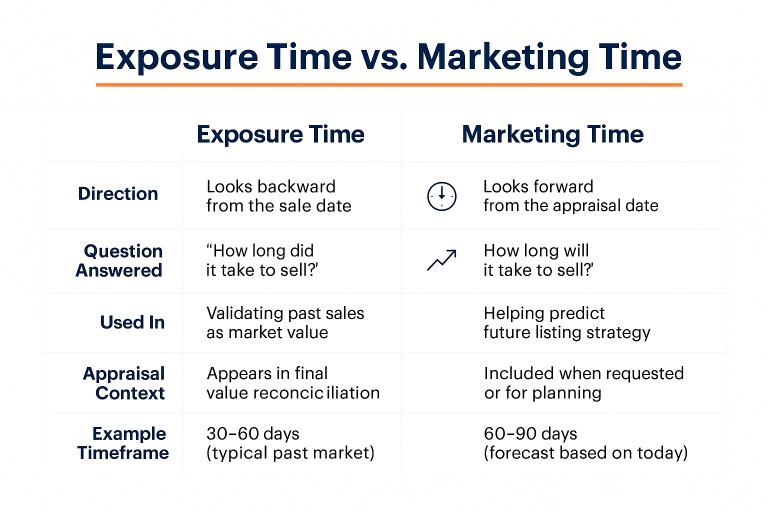
Excerpts: Is real estate appraisal, with the issue of more detailed time adjustments, at another cross roads now? In the past, appraisers simply smoothed changes in sales prices over time by measuring prices as of January 1st, then again as of December 31st. If they went up an average of six percent (6%) annually, then the appraiser made a one-half percent adjustment each month.

This protocol inflates prices at six percent (6%) per year, true. But it does not reflect the fact that for the first three quarters of the year prices may have increased at twelve percent (12%) per year, then in the last quarter went flat with a zero percent (0%) price change.

In this example, consider that a comparable sale going under contract at the beginning of the fourth quarter of the year would merit no time adjustment whatsoever. Nevertheless, the appraiser using the smoothing technique will adjust that sale upward at one-half percent per month over a time span when the market is actually flat. That appraiser is merely filling forms, not appraising. How so?

To read more, Click Here

My comments: Very good article on the “new” time adjustment techniques. Interesting music analysis and how it applies to appraising.

—————————————————————————————-

Occidental Treehouse Named California’s Most Wish-Listed Airbnb

Excerpts: Nestled among towering redwoods in western Sonoma County, the Spectacular Spyglass Treehouse in Occidental has earned the title of California’s most wish-listed Airbnb, part of the vacation rental platform’s roundup of top-trending stays in each U.S. state.

Perched high in the forest canopy, the Spyglass Treehouse — designed and built by Artistree Home — offers guests the rare chance to sleep among the redwoods without sacrificing luxury.

The one-bedroom retreat features a king-size bed, high-speed Wi-Fi, floor-to-ceiling windows with panoramic forest views, a cedar hot tub and an indoor infrared sauna.

To read more, Click Here

My comments: A cabin near the redwoods was one of the first places I lived after moving to San Francisco from Oklahoma in 1968. I became fascinated with redwoods. Very close to my cabin was a small redwood grove. I used to go there and lie down to watch the trees. Later I traveled and saw redwoods that were much larger. I am now living about 5 miles from redwood groves to visit

Read more!!

Posted in: appraisal business, Appraisal Subcomitee, ASC, New URAR, time adjustments

Drive-By Appraisals – Who, What, Why

Newz: Drivebys, Foreclosures, Hybrids?, ASB Q and As

April 18, 2025

What’s in This Newsletter (In Order, Scroll Down)

  • LIA ad: Appraisal Used in Divorce Case—Now What?
  • What is a Drive-By Appraisal?
  • Contemporary Architect’s Downtown Santa Barbara Home Could Set a Condo Price Record
  • Top 10 U.S. Housing Markets with the Most Foreclosure Starts in March 2025
  • Hybrid Appraisals – Flawed Data or Flawed Agenda?
  • New ASB Q&As
  • Mortgage applications decreased 8.5 percent from one week earlier

—————————————————————————————————–

Click here to subscribe to our FREE weekly appraiser email newsletter and get the latest appraisal news


———————————————————————

What is a Drive-By Appraisal?

Excerpts: This method bypasses traditional in-person appraisal methods and has grown in relevance for situations like refinancing or low-risk loans where a full interior inspection may not be necessary.

In addition to observing and evaluating the property’s exterior condition, appraisers will also assess the surrounding neighborhood, use MLS listings for home interior information, and evaluate comparable sales data to estimate property value.

Also known as “exterior-only appraisals” or “2055 appraisals,” this approach is often chosen when a full appraisal isn’t required, such as for low-risk lending scenarios or when lenders have sufficient market data to support a valuation without an interior inspection.

They are also used in situations like foreclosure when interior inspections are not possible.

Topics

  • How Does a Drive-By Appraisal Work?
  • Steps to Conducting Drive-By Appraisals
  • Situations When a Drive-By Appraisal is Used
  • Limitations of Drive-By Appraisals
  • Drive-By Appraisals and Industry Standards

To read more, Click Here

My comments: Definitely the most comprehensive and understandable article on drive-bys I have read. I did many drive-bys in the 80s and 90s for lenders. I finally quit doing them on 2-4 unit properties with little info available. Also, when appraising large Victorians I did not know what had changed since 1910. Permit histories in my city are very limited prior to 1950.

I did a lot of foreclosure drive-bys when prices were dropping. I did full appraisals with interior inspections after they were foreclosed.

My most difficult drive-by was a house that was completely “trashed” after the death of the owner by a young relative drug user. It had been sold after renovation and I had no access. I interviewed relatives, neighbors, etc. to try to find out what it was like on the date of death. I always ask the estate trustee to get me access to the house before any changes are made if possible.

BE CAREFUL. DO NOT UNDERBID ON DRIVEBYS.

TOO MUCH UNCERTAINTY ABOUT THE INTERIOR CONDITIONS.

Read more!!

Posted in: appraisal how to, Appraisal Standards Board, hybrid appraisals, liability, real estate market

Manufactured Home Appraisals

Newz: Appraisal Cartoon, Manufactured Homes,
Homes Lacking Insurance

NOTICE: Our Email was down from April 3 – April 9.

Our apologies for any bounced emails.

April 11, 2025

What’s in This Newsletter (In Order, Scroll Down)

  • LIA ad Protecting My Appraisal Report
  • Appraising Manufactured Homes – What Fannie Says, Demographics
  • The Vermont Earth Home, the Dome Home, the Vermont Mud Hut…
  • Very funny appraisal cartoon – Magician Explains Time Adjustments!
  • How Many U.S. Homes Lack Insurance?
  • What Are the Appraiser Independence Requirements?
  • Mortgage applications increased 20.0 percent from one week earlier

—————————————————–

Click here to subscribe to our FREE weekly appraiser email newsletter and get the latest appraisal news

—————————————————————————————————-


Appraising Manufactured Homes – What Fannie Says, Demographics

Excerpts: MH Advantage is an innovative homeownership option that pairs affordable financing with specially designated manufactured housing features typical of site-built homes.

Completing an MH Advantage appraisal requires the knowledge and experience to fully understand the unique construction process of this type of manufactured home. Appraisers must know the manufacturers’ and federal, state, and local requirements for both construction and installation.

The requirements for an MH Advantage appraisal are similar to the requirements for a standard manufactured home. Featured differences include:

Appraisers must include photos of the HUD Data Plate, HUD Certification Labels, and MH Advantage Sticker as well as the driveways, sidewalks, and detached structures located on the site.

To read more, Click Here

————————————-

Manufactured Homes: An Alternative Means of Housing Supply – Demographics

Excerpts: Manufactured homes play a measurable role in the U.S. housing market by providing an affordable supply option for millions of households. According to the American Housing Survey (AHS), there are 7.2 million occupied manufactured homes in the U.S., representing 5.4% of total occupied housing and a source of affordable housing, in particular, for rural and lower income households.

Given that most manufactured homes were produced in the 1990s, a significant portion of the existing manufactured home stock — approximately 72.2% — was built before 2000. Consequently, 7.7% of these homes are classified as inadequate compared to 5% of all homes nationwide. About 2% are considered severely inadequate and exhibit “major deficiencies, such as exposed wiring, lack of electricity, missing hot or cold running water, or the absence of heating or cooling systems”. However, with proper maintenance, manufactured homes can be as durable as site-built homes.

The East South Central division (Alabama, Kentucky, Mississippi and Tennessee) have the highest concentration of manufactured homes, representing 9.3% of total occupied housing. The Mountain region follows with 8.5%, while the South Atlantic region holds 7.7%.

To read more and see excellent illustrations, Click Here

My comments: If you live in an area with manufactured homes, these two articles can help.

In my urban area I have appraised a few homes built in cities where there were very few manufactured homes.  In some areas there are many more. My brother lived in a semi-rural area, north of San Francisco. A while ago there was a major fire destroying many homes. Owners who wanted a quick rebuild, chose manufactured homes. They were allowed on many of the parcels for many years.

Read more!!

Posted in: appraisal how to, GSEs, HOME INSURANCE, liability, New URAR

Appraisers and Firearms

Newz: Appraisers and Firearms,Future of Home Finance and GSEs, Q1 2025 Fannie Mae Appraiser Update – New URAR

April 4, 2025

What’s in This Newsletter (In Order, Scroll Down)

  • LIA ad: A Family Feud and Intended Use
  • Experiences with Firearms as an Appraiser: When Tenants Behave Unexpectedly in “Their Area”
  • Billionaire Opendoor Founder’s Three-Winged ‘Propeller Home’ Hits the Market for $40 Million
  • Appraisal Institute Scandal – Widespread Fraud Uncovered
  • Housing Market Shows Early Signs of Spring By Kevin Hecht, SRA
  • Reshaping Home Finance: The Future of Fannie Mae, Freddie Mac, and U.S. Mortgage Policy By Rob Chrisman
  • Originator jobs; Stated income loans; DOGE shifts its attention; Fannie lawsuit; clear path for rates By Rob Chrisman
  • Q1 2025 Fannie Mae Appraiser Update! – New UAD Sample Reports and Ratings, Time Adjustments
  • Mortgage applications decreased 1.6 percent from one week earlier


Click here to subscribe to our FREE weekly appraiser email newsletter and get the latest appraisal news

——————————————————————————–

————————————-

Experiences with Firearms as an Appraiser: When Tenants Behave Unexpectedly in “Their Area”

Excerpts: Appraisers often find themselves in a wide variety of settings and situations. I mean, we are entering people’s homes, somewhere that most people see as their comfort zones and a place they are not open to having a stranger poke around in. We as professionals understand this and usually try to make it as quick and painless as possible. There are those moments where it turns into a “memorable experience” and homeowners or tenants feel like they must make it known we are not welcome.

I personally am batting .1000 this year on multi-family properties, where tenants have felt it was necessary for me to get the message, by brandishing a firearm. I will share the following two situations, how I personally managed it, explain why I do not personally carry a concealed firearm, and ask you readers to tell me if this is common or for similar memorable experiences.

For more information and to read the appraiser comments, Click Here

My comments: My first appraisal-related job was with the Monterey (California) County Assessor’s office. It was transitioning to computerized valuation. I was a temporary “appraiser assistant” hired to go to properties to see if the county appraisal records needed updating.

In those days (mid-1970s), properties were reappraised regularly to increase the assessments and property taxes were increased.

I knocked on the door and was met with a man carrying a shotgun. He said: Go away assessor! I don’t remember the city, but it was not in a rural area. I left and told my supervisor to find someone else to do the inspection.

I have never owned a firearm and would never carry one. No one I knew owned a firearm except for my husband, who had firearm training when he was teaching horticulture at a state prison. I would not allow a firearm in our house but still keep a baseball bat by my front door “just in case”.

But, recreational firing at a target was on my “bucket list”. An appraiser friend took me to a local firing range. I tried handguns, rifles and shotguns. Some worked like machine guns with many bullets fired at one time. I really liked it the best. Next time I go to Las Vegas I will try out real machine guns. Trying to hit a target did not appeal to me. Ya never know until you try!

Of course, I have had many encounters with dogs. One was when I was appraising the house of an appraiser I knew. I was met with small dogs biting my ankles. When the owner put the dogs away I continued with the appraisal. Another time, in a rural area, 3 large Dobermans broke down the door of a mobile home and ran toward me. I managed to get in my car. I told the lender to get another appraiser.

When markets crashed I did a lot of foreclosure appraisals. I made a lot of noise opening the door and loudly saying I was an appraiser for the lender and needed to come inside. I never had a problem. But some appraisers requested that a police officer accompany them when the home looked “sketchy” to them from the outside.

Read more!!

Posted in: appraisal business, Appraisal Institute, Economic analysis, GSEs, humor, New URAR

Appraisal Time Adjustments

Newz: Time Adjustments, Fannie Condo “Blacklist”, Future of GSEs?

March 28, 2025

What’s in This Newsletter (In Order, Scroll Down)

  • LIA ad: Navigating Value Revisions
  • On Time Adjustments By Timothy Andersen, MAI
  • 19.5 Million Arizona Airpark Mansion Boasts Private Jet Hangar, Indoor Shooting Range, and 11 Bathrooms — but Only 3 Bedrooms
  • Pulte has no plans to lower conforming loan limits for Fannie and Freddie
  • Fannie Mae’s Condo “Blacklist”
  • FHA rescinds mortgage appraisal policies aimed at countering bias (update on last week’s newsletter topic)
  • Fannie, Freddie face uncertain futures, potential jobs cuts
  • Mortgage applications decreased 2.0 percent from one week earlier

———————————————————————————————

Click here to subscribe to our FREE weekly appraiser email newsletter and get the latest appraisal news

——————————————————————————–

—————————————————–

On Time Adjustments

Timothy Andersen, MAI, MSc., CDEI, MNAA

Excerpts: Typically, this time starts when the comparable goes under contract, then ends on the effective date of the appraisal. If the market has measurably changed over that period, that change means the appraiser should market-adjust the comps up- or downward, as the market demands¹.

This analysis reveals yet another dilemma. For example, to conclude prices went up twelve per cent (12%) per year is a simple average increase of one percent per month, or a daily factor of (0.12 ÷ 365 =) 0.000329. This simplistic analysis means that for a sale that went under contract at $400,000 42-days ago, the increase factor would be $400,000 X 0.000329, or an increase of $131.51 times 42-days or $5,523. This rationale is mathematically correct.

But our training must govern here and force us to ask the question, “Does this adjustment protocol reflect current market verities?” If not, then following this protocol is, in effect, to guess at a time adjustment. To guess at the time adjustment is to fail to reflect market trends truly and correctly. To fail to reflect them truly and correctly in the final value opinion is to mislead the client. See the dilemma?

Does USPAP² offer any advice on this issue? No. USPAP does not even use the word adjustment (or any of its derivatives) until AO-13.

To read more, Click Here

My comments: Good analysis of the current time adjustment issues. Using only an annual increase (Like most of us were trained to do) is not very accurate. Tim writes, teaches USPAP and advises appraisers on how to do better reports. He is a USPAP Expert. Tim is a regular contributor to the monthly Appraisal Today.

Read more!!

Posted in: adjustments, FHA, GSEs, liability, time adjustments

Appraisal WaIvers Can Be Risky

Newz: Waiver Risks, Appraisal Alleged Bias, FHA Rescinds Multiple Appraisal Related Policies

March 21, 2025

What’s in This Newsletter (In Order, Scroll Down)

  • LIA ad: Appraisal Used in Divorce Case — Now What?
  • The Hidden Risks of Appraisal Waivers: What Homebuyers and Homeowners Need to Know
  • Palm Desert California Home With Its Own Shark Tank Hits the Market for $59 Million
  • Relocation Appraisals: The Power of Market Analysis
  • NFHA (National Fair Housing Alliance) Rescinds Multiple Appraisal Related Policies Funding Dries Up. Appraiser lawsuit.
  • Fannie, Freddie board shakeups bring conservatorship exit closer to reality
  • FHA Rescinds Multiple Appraisal Related Policies
  • Federal Reserve leaves rates unchanged. Two rate cuts may be coming this year.
  • MBA – Mortgage applications decreased 6.2 percent from one week earlier

Click here to subscribe to our FREE weekly appraiser email newsletter and get the latest appraisal news

———————————————————————–

——————————————————————-

The Hidden Risks of Appraisal Waivers: What Homebuyers and Homeowners Need to Know

March 4, 2025 By Tom Horn

Excerpts: Imagine this: You’re buying a home, and your lender offers you an appraisal waiver. You’re told this will save time, reduce hassle, and even cut costs. It sounds like a great deal, right? But what if I told you that skipping the appraisal could lead to overpaying for your home, financial headaches down the road, and even market distortions that could affect entire neighborhoods?

6 Reason You May Not Want an Appraisal Waiver

1. You Might Overpay for the Property

2. Refinancing or Selling Could Become a Problem. Even if overpaying doesn’t seem like a big deal at the time of purchase, it can come back to haunt you when it’s time to refinance or sell.

3. Hidden Property Condition Issues Could Go Undetected

4. Appraisal Waivers Contribute to “Data Cancer” in the Housing Market. What is Data Cancer? “Data cancer” is a term used to describe the gradual corruption of real estate valuation data due to repeated reliance on flawed or incomplete information.

5. You Lose a Key Protection Against Market Volatility. A professional appraisal acts as a check and balance in the homebuying process. Without it, buyers are left vulnerable to shifting market conditions.

6. 6. Lenders Benefit More Than You Do. Appraisal waivers aren’t offered to help buyers—they’re offered to help lenders.

To read more, Click Here

My comments: Worth reading. The first article I have seen showing why appraisal waivers can be bad for borrowers. Appraisal waivers are increasing. Per the GSEs they save borrowers money on appraisal fees.

When the new URAR is required starting in late 2026, waivers will have much more data from appraisals to allow waiver use increase by the GSEs

Read more!!

Posted in: FHA, GSEs, liability, Mortgage interest rates, waivers

Appraisal Sq. Ft. Appraisal vs. Assessor/Public Records

Newz: Sq. Ft. Appraisal vs. Assessor, The “R” Word, HUD Appraiser Complaints

March 14, 2025

What’s in This Newsletter (In Order, Scroll Down)

    1. LIA AD: Navigating value revisions in appraisals
    2. Why Is the Square Footage in Public Records Different from the Appraisal?
    3. 5 Properties With ADUs or In-Law Suites
    4. Open Letter to Government Efficiency Commission on HUD’s Appraiser Complaints
    5. The “R” word in real estate – Recession
    6. Going In-Depth on a Delicate Issue: The Invisible Fence of Racial Discrimination
    7. Mortgage applications increased 11.2 percent from one week earlier

——————————————————————————————-

Click here to subscribe to our FREE weekly appraiser email newsletter and get the latest appraisal news!

——————————————————————————

————————————————————————————-

Why Is the Square Footage in Public Records Different from the Appraisal?

By Tom Horn

Excerpts:

Why Accuracy Matters

Square footage is one of the most critical factors in determining a home’s value, yet it is often misunderstood. Many homeowners and real estate agents assume that the square footage listed in public records is accurate, but that’s not always the case. When an appraiser measures a home, their calculation often differs from what’s in tax records. These discrepancies can lead to confusion, mispricing, and even appraisal challenges.

Why Square Footage Discrepancies Occur

Public Records vs. Appraisal Measurements

The square footage listed in public records typically comes from the county tax assessor’s office. Assessors determine square footage based on:

Builder-reported figures:…

Estimates or outdated records:…

Conversions and Additions

Another common reason for discrepancies is home modifications. If a homeowner adds square footage without the proper permits, tax records may not reflect the change. Examples include:

Unpermitted additions:…

Incorrect classifications:…

To read more, Click Here

My comments: Worth reading. Written for non-appraisers but the best explanations I have ever read about this topic. I worked for an assessor’s office for my first 4 years of appraising, starting in 1975. I was given a geographic area and appraised every residential in it. Fantastic experience. I learned a lot. I was very lucky. Very different than lender appraising, where you only appraise properties that are suitable for mortgage loans.

The March 2025 issue of Appraisal Today has a very comprehensive article for appraisers: Can you use the assessor’s assessment values for site valuation, by Tim Andersen, MAI.

Read more!!

Posted in: adjustments, ADUs, bias, Economic analysis, real estate market, Trump Changes

Finding Comps with Few Sales for Appraisers

Newz: Pulling Comps in 2025, Appraiser Union? AMCs Overcharging Consumers

March 7, 2025

  • What’s in This Newsletter (In Order, Scroll Down)
  • LIA ad: Problem with An Affidavit
  • The struggle of pulling comps in 2025 By Ryan Lundquist
  • Op-Ed: Why An Appraiser Union Would Never Work By Dustin Harris
  • The Full Measure: February 2025 Housing Market Snapshot for Appraisers By Kevin Hecht
  • The Trump Administration’s Regulatory Overhaul: The Impact on CFPB, FHA, and the Housing Industry By Rob Chrisman
  • Homebuilders Warn of Rising Building Costs as Trump’s Tariffs on Canada and Mexico Take Effect By NAR
  • AMCs Overcharging Consumers? Morgan & Morgan Investigates
  • Mortgage applications decreased 1.2 percent from one week earlier

Click here to subscribe to our FREE weekly appraiser email newsletter and get the latest appraisal news!


——————————————————————-


———————————————————————————-

The struggle of pulling comps in 2025

By Ryan Lundquist

Excerpts:

1) SALES TELL US ABOUT THE PAST

Comps aren’t easy today. The problem is there aren’t that many sales, so it’s not so simple to figure out value. Lately, I’ve been getting a ton of questions about this, so I wanted to share some things I’m doing on my end….

2) TWO OPTIONS TODAY

We have two choices for comps. Go back further in time in the immediate neighborhood, or go out further to competitive areas. Why not do both?…

3) HOW FAR AWAY CAN YOU GO FOR COMPS?

It’s not how far you can go, but where you should go. Read that again. This is true in any market. And where would buyers go for comps? That’s also a viable question. No matter where you’re getting comps, be sure they are a good substitution…

To read lots more plus see graphs and read appraiser comments, Click Here

My comments: Read This Article! Few sales are common in many areas. I prefer going back in time. I have been doing time adjustments since 1975, when prices were going up 5% per month in a semi-rural Northern California county. The GSEs seem to be making it way more complicated. I do them on every appraisal. If not needed, I always comment that the market is stable. It is the only adjustment I make on my non-lender appraisals, except for features that are unusual.

I have no idea why the GSEs complain that many appraisers are not doing them when needed. Maybe the appraisers never learned how? Many dollar adjustments are needed on the grid and can be much more difficult than time adjustments.

Read more!!

Posted in: adjustments, AMCs, appraisal business, Appraisal fees, Economic analysis, Trump Changes

Appraisers: Advice On Staying Current

Newz: AMCs Fee Skimming Lawsuit, Appraising a Hobbit Hole

February 28, 2025

What’s in This Newsletter (In Order, Scroll Down)

  • LIA ad: Disclosing Identity of Complaining Party
  • On Staying Current By Timothy Andersen, MAI
  • Futuristic $177 Million Bel-Air Megamansion With Its Own Private Jazz Club Hits All the Right Notes
  • Appraising a Hobbit Hole: The Property Value of Bag End
  • AMCs Deceptive Fee Skimming Exposed in Lawsuit
  • The 10 Most Expensive Home Listings and Home Sales in the U.S.
  • February 21, 2025
  • Mortgage applications decreased 1.2 percent from one week earlier

———————————————-

Click here to subscribe to our FREE weekly appraiser email newsletter and get the latest appraisal news!

————————————————


On Staying Current

By Timothy Andersen, MAI

Excerpts: In this monograph, we discuss the absolute necessity of developing more than one skill set as part of becoming a competent and professional real estate appraiser.

Real estate appraising is a complex practice that requires a diverse range of skills and knowledge, from understanding current market conditions to understanding and interpreting complex legal and financial documents. If you want to be your own boss, it also requires business acumen.

At its core, real estate appraising involves the due diligence necessary to form a credible opinion of the market value of a particular property. This requires a deep understanding of the appraiser’s local real estate market, as well as of the physical, legal, and economic factors that influence property values in it. However, becoming a successful real estate appraiser requires more than mere market knowledge.

It also requires a range of other skills, including the ability to conduct thorough research, analyze mountains of data, communicate persuasively and effectively with and to other professionals, and manage complex projects. These are all aspects of being an appraiser they do not teach us in appraisal school.

Most importantly, successful appraisers must adapt to changing market conditions and trends. Currently there are so many of these ongoing, especially as the GSEs are about to inaugurate UAD-2 to replace their archaic appraisal reporting forms. This means continually learning and developing new skills to stay ahead of the curve.

To read more, Click Here

My comments: Good analysis of appraising. I have been appraising for 50 years and I still love it. I am easily bored, but every property is different and market conditions change regularly where I work. I am always learning something new.

If this seems overwhelming to you or other post-licensing appraisers, it is not your fault. Unfortunately, after licensing started many trainees hired other trainees. Almost all had poor training and classes. I was unable to refer wannabes to professional associations as they only wanted classes for members, not for new appraiser. Changing what you learned when you started is very difficult to do. I was very fortunate as I started before licensing and had very active local chapters of AIREA and SREA predecessors of the Appraisal Institute. The appraisers I met had lots of experience. They helped me whenever I had any questions. I learned how to lender appraisals plus many types of non-lender appraisals correctly from them.

Read more!!

Posted in: AMCs, appraisal, appraisal how to

Highest and Best Use and Appraisals

Newz: HUD Layoffs – Including FHA, GSE Selling Guide Updates

February 21, 2025

What’s in This Newsletter (In Order, Scroll Down)

  • LIA Ad: Should I Complete this Assignment?

  • Highest and Best Use: A Superpower You Already Possess By Byron Miller, SRA

  • High Octane’ Desert Ranch That Boasts Airplane Hangars, Racetracks, and Custom Dune Buggies Hits the Market in California for $15 Million

  • Fannie Mae and Freddie Mac’s New Selling Guide Updates: What Appraisers Need to Know. What Data Sources Appraisers Are Using.

  • Massive FHA cuts would create dysfunction for mortgage industry, homeowners: ex-official

  • Builder Confidence Falls to the Lowest Levels Since May 2024

  • Mortgage applications decreased 6.6 percent from one week earlier

Zoning in the Appraisal Process

Click here to subscribe to our FREE weekly appraiser email newsletter and get the latest appraisal news!

—————————————————————–

———————————————–

Highest and Best Use: A Superpower You Already Possess

By Byron Miller, SRA

Excerpts: Like the Incredible Hulk, my superpower didn’t show itself until stressed. That stress came in January 2020, when Minneapolis became the first major U.S. city to eliminate single-family residential (SFR) zoning, allowing one-to-three units to be built on what were previously (SFR) parcels. Suddenly, there was a lot of confusion in the appraisal community about when and how to perform the highest & best use (H&BU) analysis for the new zoning classification.

As chapter president of the North Star Chapter of the Appraisal Institute, I fielded a flood of questions from residential appraisers to state regulators. One thing I quickly realized was that many of the residential appraisers I spoke with didn’t know the four tests of H&BU analysis.

Let’s revisit the basics: In an H&BU analysis, real estate appraisers determine the most probable use of a property by applying four tests: whether the use is legally permissible, physically possible, financially feasible, and maximally productive. Order doesn’t matter for the first two tests, but it’s essential for the last two. Moreover, appraisers must conduct each of the four tests on the real property as if vacant, and as improved.

Applying each of these tests properly is essential to the valuation process. In many litigation situations where appraiser’s values are far apart, it’s due to H&BU analysis differences.

To read more, Click Here

My comments: Worth reading. The author is a residential appraiser. H&BU is one of my favorite topics! I have done many commercial properties for lenders and non-lenders where H&BU was not the current use. I appraised them at their H&BU.

If you only do residential properties H&BU issues is much less an issue, so you don’t do the H&BU analysis very often. Unfortunately, many of the res appraisers who call me did not think about the relevant H&BU. This article is an excellent reminder. You can get into Big Trouble with H&BU if you don’t know when it is important.

The article has a section titled: Practical H&BU Analysis of the 4 factors with an excellent case study. Interesting appraiser comment worth reading.

Read more!!

Posted in: appraisal how to, Fannie, Freddie, real estate market